The Great Buddha Hall—The "Supreme Majesty" of Western Xia Architecture
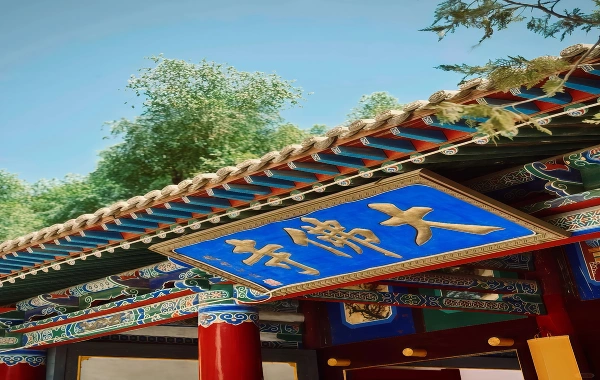
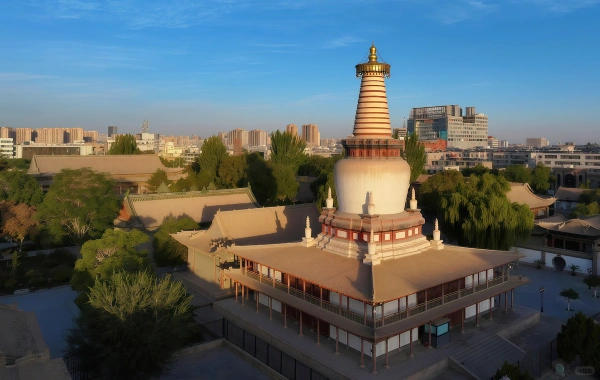
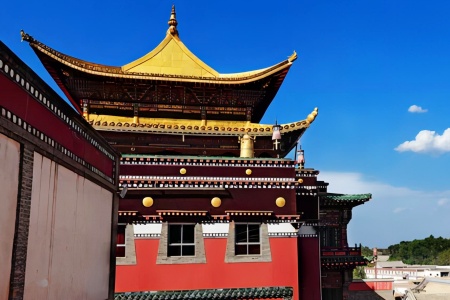
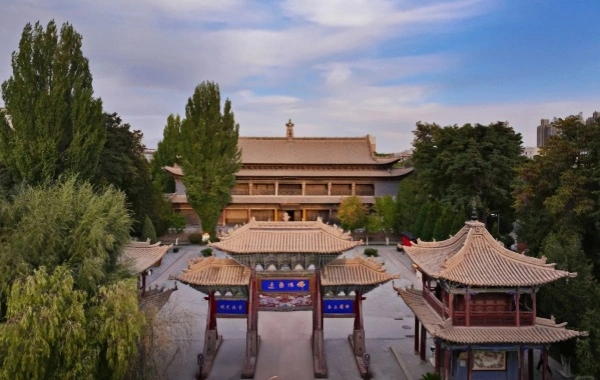
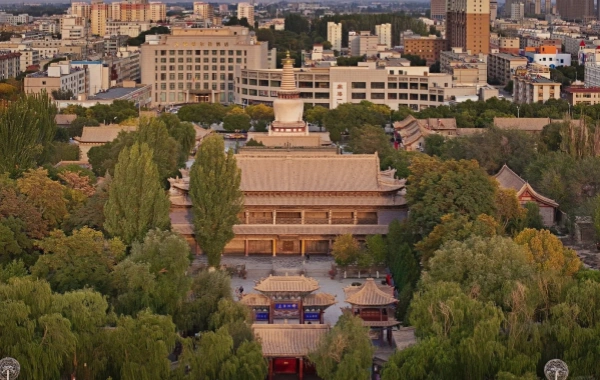
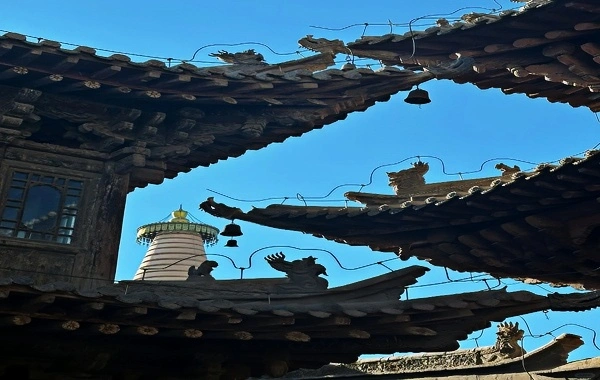
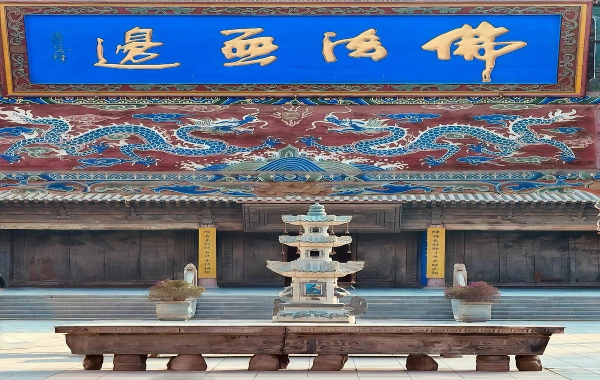
Upon entering the Giant Buddha Temple, the first sight to greet the eye is the majestic and magnificent Great Buddha Hall. Spanning nine bays in width (48.3 meters), seven bays in depth (24.5 meters), and standing 20.2 meters tall, this structure—distinguished by its double-eaved xieshan (hip-and-gable) roof—is one of the few surviving Buddhist halls from the Western Xia dynasty in my country today.
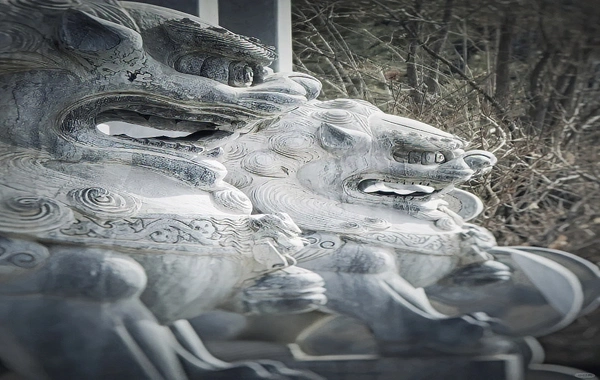
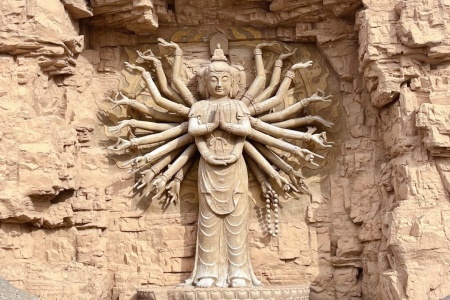
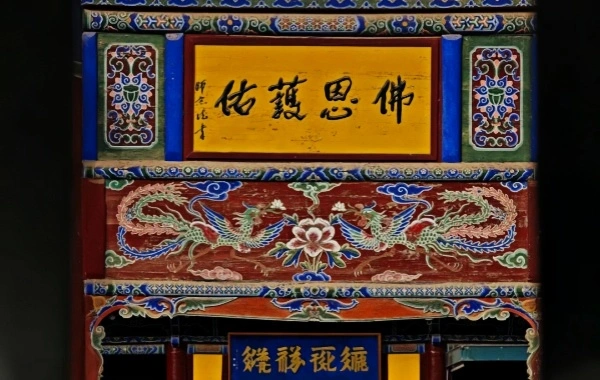
Its architectural layout—specifically the "nine bays in width and five bays in depth" configuration—subtly echoes the imperial ceremonial concept of "Nine-Five Supreme Majesty" (the ultimate symbol of imperial power), thereby underscoring the temple's once-illustrious status. The main body of the hall is encircled by a wooden ambulatory, while the lintels beneath the eaves and the panels flanking the main entrance are adorned with exquisite wood carvings and brick reliefs. Particularly precious are the two colossal brick carvings flanking the temple gate. Each panel covers an area of 4.6 square meters and is composed of fifty interlocking blue bricks. Employing a combined technique of high relief, flat carving, and line engraving, they depict the "Western Pure Land" and "The Buddha Preaching in the Jetavana Grove," respectively. Exquisitely detailed and remarkably lifelike, these works stand as the pinnacle of brick-carving artistry.
The Marvel of the Reclining Buddha—Asia’s Largest Indoor Clay Sculpture
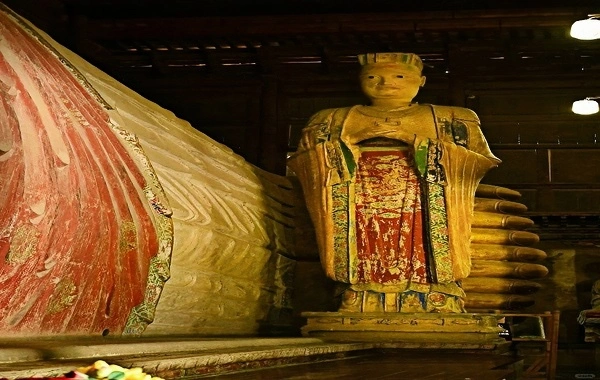
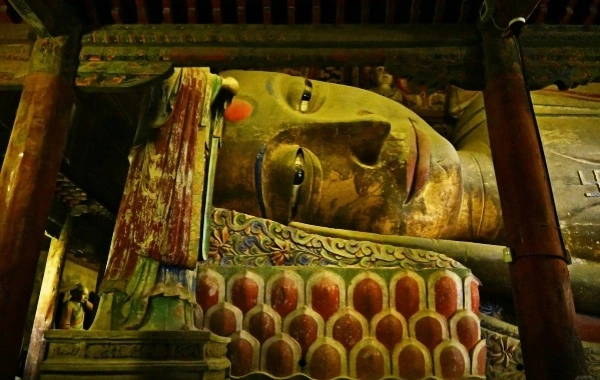
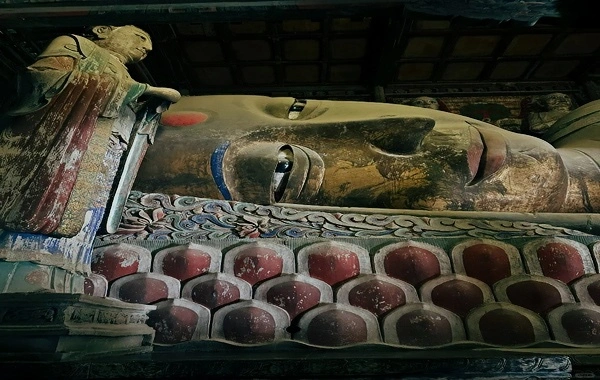
Passing through the temple gate, visitors are instantly awestruck by the sight of a colossal statue of Shakyamuni Buddha in Nirvana, resting peacefully upon a 1.2-meter-high altar. The statue measures 34.5 meters in length, with shoulders spanning 7.5 meters, ears approximately 4 meters long, and feet measuring 5.2 meters. A single human being could lie flat upon one of its middle fingers, while eight people could sit side-by-side within the hollow of an ear.
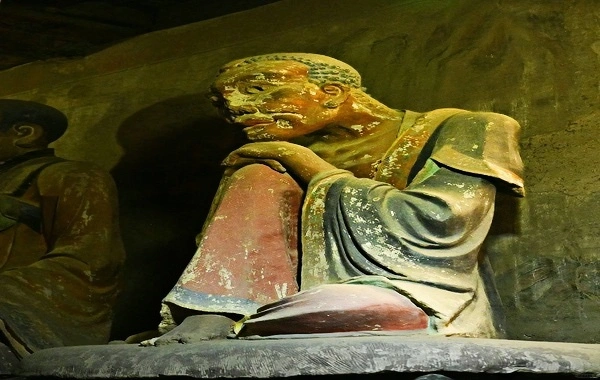
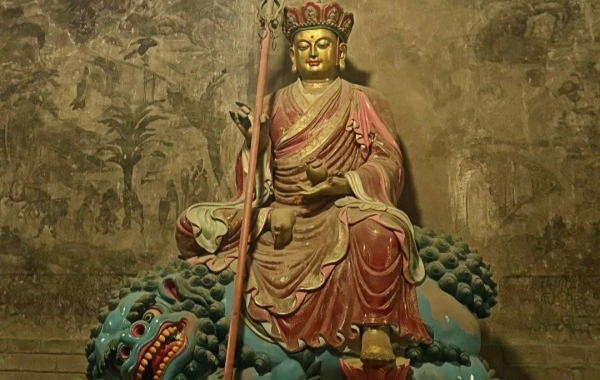
Constructed with a wooden armature, modeled in clay and straw, and featuring a hollow interior housing sacred relics, this Reclining Buddha was created using a unique technique of gilded and polychrome decoration. Having undergone numerous repairs and restorations throughout the Western Xia, Yuan, Ming, and Qing dynasties, it remains remarkably well-preserved to this day. The Buddha appears "as if awake when viewed from afar, yet asleep when called upon"; a faint smile plays upon his lips, and his expression is one of profound serenity and peace—as if conveying to the world that Nirvana is not an end, but rather a new beginning. Behind the Reclining Buddha stands a sculptural ensemble depicting his Ten Great Disciples in mourning, each displaying a distinct emotional state—some sorrowful, others contemplative. Along the northern and southern walls stand the Eighteen Arhats—some appearing majestic, others benevolent—collectively forming a magnificent sculptural panorama of Buddhist art.
The Mural Gallery—A Pictorial Chronicle of Hexi Customs
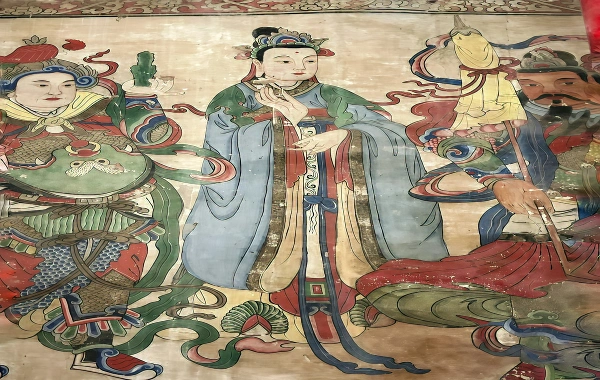
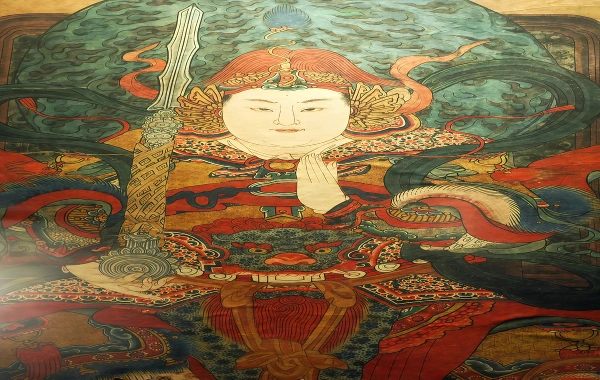
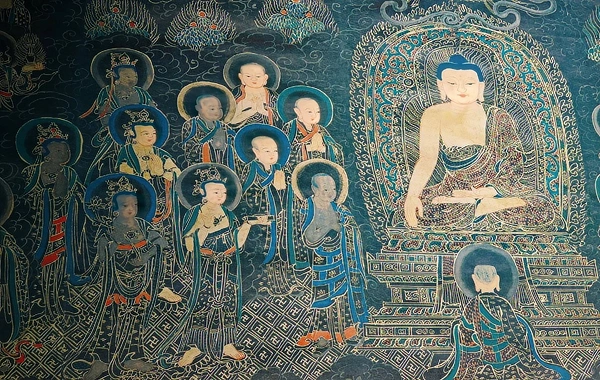
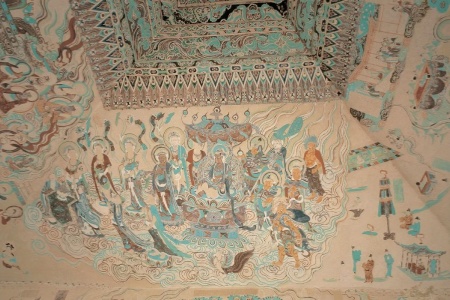
The four walls of the Great Buddha Hall, as well as the wooden partitions on the second level, preserve over 530 square meters of murals dating back to the Ming and Qing dynasties. Distinguished by their immense richness of content and diversity of themes, they are aptly described as a "pictorial scroll of Hexi history upon the walls."
The Homage of the Celestial Deities: Painted on the eastern and western walls, these murals depict the Dharma-protecting celestial beings with solemn dignity. Characterized by fluid lines, a palette of deep, restrained colors, and a majestic grandeur, they fully embody the magnificent aura of a royal temple.
Murals from Journey to the West: Painted on the wall situated behind the Reclining Buddha, these surviving fragments depict classic scenes from the epic tale, such as "The Battle Against the Red Boy" and "Blocked by the Flaming Mountain." Particularly precious is the depiction of Zhu Bajie (Pigsy) in these murals, which differs starkly from his portrayal in the standard novel—here, he is shown shouldering luggage, fetching water from deep ravines, and bravely subduing demons, revealing a diligent and unpretentious side to his character. This imagery closely resembles the illustrations found in the Ming Dynasty edition of Mr. Li Zhuowu’s Commentary on Journey to the West, serving as a vivid testament to the diverse ways in which the Journey to the West narrative circulated among the populace.
Classic of Mountains and Seas (Shanhaijing) Murals: The north and south walls are demarcated by depictions of the Eighteen Arhats; on either side, the walls feature distinct murals—one depicting landscapes, flora, and fauna, and the other illustrating tales from the Classic of Mountains and Seas. Here, the aesthetic sensibilities of Han Chinese literati coexist harmoniously with the fantastical imagery of the Western Regions, showcasing the long-standing tradition of cultural pluralism in the Hexi Corridor.
These murals possess not only immense artistic merit but also serve as authentic historical records, capturing the social milieu and the process of ethnic integration within the Hexi region during the Ming and Qing dynasties. With their meticulous details—ranging from character costumes and architectural styles to scenes of daily life—they can truly be described as a "pictorial ethnography of Hexi customs" inscribed upon the walls.
> Photography Tips: The lighting inside the Hall of the Great Buddha is relatively dim; for wide-angle shots capturing the entire Reclining Buddha, a wide-angle lens is recommended. To capture the intricate details of the brick carvings and murals, consider bringing a telephoto lens. Flash photography is strictly prohibited inside the hall; please observe all regulations regarding the preservation of cultural heritage sites.