Architectural Miracle—Flying Fish Leaping into the Sea
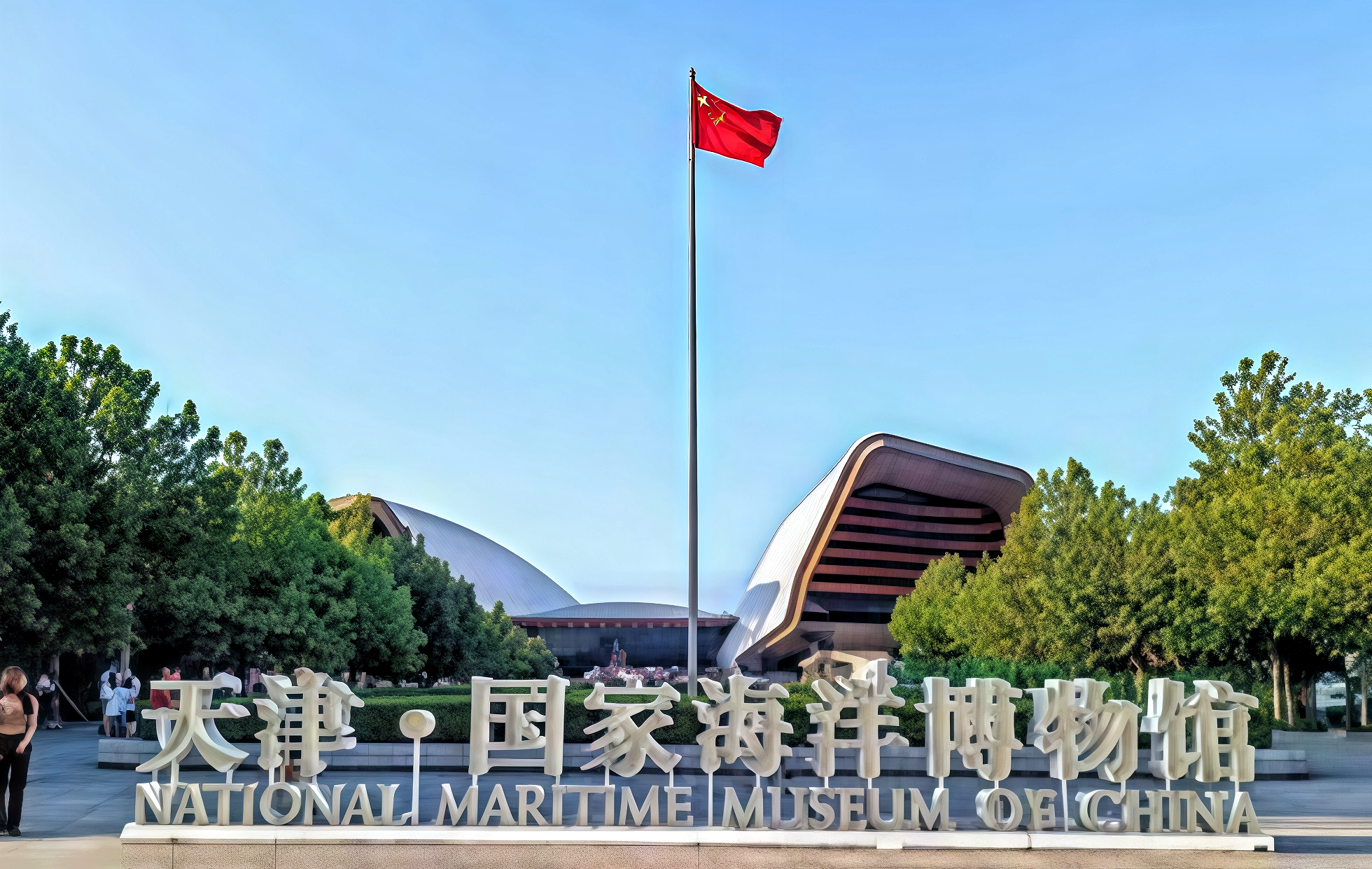
The National Maritime Museum’s architecture is, in itself, a work of art worthy of close and careful appreciation.
The Design Concept: "Fish of the Northern Darkness"
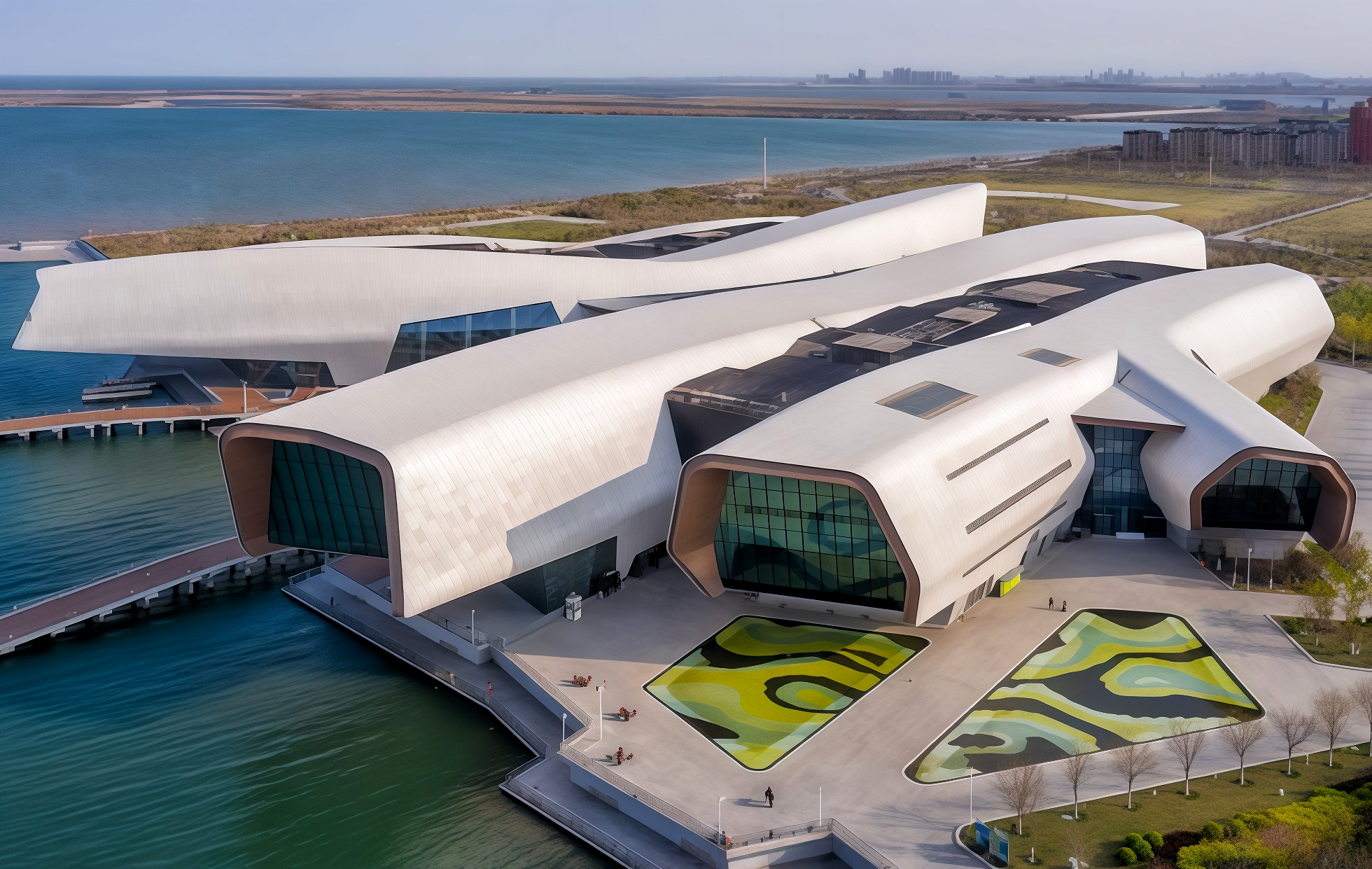
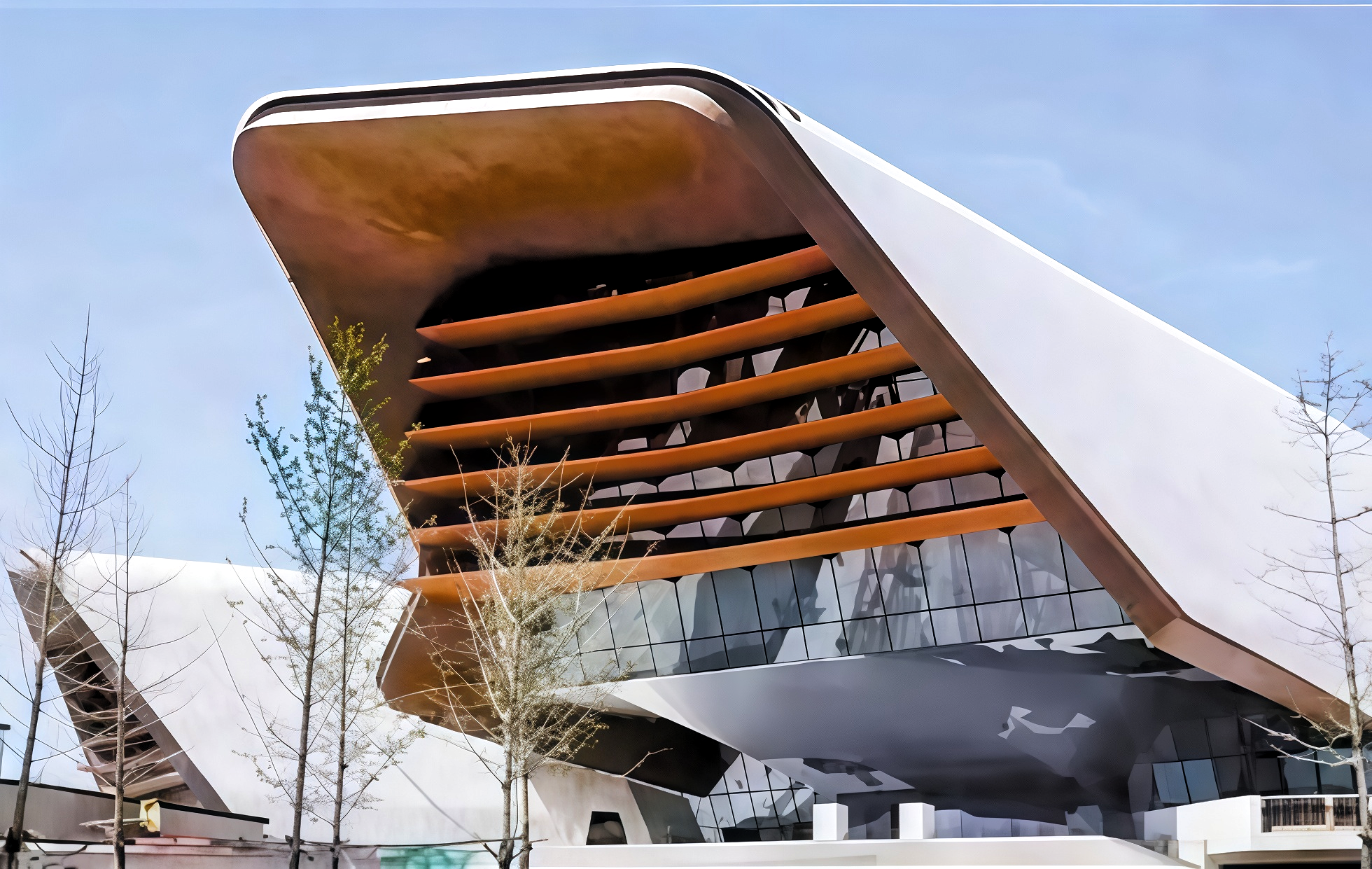
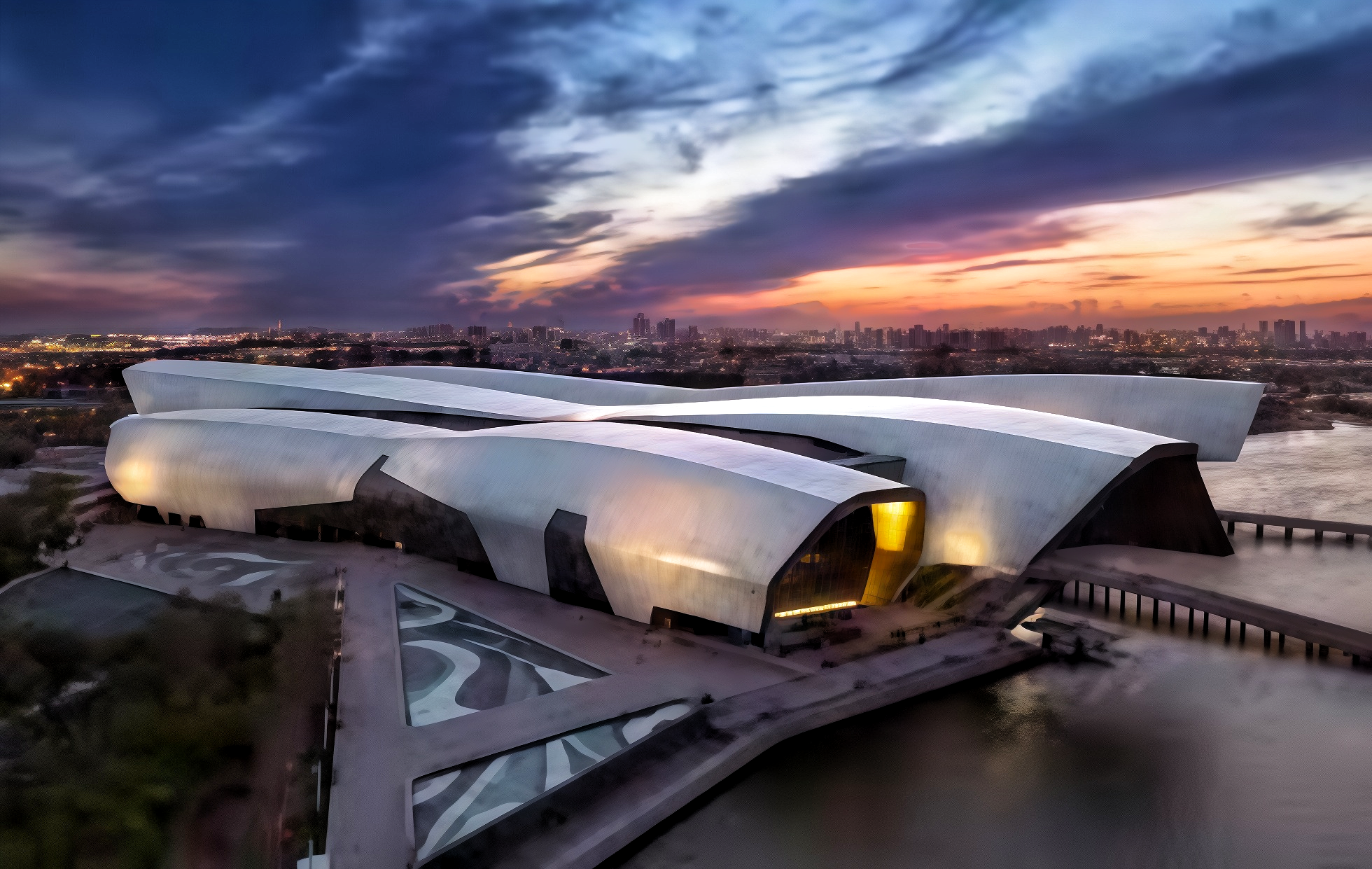
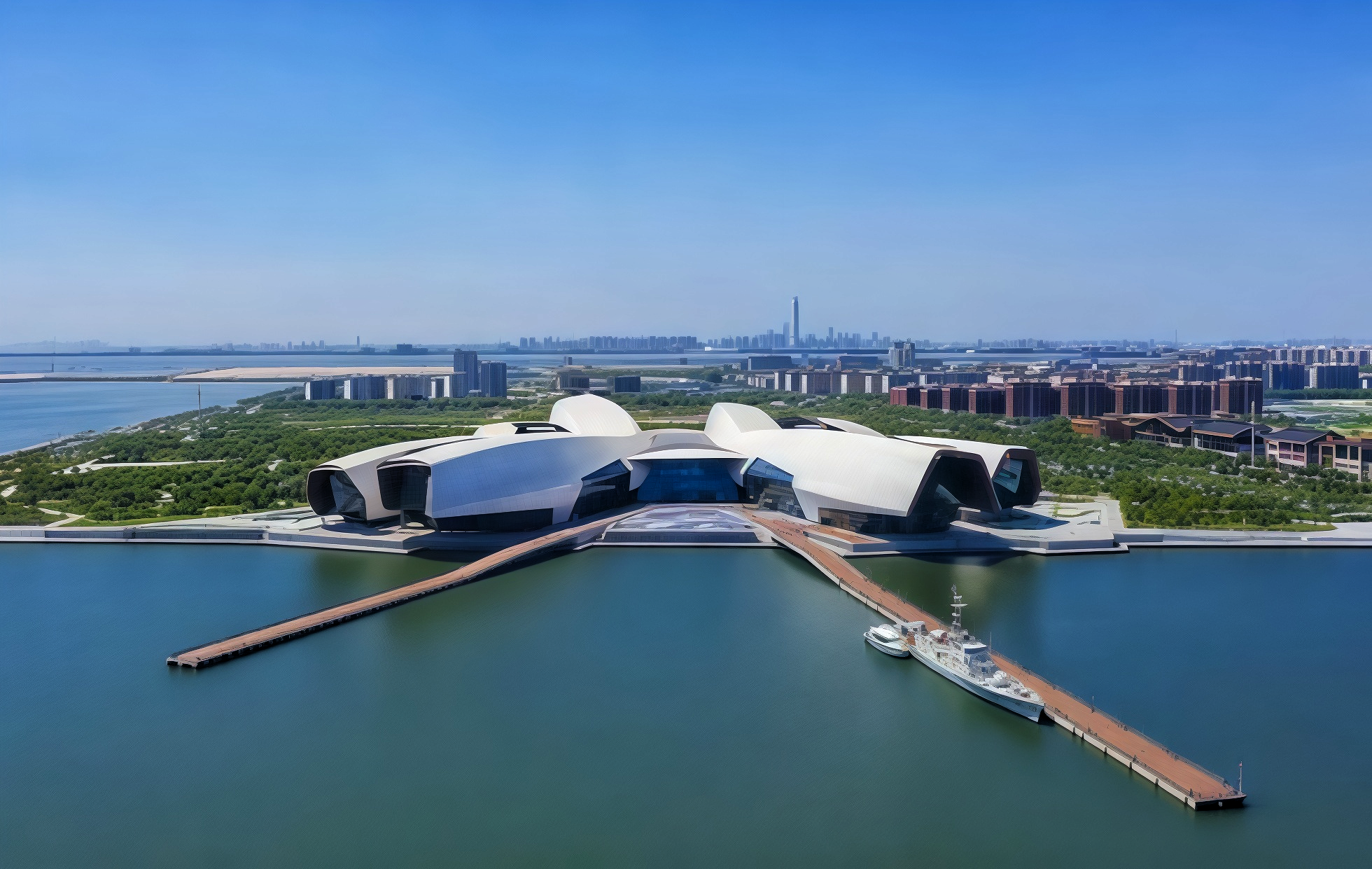
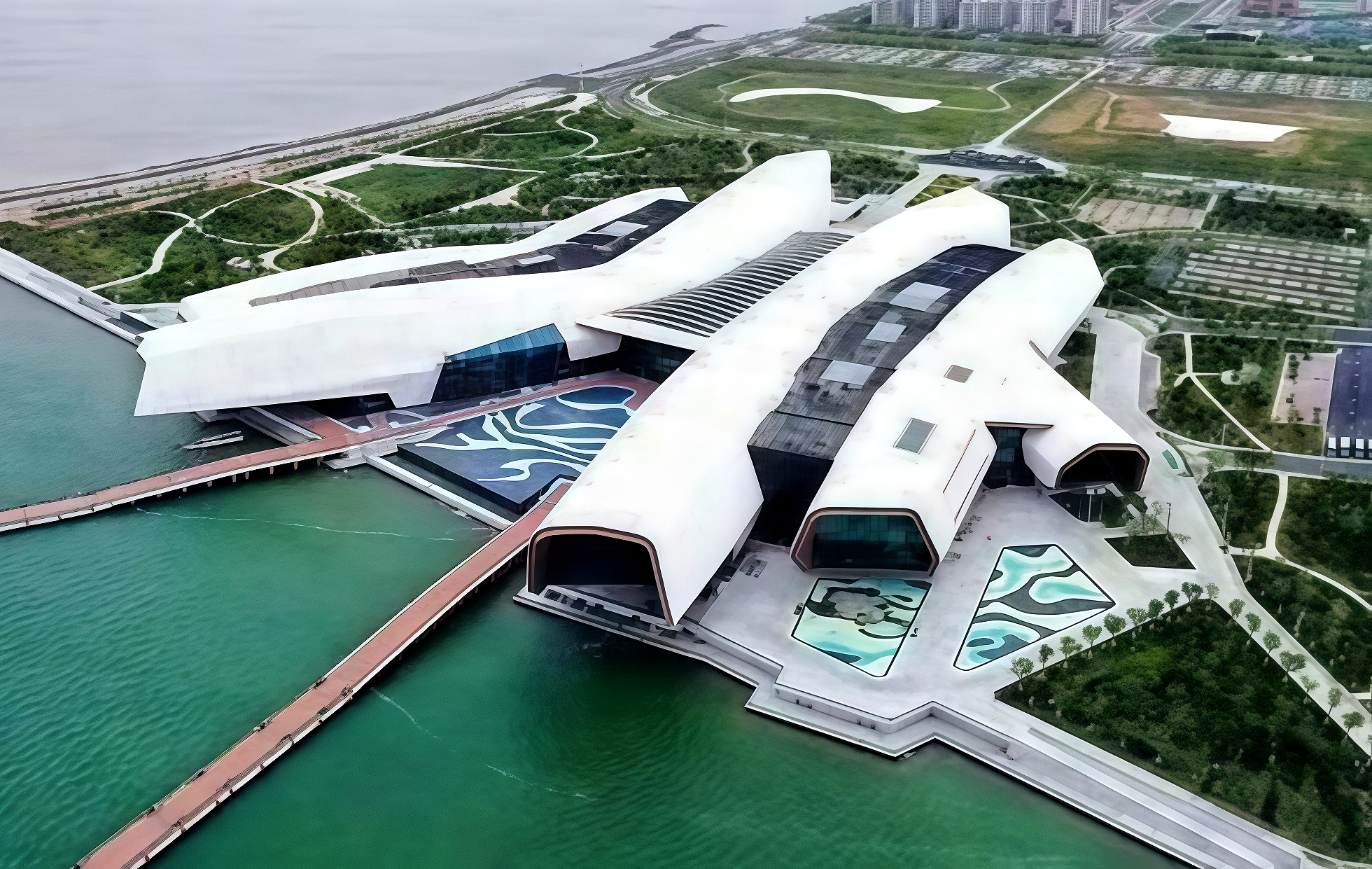
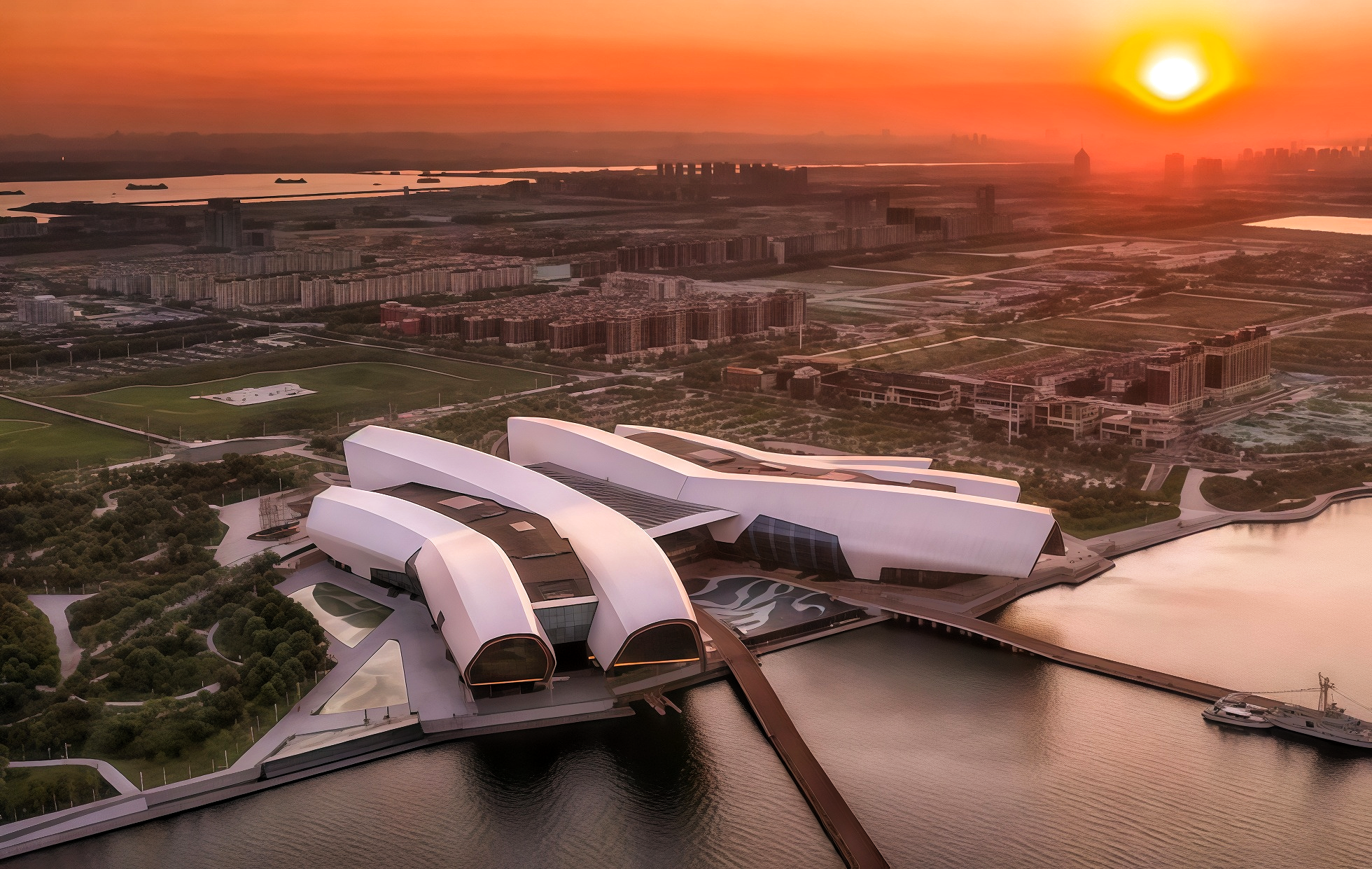
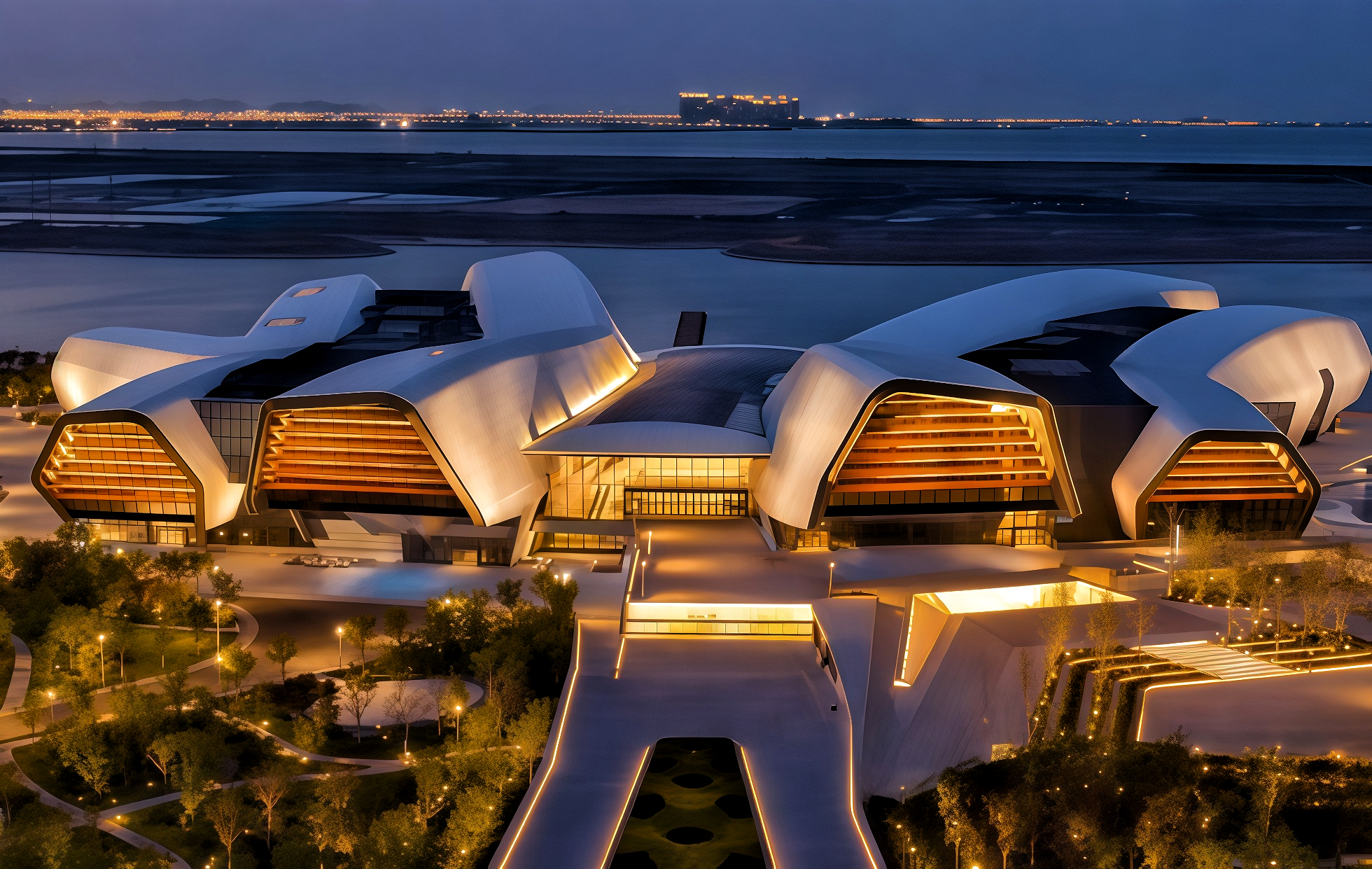
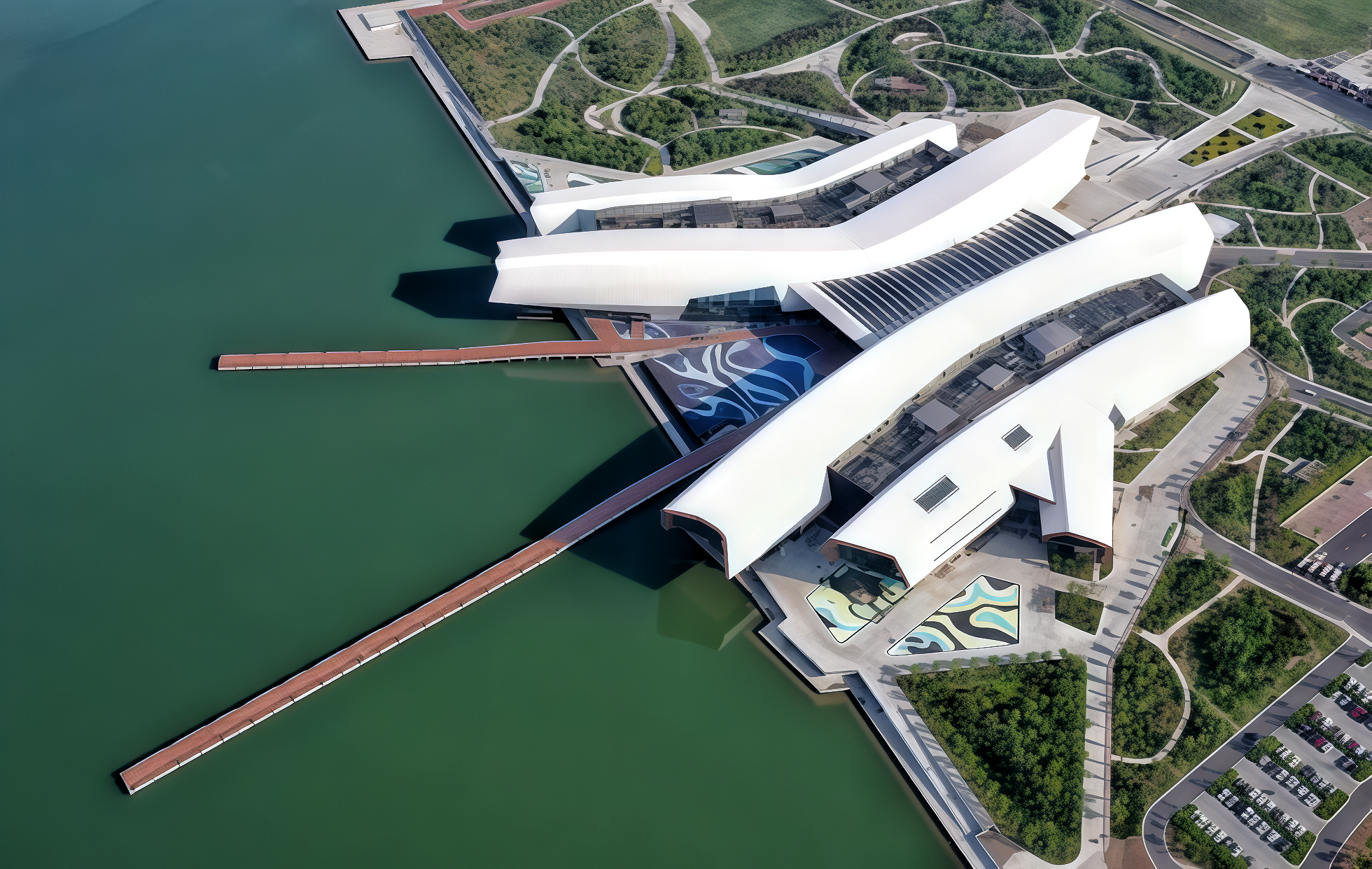
Designed by the Australian firm COX Architecture, the National Maritime Museum consists of four elongated, streamlined white structures connected by walkways and a central atrium. The ensemble resembles a school of four fish leaping toward the water's surface—or perhaps a fleet of ships docked along the shore. This "fish leaping into the sea" motif symbolizes the exploration and pursuit of maritime civilization by a land-based culture. The northern section of the building cantilevers dramatically over the sea below; with a maximum overhang exceeding 38 meters, it offers visitors a unique vantage point—the sensation of hovering directly above the ocean waves.
The Artisanal Craftsmanship Behind 55,000 "Fish Scales"
The museum's exterior features a "fish-scale" design motif, composed of 55,000 diamond-shaped, curved aluminum panels. Due to the constantly shifting curvature of the facade, no two aluminum panels are exactly alike; consequently, the project team assigned a unique, custom-generated code to each individual "scale," utilizing BIM technology to ensure precise installation. Viewed from a distance, the overlapping and intricately arranged aluminum panels shimmer in the sunlight, evoking the iridescent scales of swimming fish.
Architectural Ingenuity: "Cutting-Edge Technology" in Action
The museum incorporates 28 distinct energy-saving and eco-friendly systems and technologies—including ground-source heat pumps, solar photovoltaic power generation, energy monitoring systems, and intelligent temperature and humidity controls. A unique "universal spherical hinge support" system connects the exhibition halls to the ground much like a human joint; in the event of an earthquake, the internal sliding mechanism between the spherical shell and core acts as a shock absorber, enabling the museum structure to "stand its ground" firmly. These innovations earned the National Marine Museum the distinction of being recognized as a "National Demonstration Project for Green Construction."
Museum Treasures: A Spatio-Temporal Corridor of Marine Civilization
The exhibitions at the National Marine Museum revolve around the central theme of "The Ocean and Humanity." They are organized into three major sections—"Marine Humanities," "Marine Nature," and "Marine Ecology"—comprising a total of six major exhibition zones and 15 individual galleries.
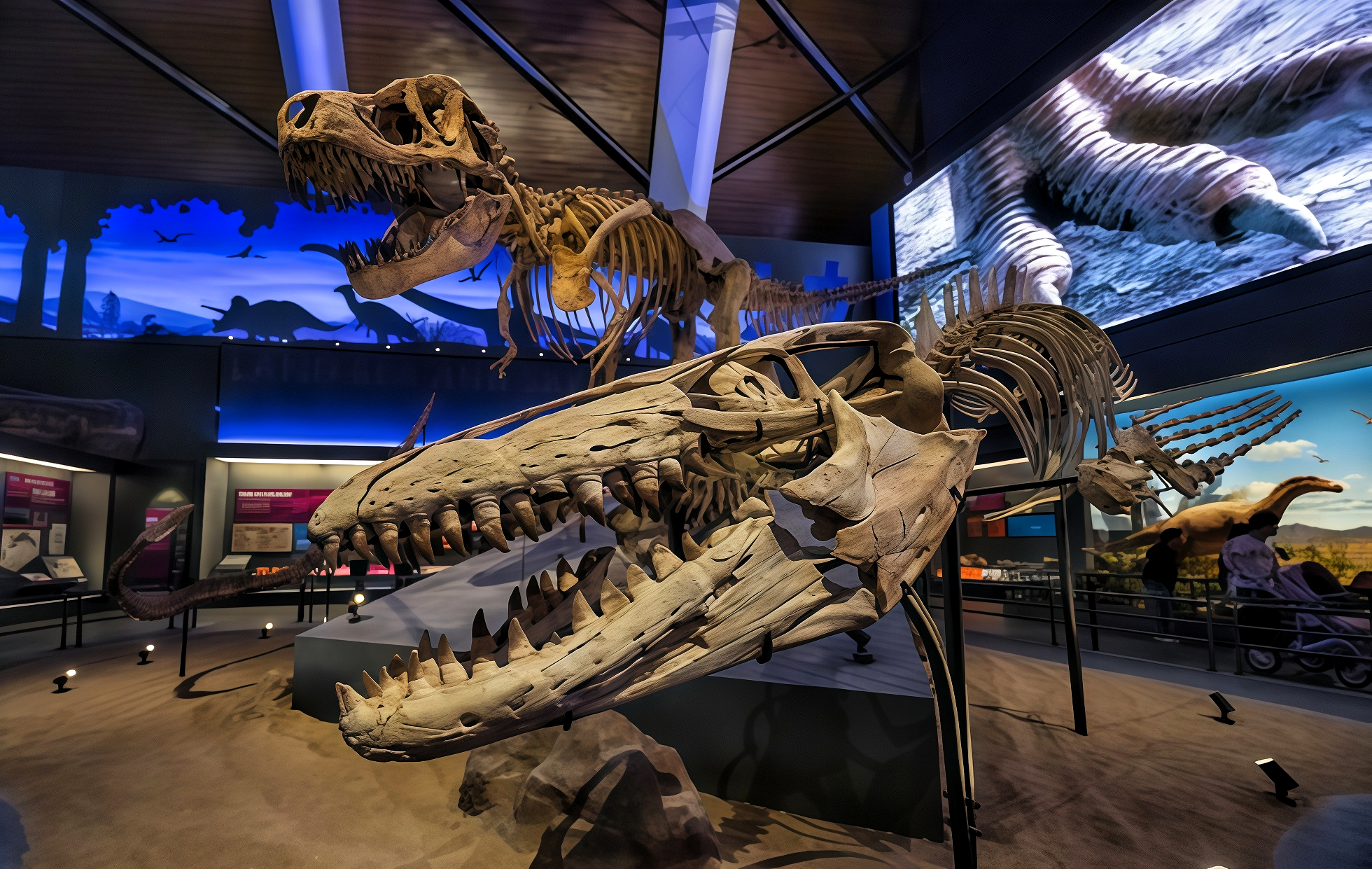
The Age of Dragons: Rulers of the Mesozoic Seas
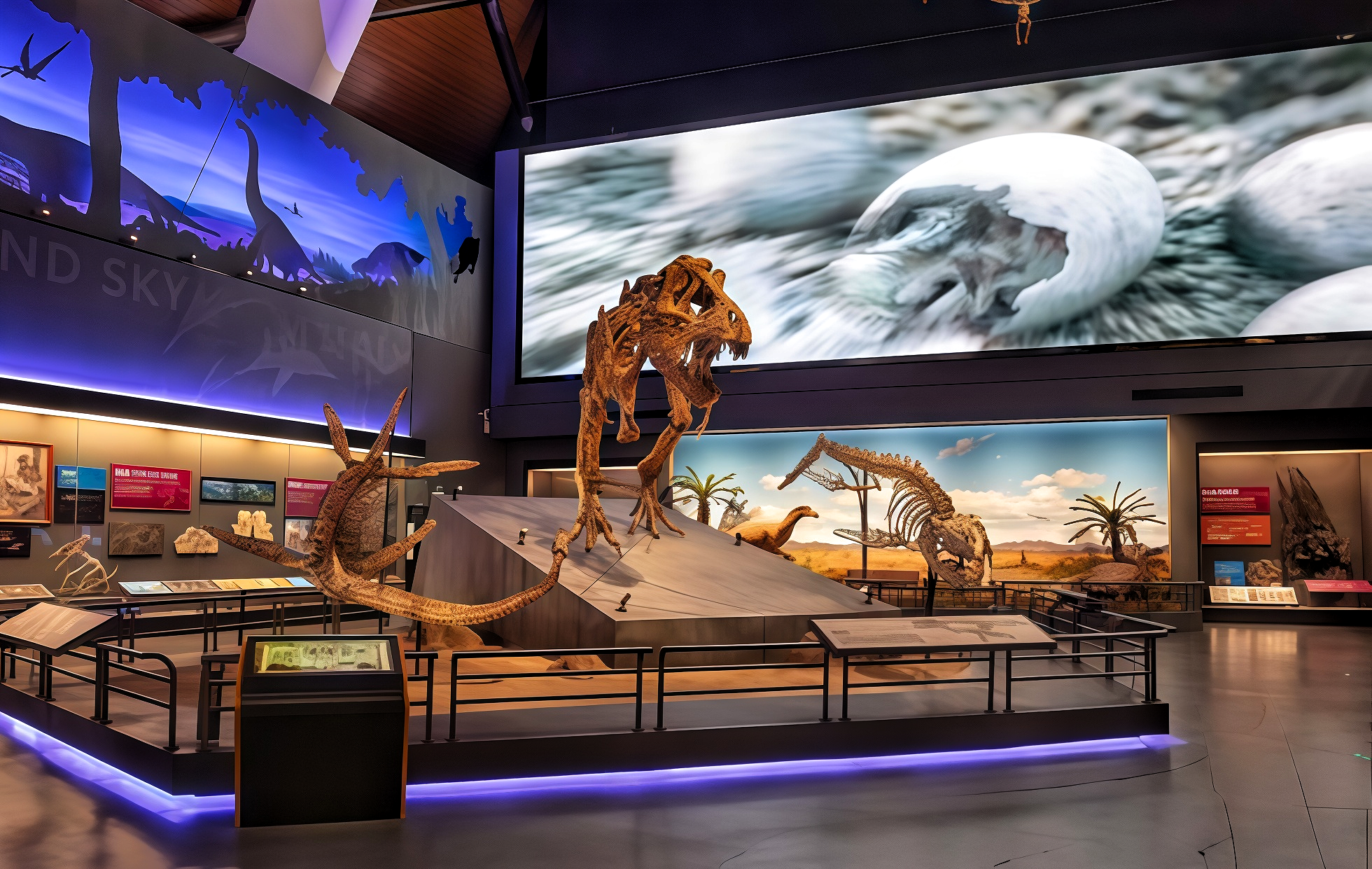
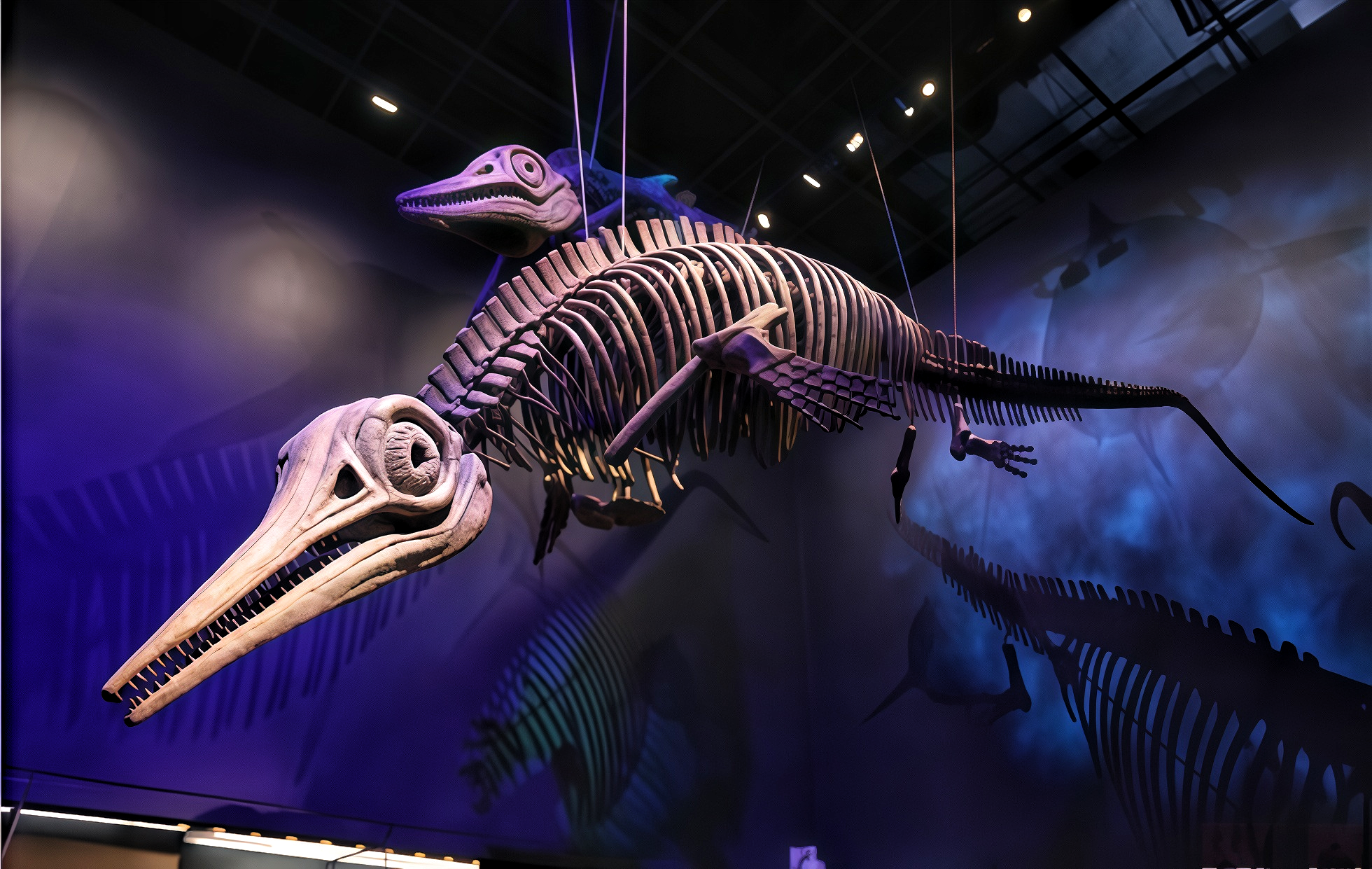
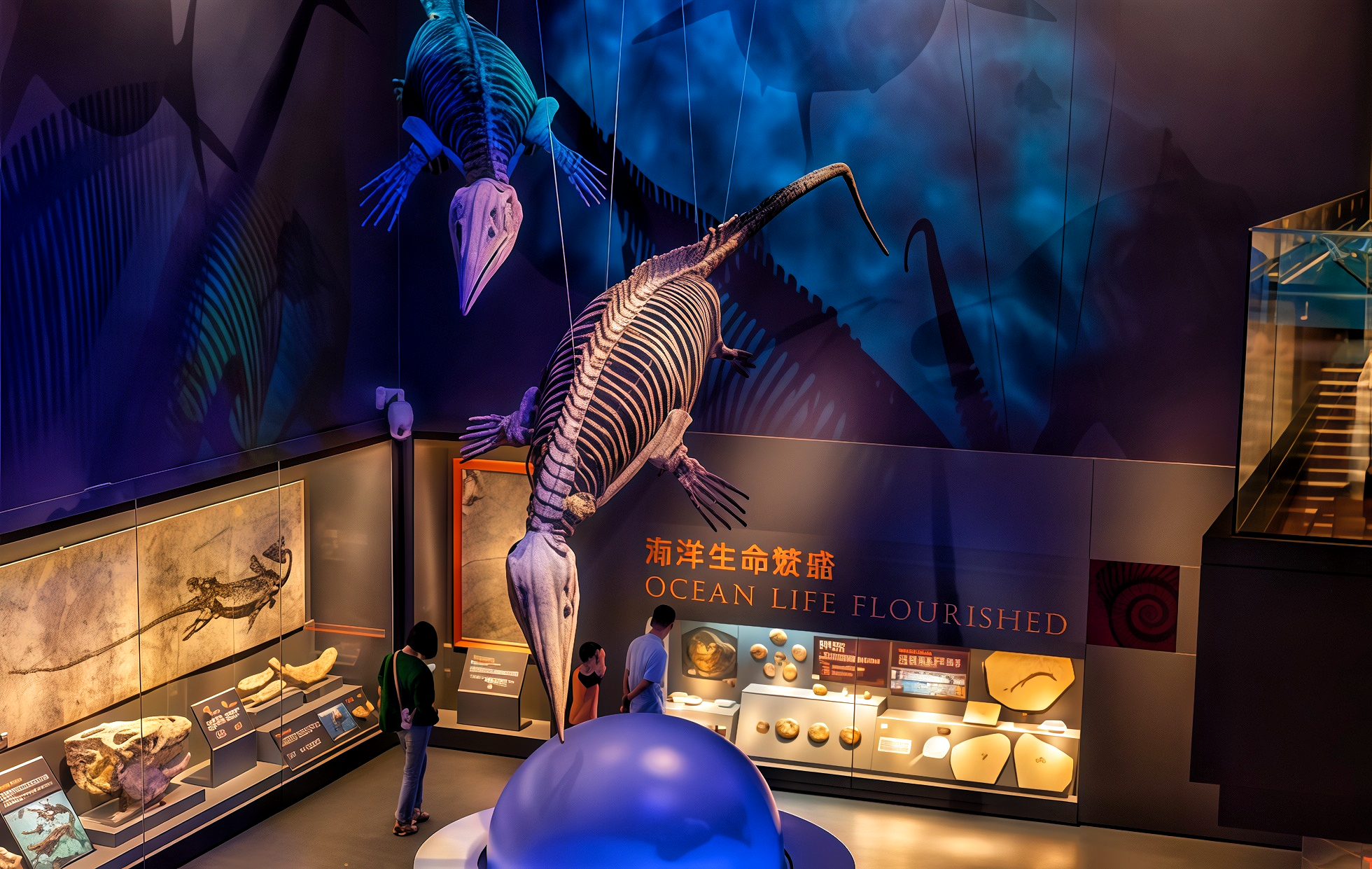
Stepping into "The Age of Dragons" gallery, visitors are immediately captivated by an 11-meter-long Ichthyosaur fossil—the largest specimen of its kind ever discovered in China. Ichthyosaurs were not dinosaurs, but rather marine reptiles fully adapted to life in the ocean, possessing a streamlined physique remarkably similar to that of modern dolphins. The gallery also showcases the fossilized skeletons of Plesiosaurs and Mosasaurs; collectively, these three groups are celebrated as the "Three Great Marine Reptiles of the Mesozoic Era." Of particular note is the Plesiosaur specimen on display, which boasts an exceptionally high degree of completeness—including a 100% intact skull—making it an extremely rare and invaluable find.
The Ocean Today: An Epic of Azure Life
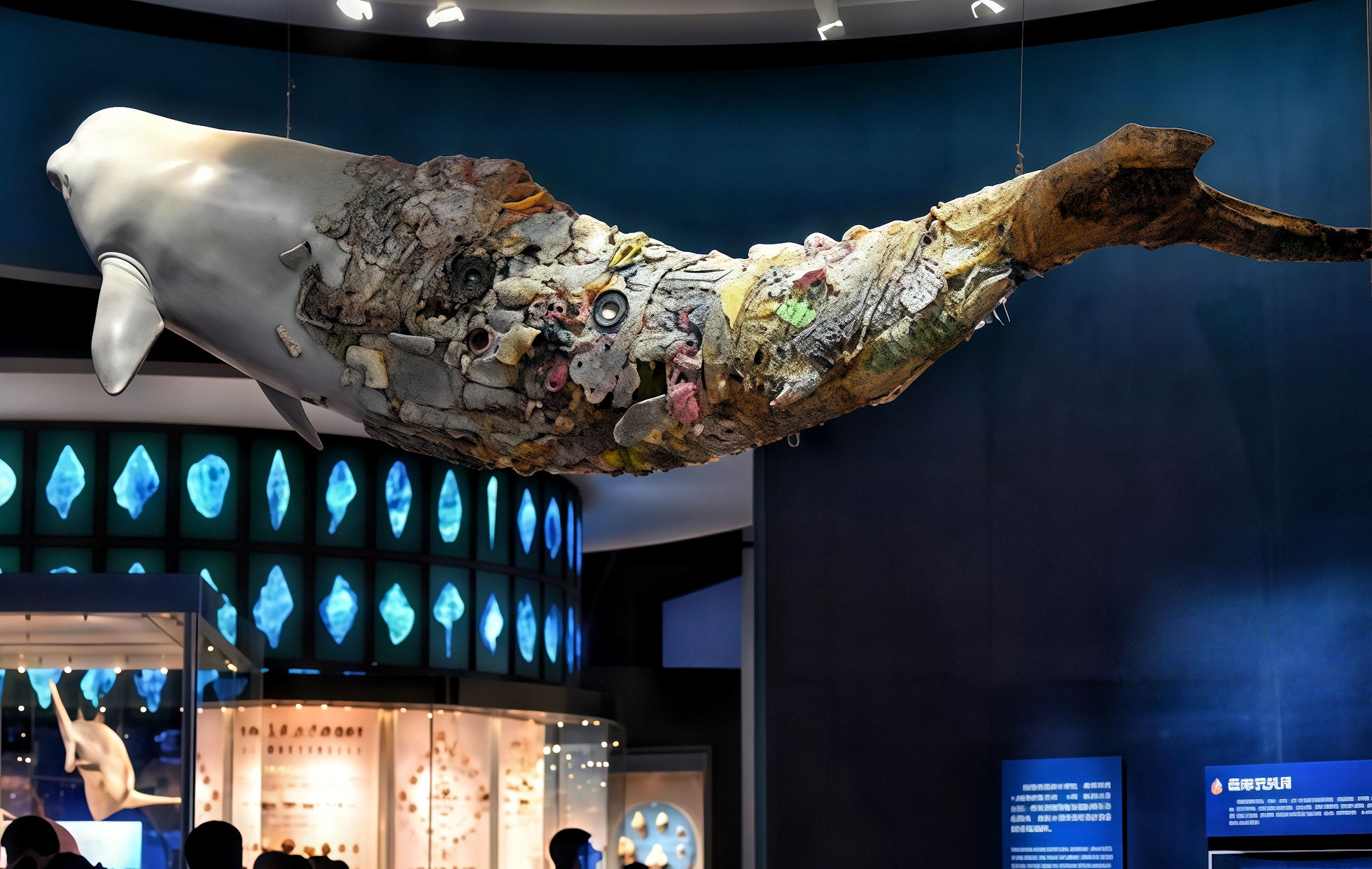
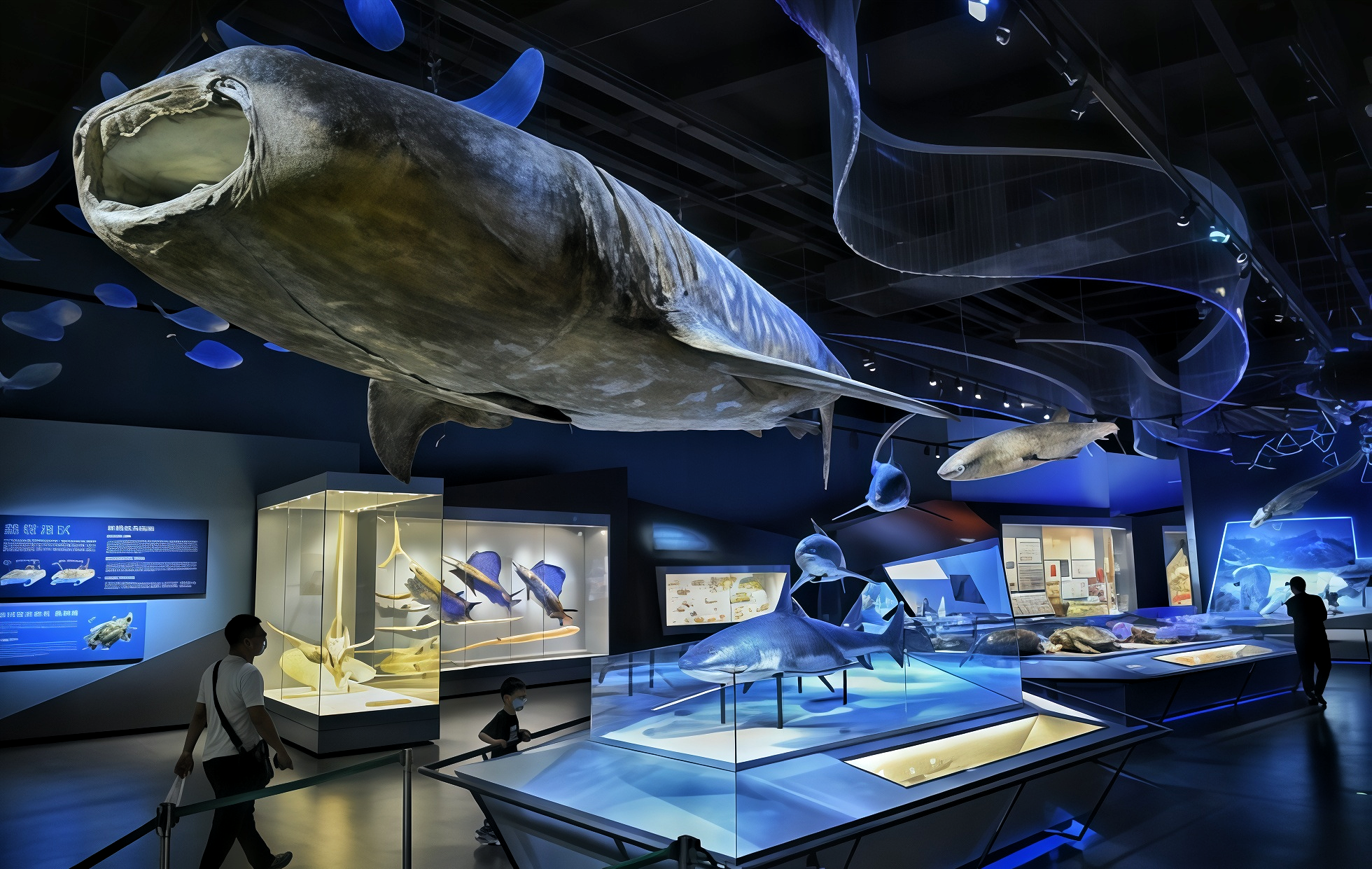
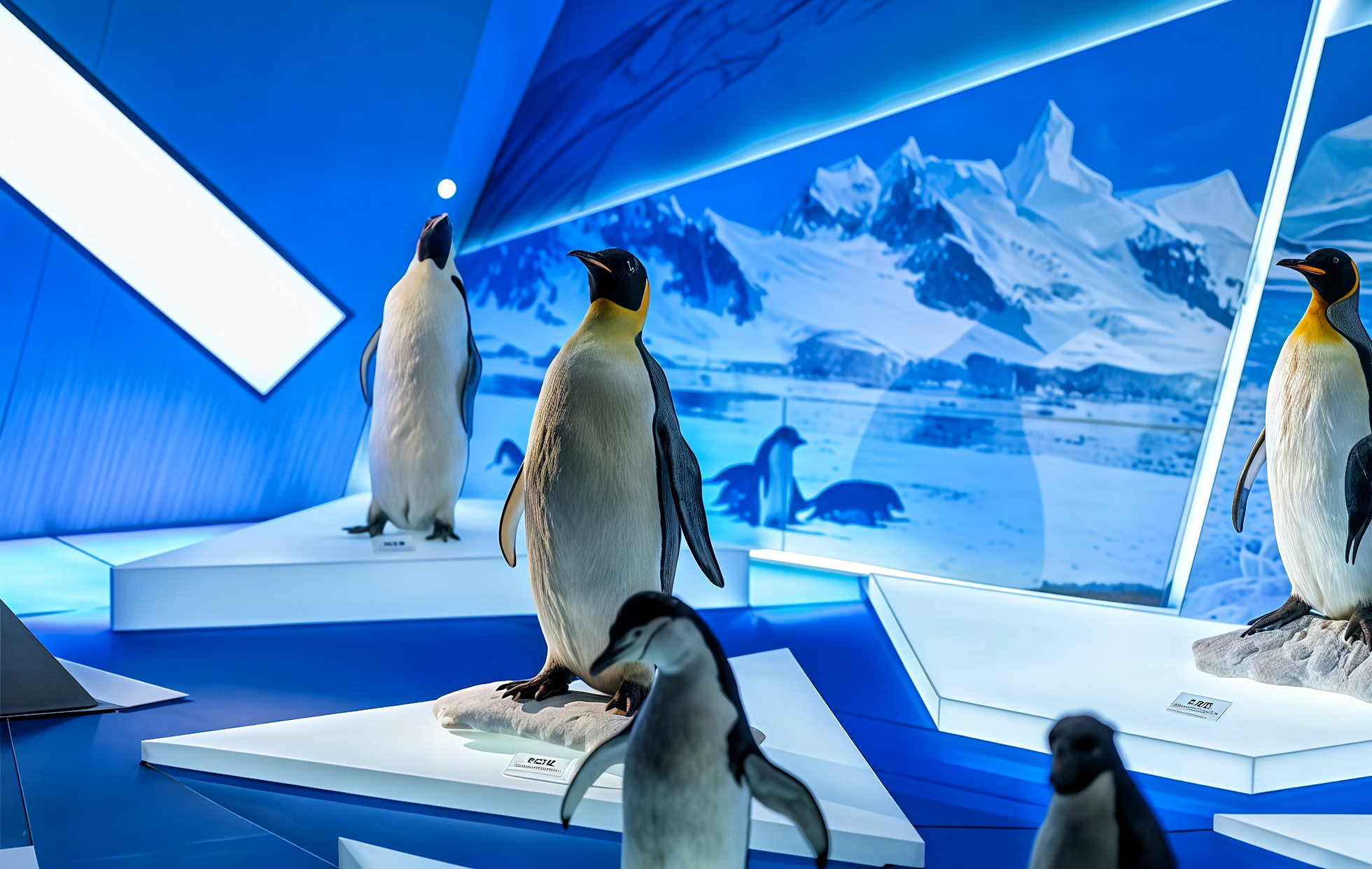
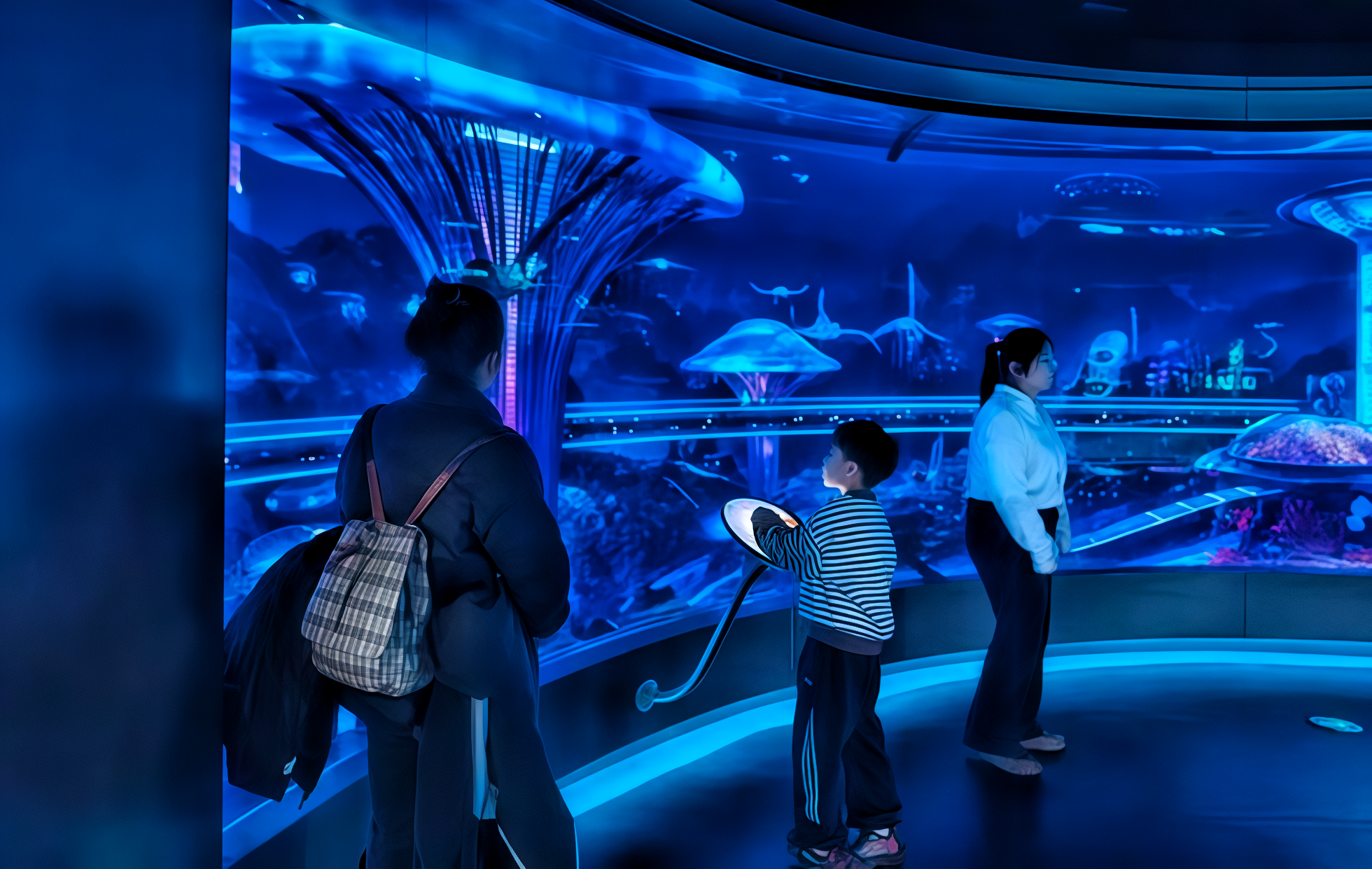
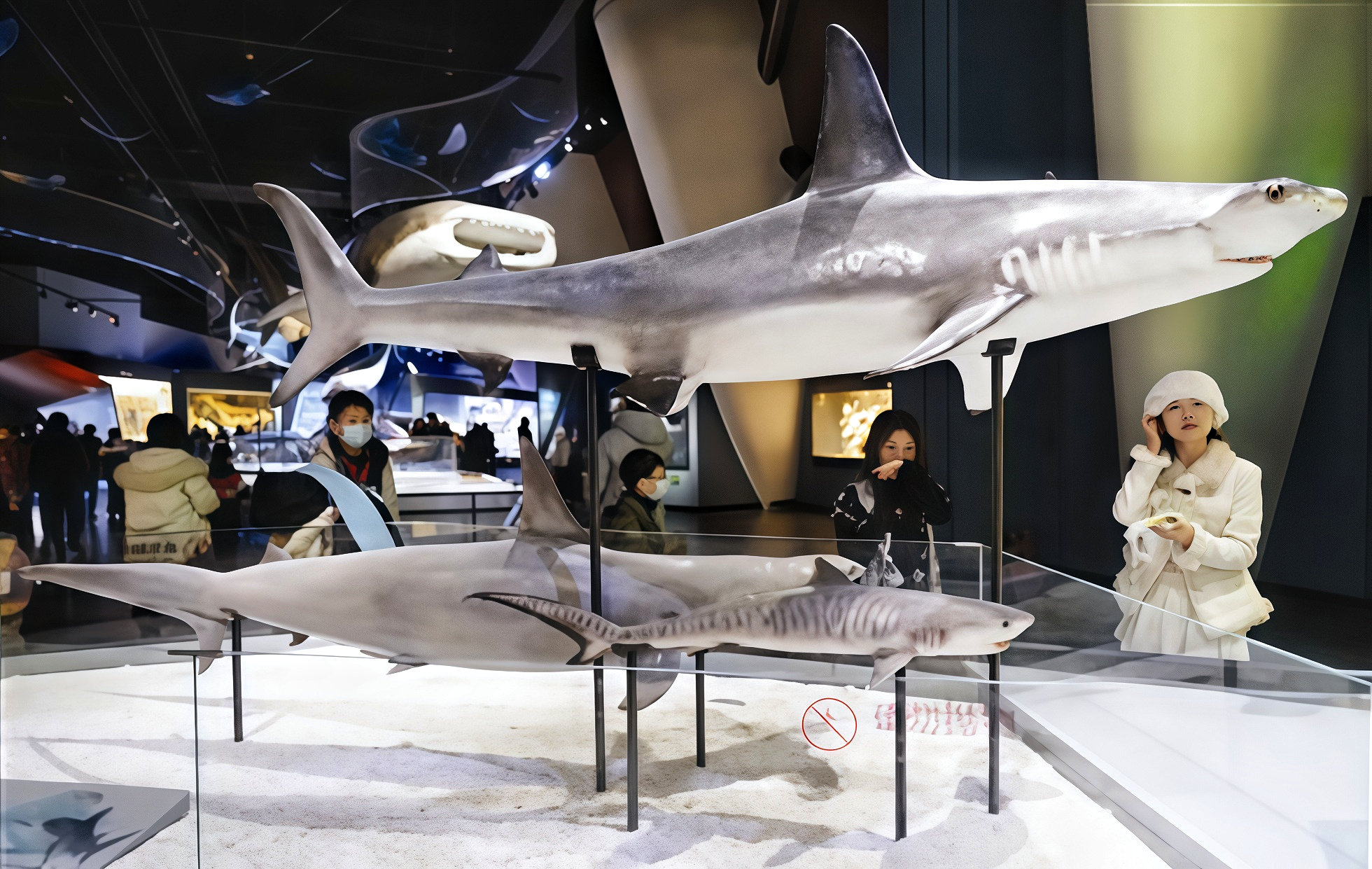
The "The Ocean Today" gallery houses a collection of over 6,000 marine biological specimens. Ranging from microscopic plankton to colossal marine mammals, this extensive collection paints a comprehensive and vivid picture of the ocean's diverse ecological landscape. The museum's signature treasures include:
- 9.4-meter Whale Shark Specimen: A rare and colossal whale shark specimen—one of the largest of its kind in China—that leaves visitors awestruck by the grandeur of marine life.
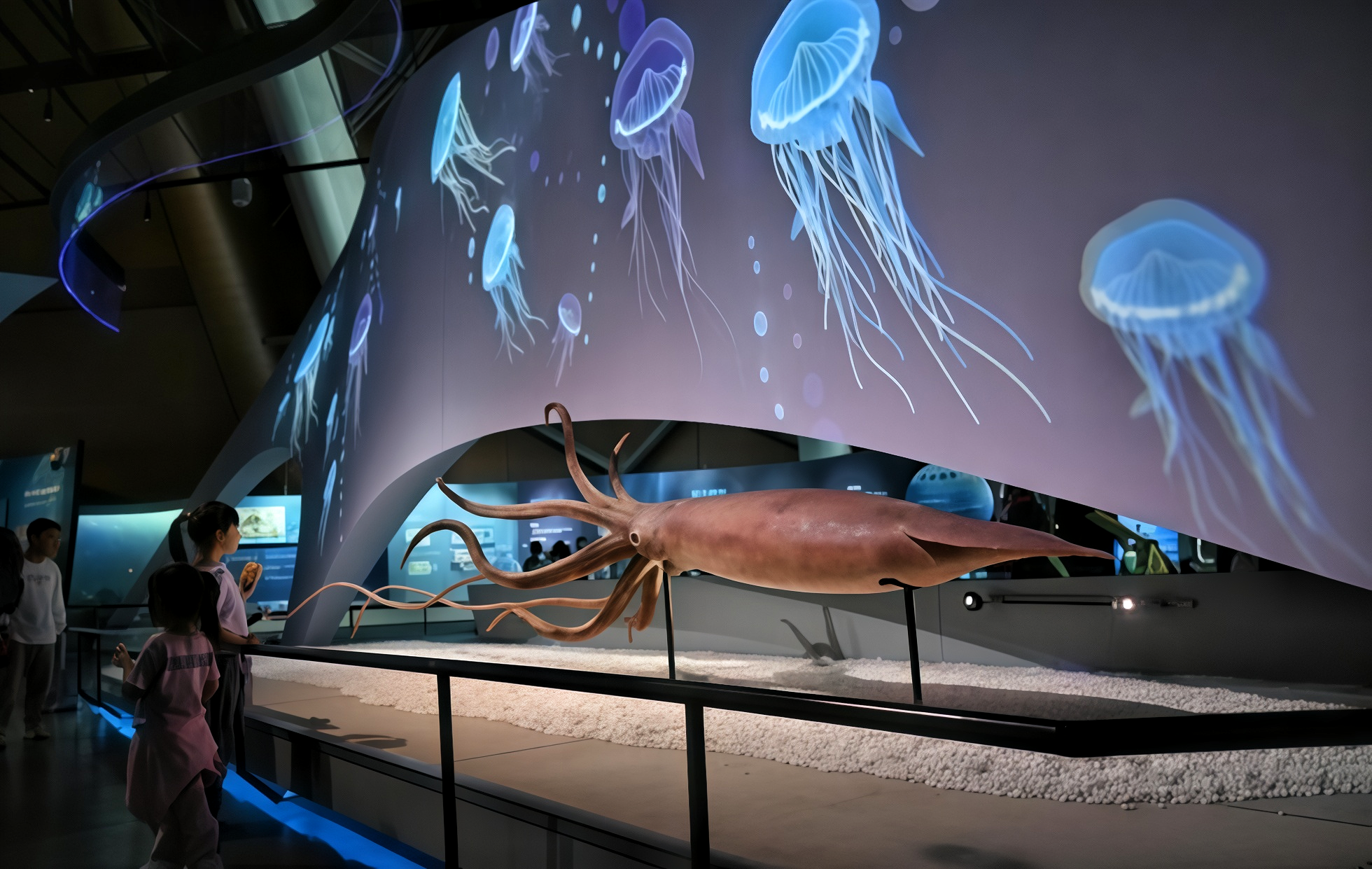
- Giant Squid Model: A lifelike recreation of this mysterious deep-sea behemoth.
- Relict Gull Specimen: A Class I protected bird species, serving as a living testament to the environmental improvements along the coastline of the Tianjin Eco-City.
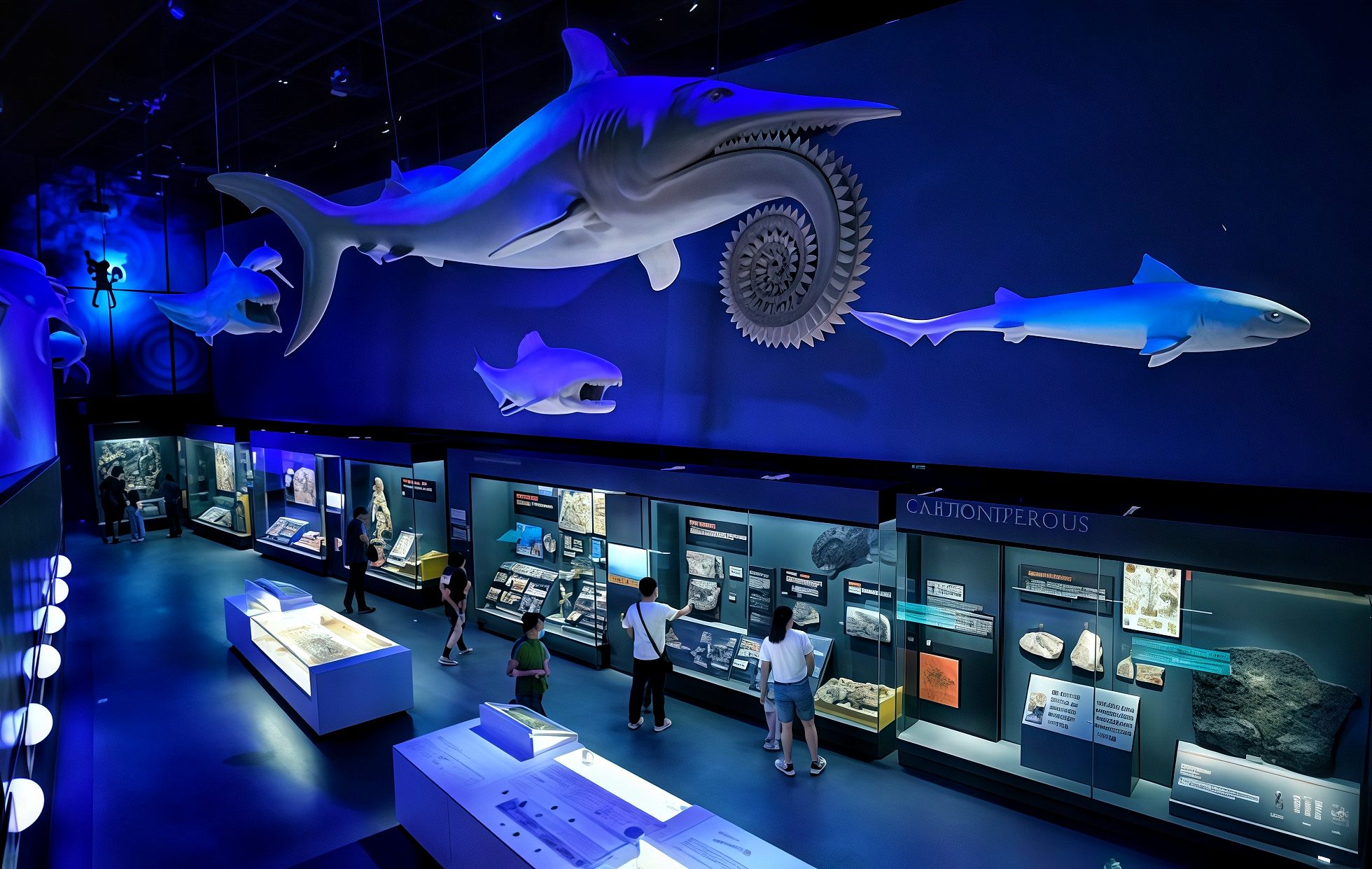
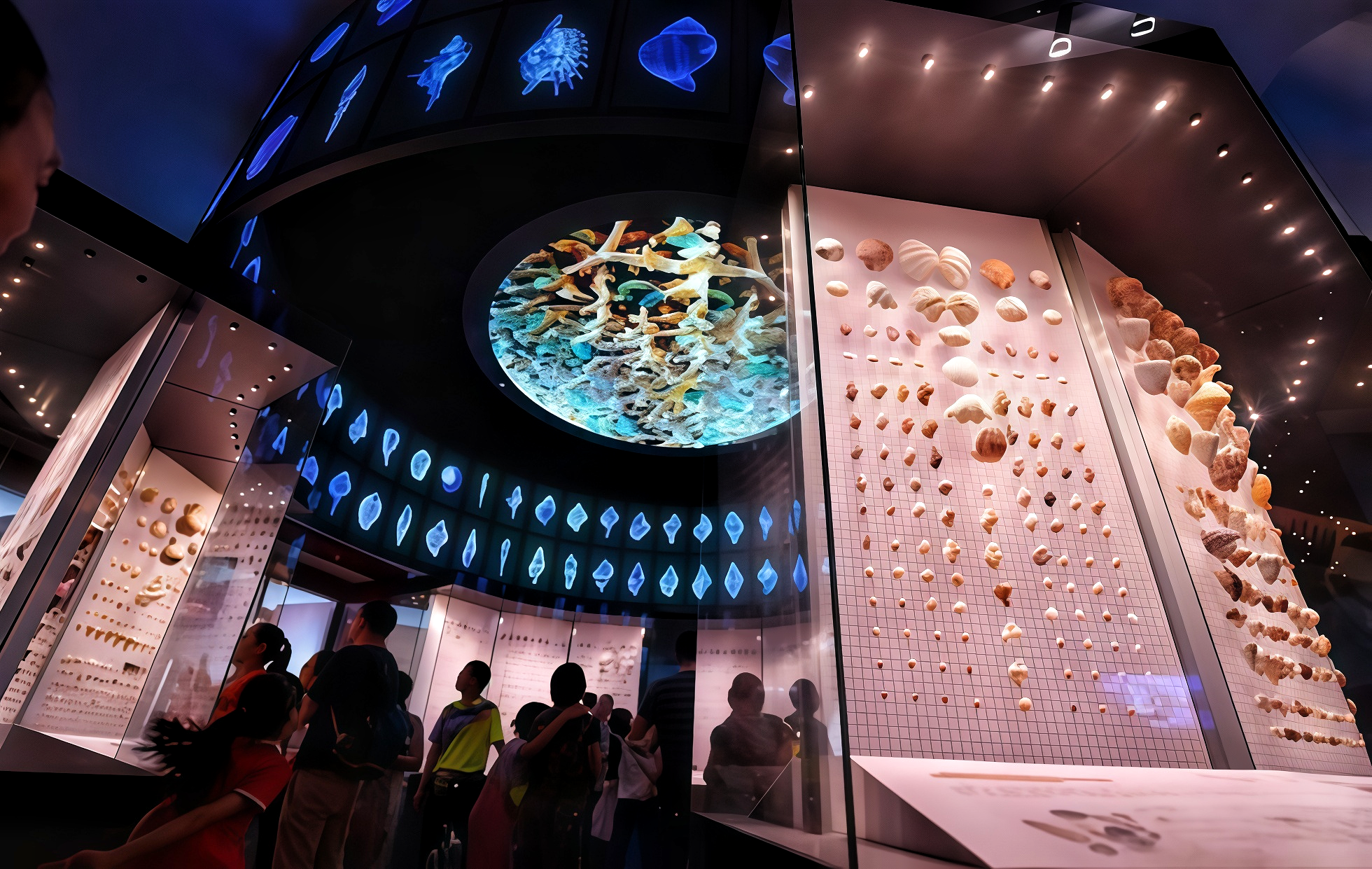
The Ancient Ocean: A Fossil Corridor Spanning Hundreds of Millions of Years
Here, visitors can trace the magnificent evolutionary journey of the ocean and life itself. Marine fossils from the Guanling Biota—along with the Longgong Wengronglu (a species of slit shell), a "living fossil" that bears witness to ancient geological shifts—all whisper the secrets of the primeval ocean. The display cases also feature the Chaohu Ichthyosaur fossil—one of the most primitive ichthyosaurs ever discovered globally—which holds immense significance for research into the origins of marine reptiles.
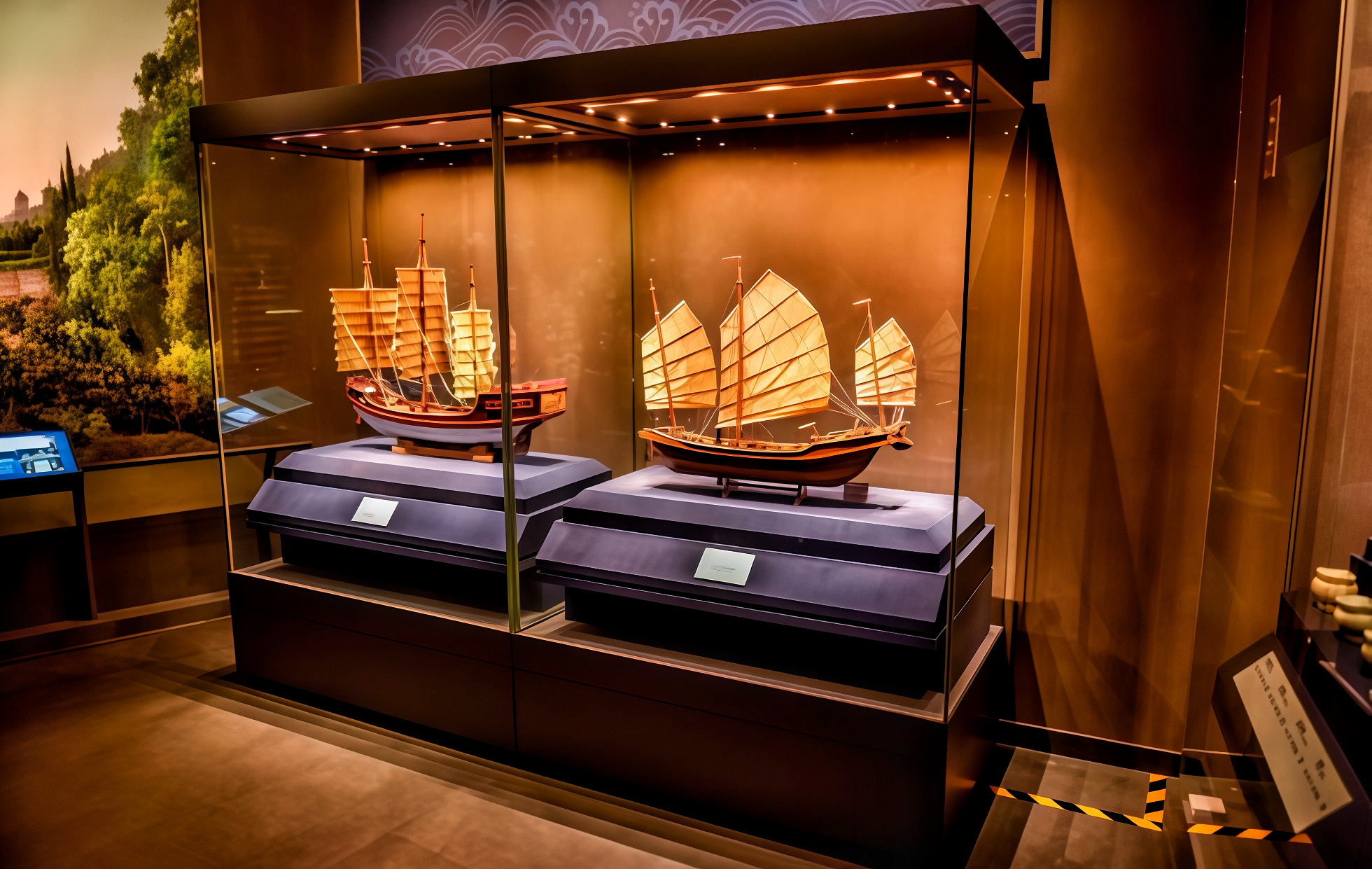
Chinese Maritime Civilization: The Millennium-Old Maritime Silk Road
- Tang Dynasty Dugout Canoe: One of the museum's "signature treasures," its sturdy hull bears the deep imprints of time, inviting visitors to imagine the ancient voyages of those who once braved the waves in such vessels.
- Reconstruction Model of a Song/Yuan Dynasty Fu Ship: An ancient sailing vessel that embodies the glory of the "Maritime Silk Road."
- The Zheng He Navigation Map: The world's oldest surviving nautical atlas, bearing witness to Zheng He's monumental voyages to the "Western Oceans."
- The Jiaolong Submersible Model: A modern Chinese deep-sea submersible that once set a world record for the deepest dive (7,062 meters) achieved by a manned operational submersible of its class.
From the humble dugout canoe to the high-tech Jiaolong, a dialogue spanning a thousand years of maritime exploration unfolds here in a truly breathtaking manner.
> Photography Tips:
> - Best "Check-in" Spots: The window seats overlooking the sea at the Maritime Café on the second floor, and the seaside lounge area on the first floor.
> - "Instagrammable" Angles: The 360-degree dome projection in the Starry Sky Theater, and the 3D storm surge simulation experience in the Marine Disaster Hall.
> - Best Time to Photograph the Exterior: Early morning or late evening, when the sunlight highlights the building's distinctive "flying fish" silhouette. ---