Humanistic Ingenuity—The Pinnacle of Stone Architecture
The architecture of Kaiyuan Temple is not only a carrier of faith but also a crystallization of human wisdom.
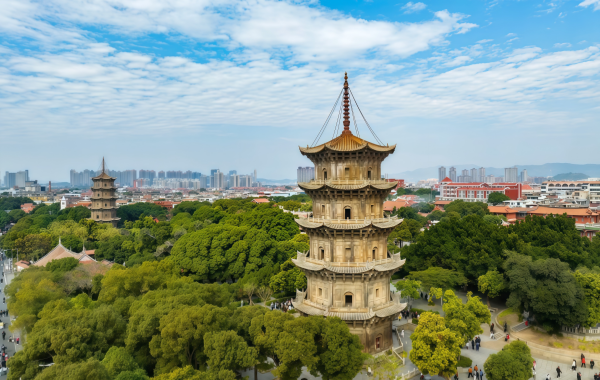
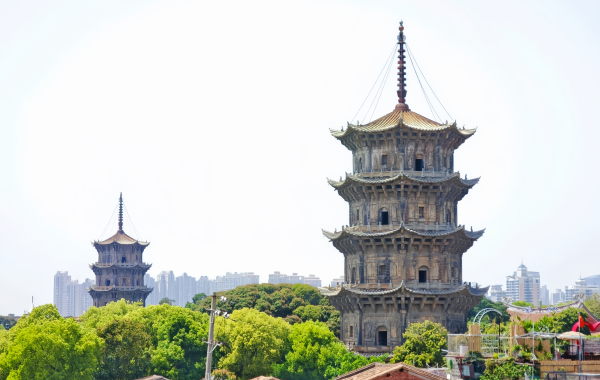
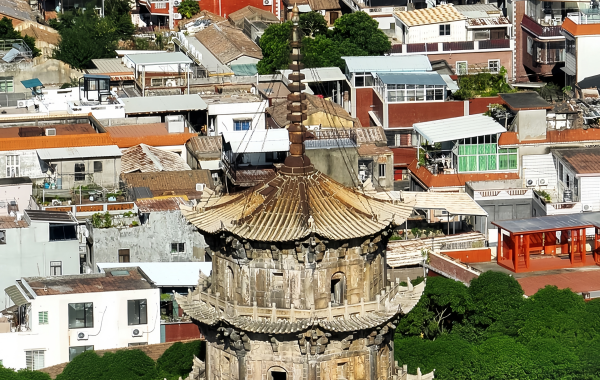
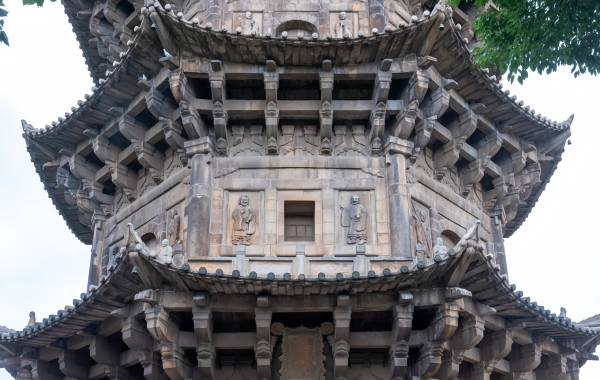
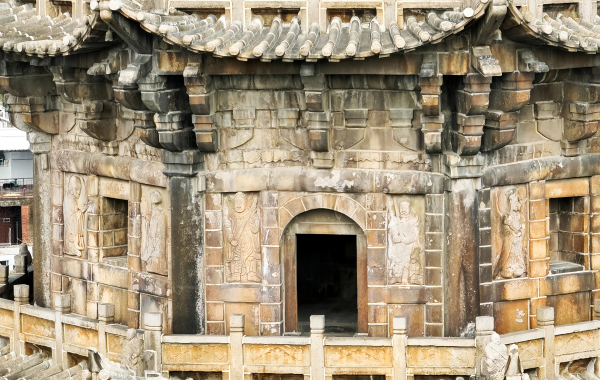
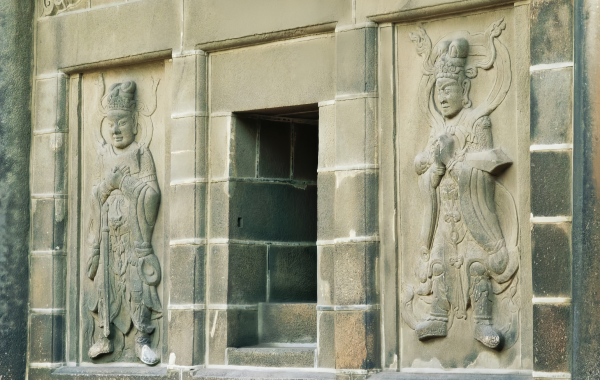
The East and West Pagodas(Zhenguo Pagoda and Renshou Pagoda):the soul landmarks of Kaiyuan Temple.These two octagonal,five-story,pavilion-style stone pagodas,imitating wooden structures,are about 200 meters apart.The eastern one,"Zhenguo Pagoda,"is 48.24 meters high;the western one,"Renshou Pagoda,"is 44.06 meters high.They are the tallest pair of Song Dynasty stone pagodas still standing in China and are also the city symbols of Quanzhou.The eastern pagoda was first built in the sixth year of the Xiantong era of the Tang Dynasty(865 AD),initially as a wooden pagoda,then converted to a brick pagoda during the Southern Song Dynasty,and later rebuilt as a stone pagoda.The western pagoda was first built in the second year of the Zhenming era of the Liang Dynasty(916 AD),similarly undergoing the evolution from wood to brick to stone.Looking up at the pagodas,80 bas-reliefs of Buddhas,Vajras,and Arhats,each with a unique expression,are lifelike.The Buddhist story bas-reliefs on the Sumeru pedestal are the pinnacle of Song Dynasty stone carving art.Having withstood a thousand years of wind and rain and earthquakes,the two pagodas still stand tall,truly deserving the title of"Kings of Stone Pagodas."Standing beneath the tower and gazing upwards,the devout faith and exquisite craftsmanship of the Song Dynasty artisans are palpable.
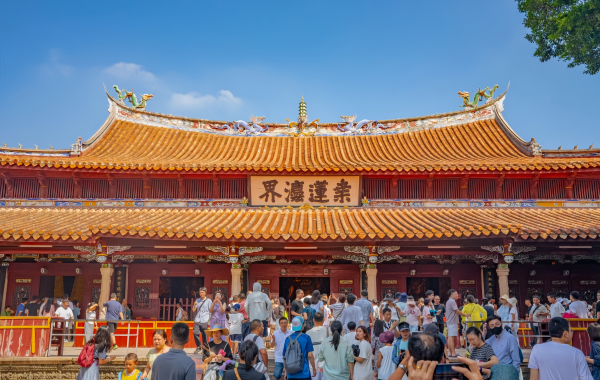
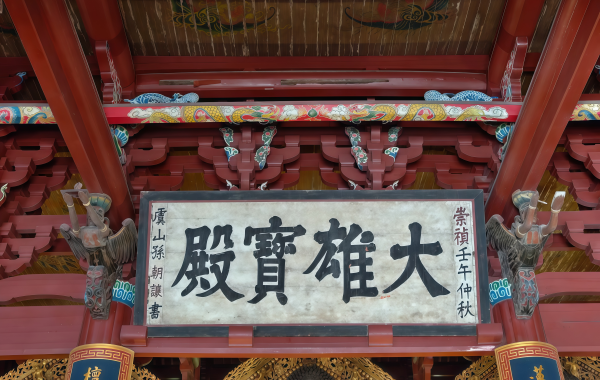
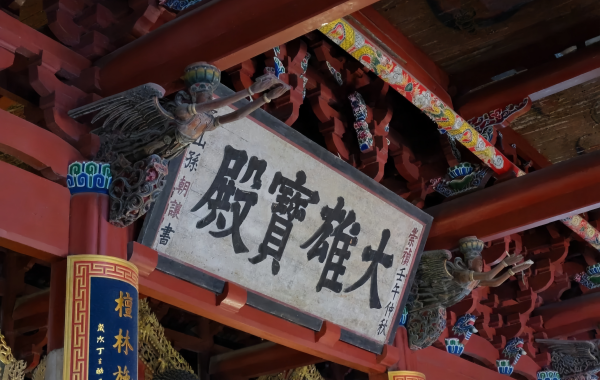
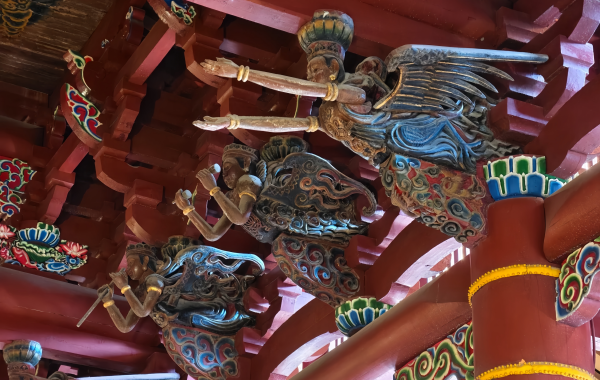
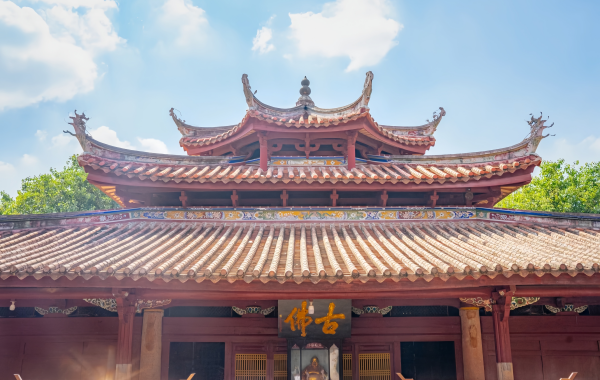
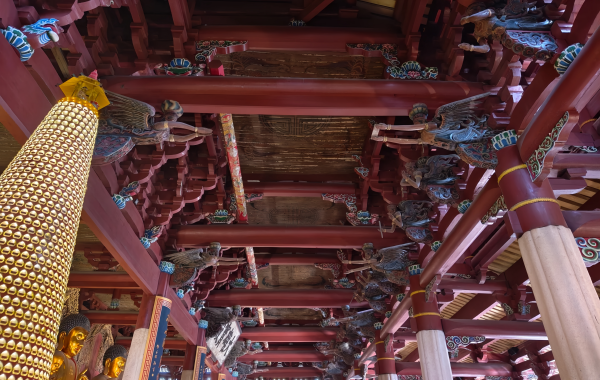
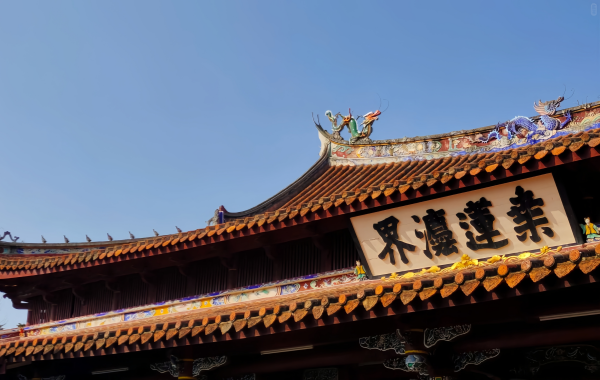
The Great Buddha Hall(Ziyun Hall):The main building of Kaiyuan Temple,it spans nine bays in width and six bays in depth.Supported by 86 massive,begonia-shaped stone pillars,it is commonly known as the"Hall of a Hundred Pillars."Above the hall is a large plaque inscribed"Sanglian Fajie,"echoing the legend of the temple's founding,"the mulberry tree blooms with a white lotus."Most breathtaking are the 24"Flying Apsaras"adorning the brackets—they combine Buddhist mythical birds,Christian angels,and Chinese apsaras in their forms,adorned with colorful ribbons,holding instruments such as the pipa,erhu,and xiao,dancing and singing gracefully,seemingly in flight.This fusion of diverse cultural elements in wood carving is rare in Chinese wooden architecture.
The Ganlu Ordination Platform:Behind the Great Buddha Hall lies one of the three major existing ordination platforms in China(along with Beijing's Jietai Temple and Hangzhou's Zhaoqing Temple).Originally built in the Song Dynasty,the existing structure was rebuilt during the Kangxi period of the Qing Dynasty.The altar's ceiling features a complex and exquisite caisson structure,resembling a spider's web or a brocade pattern.Around the altar,between the pillars and brackets,are 24 wooden sculptures of flying apsaras and musicians,echoing the main hall.At the top of the altar is a Ming Dynasty wooden seated statue of Vairocana Buddha,its lotus pedestal adorned with a thousand lotus petals,each petal carved with a small Buddha image—the craftsmanship is truly breathtaking.
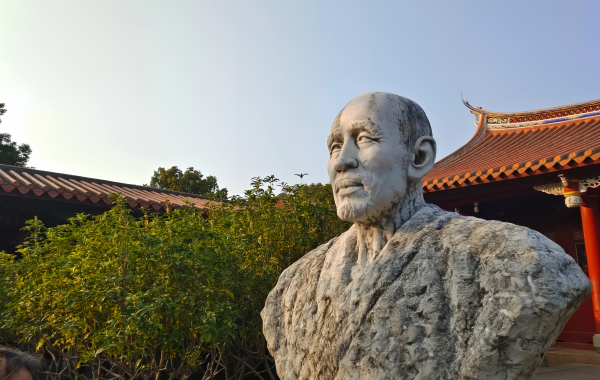
The Sutra Repository and the Hongyi Master Memorial Hall:The Sutra Repository houses precious Buddhist scriptures from the Song and Yuan dynasties,including fragments of the Tripitaka written in gold and silver ink by Wang Shenzhi,the King of Min during the Five Dynasties period,and the Lotus Sutra written in blood by the Yuan Dynasty monk Ruzhao.Master Hongyi(Li Shutong)resided at Kaiyuan Temple multiple times in his later years.The memorial hall displays the calligraphy,writings,and life story of this eminent modern monk,making it a must-see for understanding the complexities of life.
Photography Tips:
The best panoramic view is from the rooftop on the 3rd floor of the West Street Visitor Center,offering a simultaneous shot of the East and West Pagodas and the vibrant atmosphere of West Street.
Xiangfeng Lane is a classic spot for photographing the East Pagoda,where the ancient lane's red walls and stone pagoda create a picturesque scene.
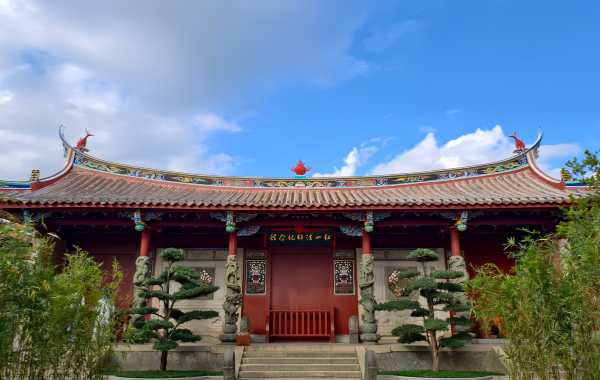
The red walls in front of the Mahavira Hall provide an excellent backdrop for portrait photography.
Early mornings or dusks,with their soft light,are the best times to capture the silhouettes of the twin pagodas.
Natural Charm–A Breathing Millennium Courtyard
Sanglian Ancient Site:The oldest"living relic"in the temple–the thousand-year-old mulberry tree that is said to have bloomed with white lotuses.Although its main trunk has branched into three,it remains lush and vibrant.Every spring and summer,the ancient mulberry tree sprouts green leaves,contrasting beautifully with the red walls and flying eaves,making it the best place to experience the atmosphere of a"millennium-old temple."
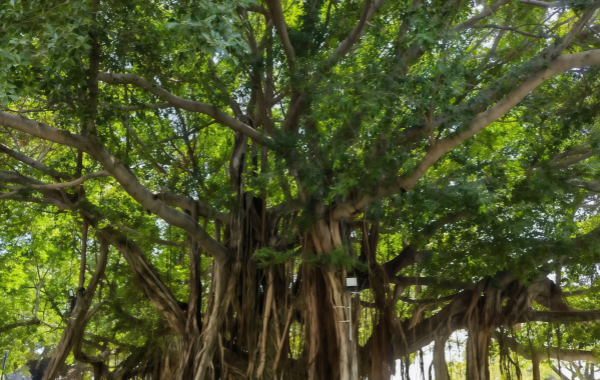
Ancient Banyan Trees and Worship Courtyard:Upon entering the mountain gate,towering ancient banyan trees,many hundreds of years old,line both sides of the worship courtyard.These banyan trees have aerial roots that reach the ground,their canopies providing a cool respite for pilgrims and tourists.Resting under the trees,watching the sunlight filter through the leaves and cast dappled shadows,listening to the interplay of chanting and birdsong—this is the perfect embodiment of Quanzhou's slow-paced lifestyle.
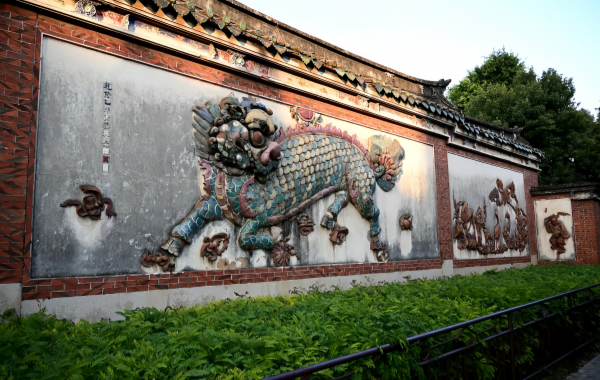
Lions and Stone Carvings:On the Sumeru pedestal of the platform in front of the Mahavira Hall,there are 72 sphinx-shaped stone reliefs.These are precious artifacts moved from a destroyed Yuan Dynasty Hindu temple during the Ming Dynasty reconstruction of the hall.These exotic reliefs are vivid testament to Quanzhou's status as a"world religious museum,"telling the story of the cultural exchange along the ancient Maritime Silk Road.
The charm of Kaiyuan Temple goes far beyond"seeing,"it lies in"experiencing."Here,there is no bustling commercial atmosphere,only a thousand years of tranquility and serenity.