Humanistic craftsmanship—A cultural corridor spanning a thousand years
Imitation Song Dynasty Ancient Street:Stepping into the bustling world of a Song Dynasty"grass market"
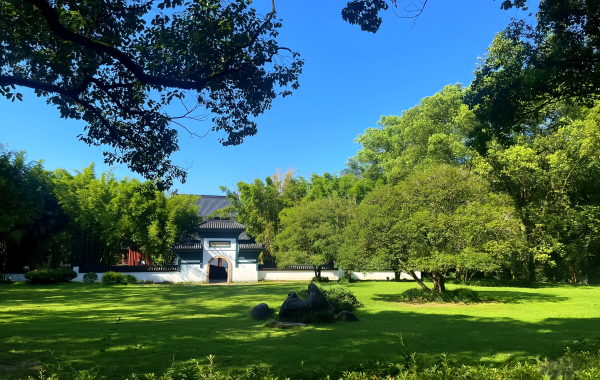
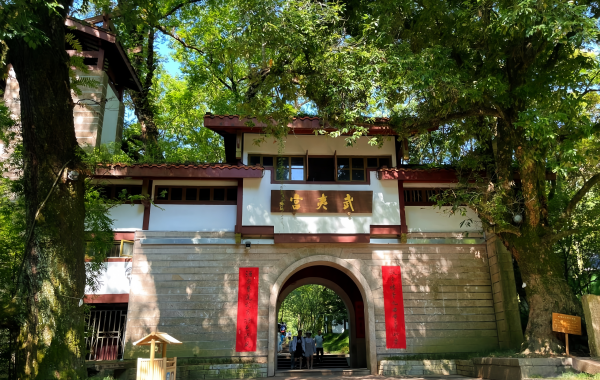
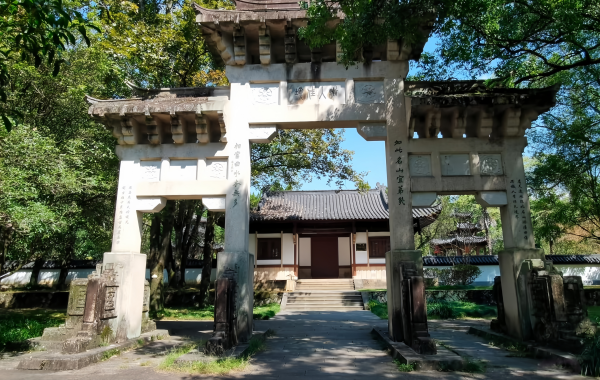
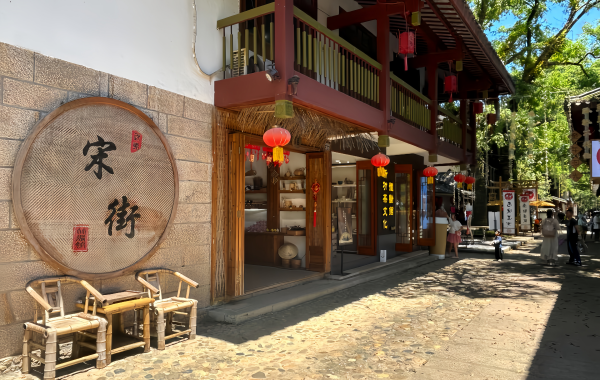
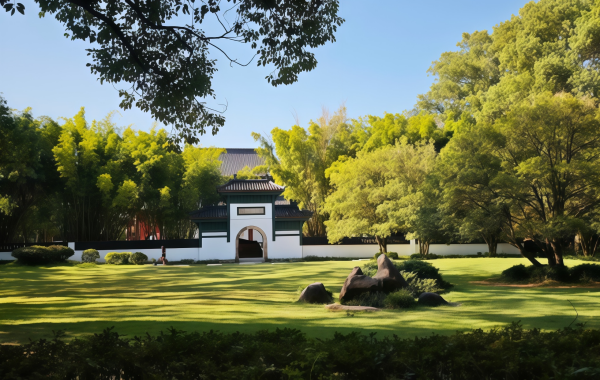
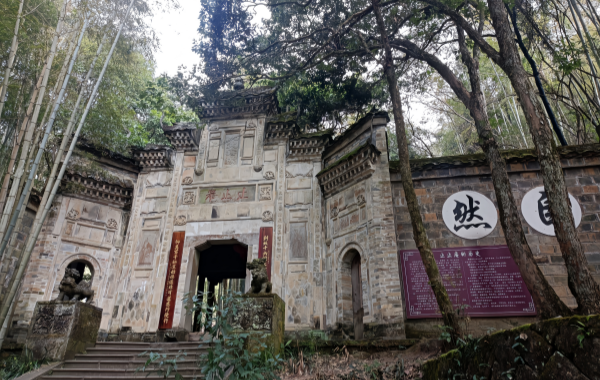
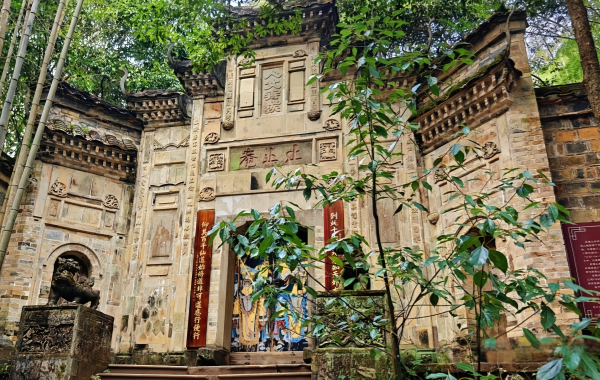
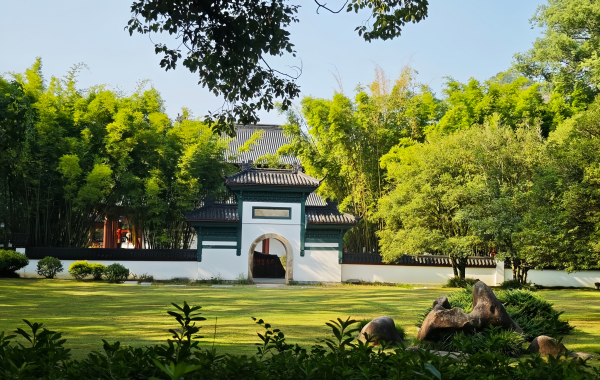
Located in the core area ofWuyi Palace,at the end of the Nine Bend Stream bamboo rafting journey,the Imitation Song Dynasty Ancient Street is a 300-meter-long north-south street.Designed by the renowned architect Yang Tingbao,it was restored and rebuilt starting in 1987,striving to reflect the architectural style of the Song Dynasty and the characteristics of local Wuyishan residences.The stone archway at the beginning of the street bears the inscription"Gradually Entering a Beautiful Scene,"and the ancient gate tower at the end of the street stands majestically.Strolling along the cobblestone path,one can see a series of buildings,including a teahouse,an ancient opera pavilion,Pengzu Mountain House,a rural village,a Gobi art museum,the Wuyishan Museum,and the Bidan Restaurant.The preserved old trees blend seamlessly with the new architecture,exuding an ancient charm.This place is not only a place for sightseeing and rest,but also a living space to experience the daily life of the Song Dynasty.
Wannian Palace(Zhu Xi Memorial Hall):The Spiritual Temple of the Master of Neo-Confucianism
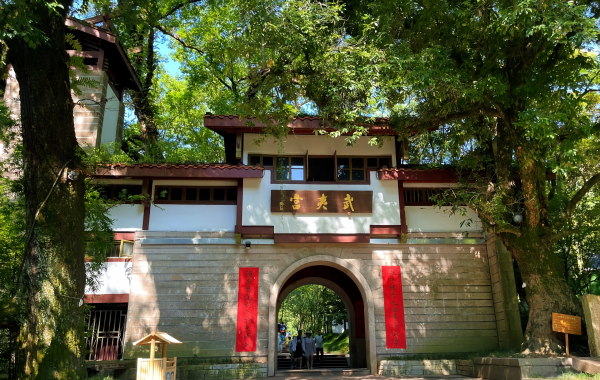
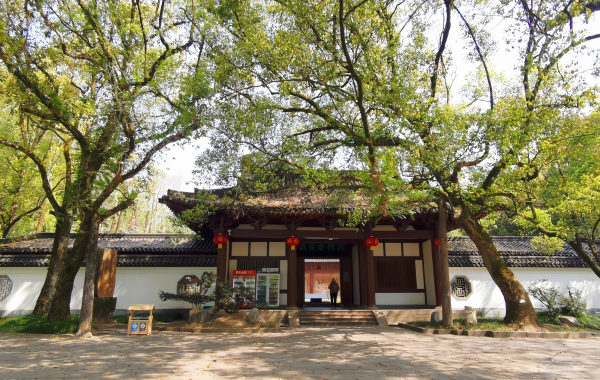
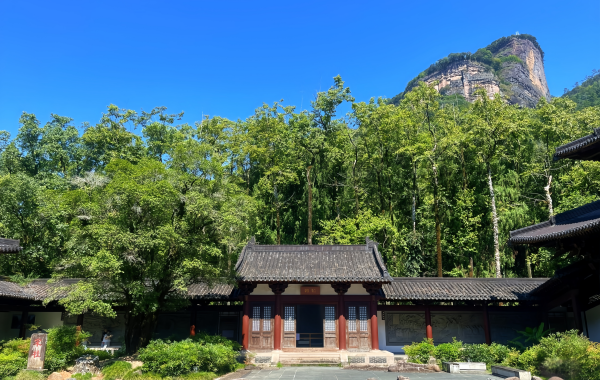
Wannian Palace is the main hall of Wuyi Palace,now converted into the Zhu Xi Memorial Hall.Two ancient osmanthus trees,some over a thousand years old,stand as living witnesses to the transmission of Zhu Xi's culture.The hall displays Zhu Xi's life story,his Neo-Confucian works,and related artifacts,telling visitors about the philosophical thought of this great Song Dynasty Confucian scholar—"investigating things to extend knowledge"—and his years of lecturing and writing in Wuyishan.Every Mid-Autumn Festival,a sacrificial ceremony is still held here,continuing the tradition of incense offerings for over a thousand years.
Sanqing Hall and Stele Inscriptions:A Dialogue Between Calligraphy and History
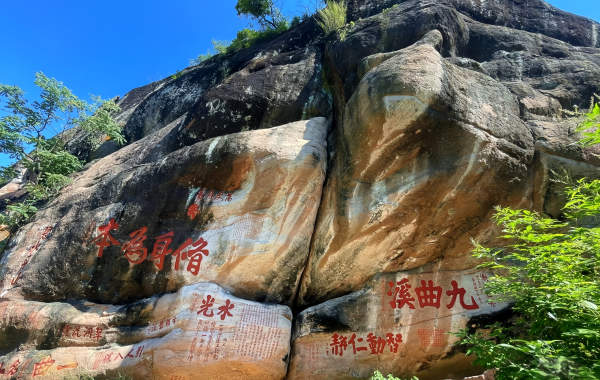
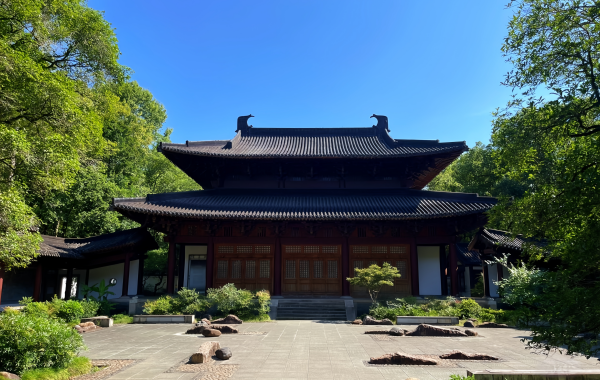
The Sanqing Hall is now the site of the International Lanting Academy.It houses four precious steles:the Zhongding Divine Path Stele,the Dongtian Immortal Abode Stele,the Ming Dynasty Gong Yiqing's Poem Stele,and the modern writer Guo Moruo's Poem Stele inscribed during his visit to Wuyi Mountain.These steles are a perfect combination of calligraphic art and historical memory,worthy of careful appreciation.
Liu Yong Memorial Hall:A Master of Ci Poetry's Nostalgia for Wuyi Mountain
Located on the north bank of the Jiuxi River,the Liu Yong Memorial Hall is a three-story pavilion-style building.A full-body bronze statue of Liu Yong stands on the lawn in front of the hall,facing Manting Peak and Dawang Peak.The hall includes a biography hall,a calligraphy and painting hall,a painting hall inspired by the ci poem"A Cloud Over Wushan,"and a painting hall inspired by the ci poem"The Song of Boiling the Sea,"comprehensively showcasing the artistic achievements of this master of the graceful style of Song Dynasty ci poetry.Behind the memorial hall,a small bamboo grove borders the Jiuxi River,a tranquil place for enjoying tea and reciting poetry.
Wuyishan Museum:A Historical Scroll from Hanging Coffins to the Han Dynasty City
Established in 1993,the Wuyishan Museum is located at the beginning of Songgu Street.It exhibits various cultural relics from Wuyishan,spanning from ancient times to the recent past,including actual hanging coffins,rainbow bridge planks,Neolithic stone adzes and axes,a model of the ancient Han Dynasty city of Chengcun,and artifacts unearthed from the Western Han Dynasty to the Qing Dynasty.The hanging coffin burial model and the actual hanging coffins are particularly impressive and are a must-see for understanding the ancient Yue culture of Wuyishan.
Gobi Art Museum:A Wonder of the Micro-Sculpture World
Located in the heart of Songgu Street,the Gobi Art Museum permanently exhibits hundreds of works by artist Gobi,including micro-sculptures,root carvings,paintings,and photographs.Among them,the"Micro-Sculpture Folding Fan of Three Hundred Tang Poems in Nine Literary Styles"is a masterpiece,perfectly blending Tang poetry with micro-sculpture art.
Photography Tips:
The best spot for ancient-style portrait photography is between the bluestone pavement and ancient buildings of Song Street,suitable for Hanfu(traditional Han clothing)photography;the two thousand-year-old osmanthus trees in front of Wannian Palace offer an ideal backdrop for photographing the combination of ancient trees and architecture;close-up shots of the inscriptions on the Sanqing Hall stele are needed to capture the details and showcase the beauty of the calligraphy;Lanyue Bridge offers excellent views of the reflections of the Nine-Bend Stream and Dawang Peak,with the best light in the early morning and evening.
Natural Wonders–The Beautiful Landscape Beneath Dawang Peak
Dawang Peak:The"King of the Immortal Valley"Dominating the Mouth of the Nine-Bend Stream
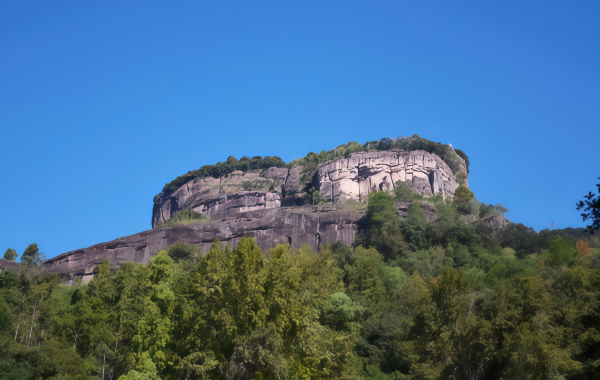
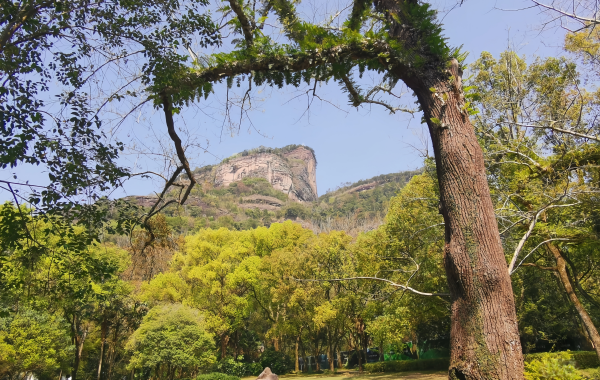
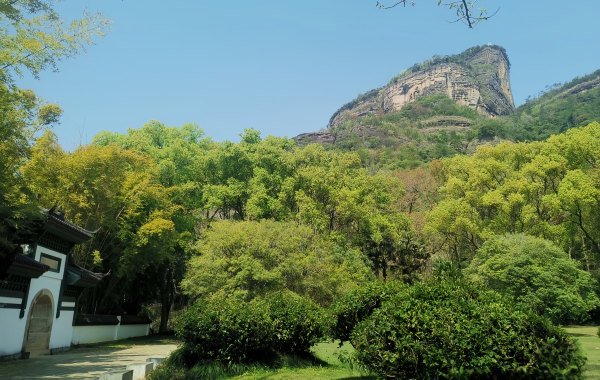
Dawang Peak,also known as Shamao Rock or Tianzhu Peak,is 530 meters above sea level.Its shape,broad at the top and tapering towards the bottom,is majestic and imposing,named for its resemblance to a royal hat.It stands majestically on the north side of the Nine-Bend Stream mouth,the first peak encountered upon entering the stream,and is known as the"King of the Immortal Valley."From its summit,one can overlook the Wuyi Mountains and their emerald waters,a picturesque scene.Midway up the peak are ancient sites such as Zhangxian Rock and Tianjian Pool,said to be the place where Zhang Gai of the Han Dynasty attained enlightenment.The path to the summit is a straight,narrow crevice,only about a foot wide,with stone steps carved into the middle,allowing one to climb the winding path.Xu Xiake of the Ming Dynasty called it one of the three most dangerous paths in Wuyi Mountain.
Manting Peak:The Han Dynasty Altar and the Legend of"Manting Banquet"
Manting Peak is located north of Dawang Peak.Legend has it that Emperor Wu of Han sent envoys to set up an altar here to worship the Lord of Wuyi.A folk tale of"Manting Banquet"also circulates—it is said that the Lord of Wuyi hosted a banquet for the villagers here,hence the name Manting Peak.Binyun Pavilion at the foot of the peak offers the best view of Manting Peak,and Lu Tingcan,a descendant of Lu Yu,the Tea Sage of the Tang Dynasty,wrote a poem praising it.
Nine-Bend Stream Estuary:A Landscape Painting at the End of the Bamboo Rafting Trip
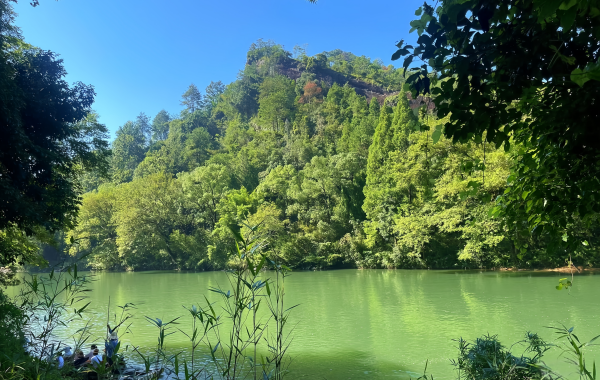
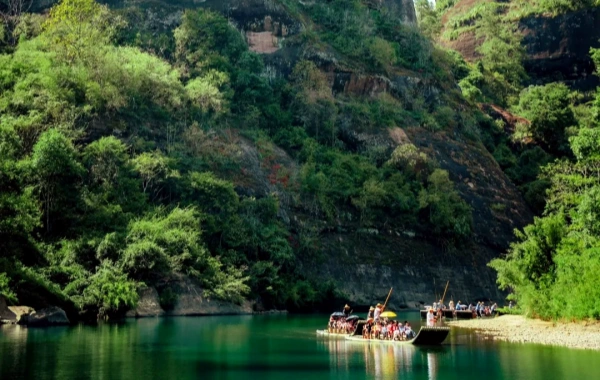
Wuyi Palace faces the mouth of the Nine-Bend Stream,marking the end of the bamboo rafting trip on the Nine-Bend Stream.The crystal-clear stream reflects the majestic Dawang Peak,creating a classic scene of"emerald waters and crimson mountains."After the bamboo rafts dock,visitors can rest,enjoy a cup of Wuyi rock tea,and quietly appreciate the beauty of the landscape.
Dragon Wells and Immortal Footprints:Natural Wonders in an Ancient Temple
There are two dragon wells,one square and one round,on either side of the Wuyi Palace gate,both natural stone springs.Historical records state that during droughts,people would draw water to pray for rain,and the prayers were always answered.On the lawn beside the dragon wells,there is a large,foot-shaped grass depression,said to be the footprint left by an immortal who came to offer sacrifices,adding a touch of mystery to this thousand-year-old temple.