The Potala Palace: A Journey to the Snowy Sanctuary on the "Roof of the World"

The Potala Palace: A Journey to the Snowy Sanctuary on the

Overview: A Millennia-Old Palace-Fortress Standing Atop the Red Mountain

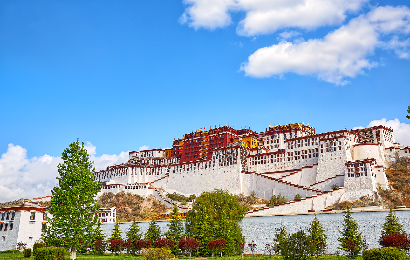
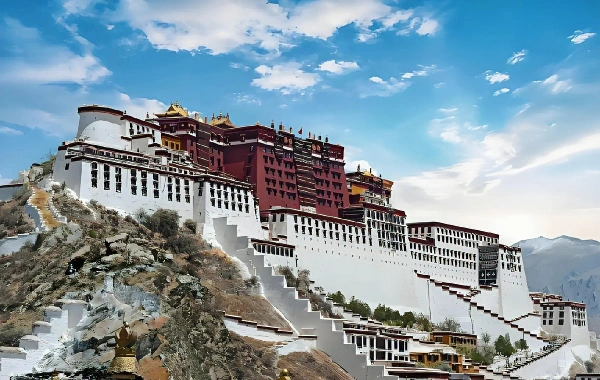
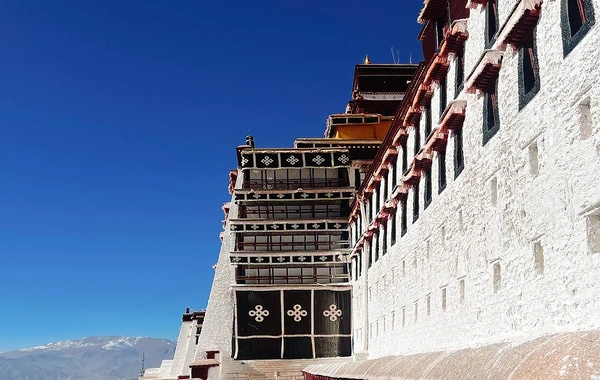
The Potala Palace is situated atop Marpori (the Red Mountain) in the heart of Lhasa, Tibet Autonomous Region. Standing at an elevation of over 3,700 meters, it is the world's highest and most magnificent architectural complex, seamlessly integrating the functions of a palace, a fortress, and a monastery.

Key Highlights at a Glance

Distinctions: UNESCO World Heritage Site / The World's Highest Palace

Core Experiences: Paying homage at the Stupa of the 5th Dalai Lama; strolling through the East Sunshine Hall (Dong Riyangdian) of the White Palace; wandering through the "Jewel Garden" of Norbulingka.

Suggested Visit Duration: 2–3 hours (Potala Palace only); 1 day (Potala Palace + Jokhang Temple + Barkhor Street); 1.5 days (including Norbulingka).

Address: No. 35 Beijing Middle Road, Chengguan District, Lhasa, Tibet Autonomous Region.

  • The Potala Palace: A Journey to the Snowy Sanctuary on the
  • The Potala Palace: A Journey to the Snowy Sanctuary on the
  • The Potala Palace: A Journey to the Snowy Sanctuary on the
  • The Potala Palace: A Journey to the Snowy Sanctuary on the

Origins: Songtsen Gampo’s Grand Vision and the Center of Theocratic Rule

Furong Ancient Town Furong Ancient Town Furong Ancient Town

The Initial Construction on the Red Mountain—Songtsen Gampo and Princess Wencheng’s Millennial Covenant

The story of the Potala Palace begins in the 7th century AD. After moving his capital to Lhasa, Songtsen Gampo—the 33rd King of the Tubo Dynasty—commissioned the construction of a nine-story palace complex comprising a thousand chambers atop the Red Mountain. He named it the "Red Mountain Palace." According to Tibetan historical records, this early fortress featured "three concentric walls on the exterior and a thousand chambers within," serving as the political epicenter of the Tubo Dynasty. The life-sized statue of the 12-year-old Siddhartha Gautama—brought to Tibet by Princess Wencheng—was originally enshrined within these very walls.

However, this inaugural palace-fortress was destined for a turbulent fate. In the 9th century AD, the Tubo Dynasty collapsed, and the Red Mountain Palace gradually fell into ruin due to lightning strikes, fires, and the ravages of war. For the eight centuries that followed, Lhasa ceased to be the political capital of Tibet. Although the Red Mountain Palace occasionally served as a venue where high-ranking lamas from various schools of Tibetan Buddhism gathered to expound upon the scriptures, it never truly regained its former glory. 1.2 Reconstruction in an Era of Prosperity—The 5th Dalai Lama and the Ganden Phodrang Regime

In 1642, with the support of Gushi Khan of the Khoshut tribe of the Mongols, the 5th Dalai Lama, Ngawang Lobsang Gyatso, established the Ganden Phodrang regime; Lhasa was thus restored as the political, religious, economic, and cultural hub of Tibet. In 1645, the 5th Dalai Lama decided to undertake the reconstruction of the Potala Palace. Three years later, the main structure of the White Palace was the first to be completed, and the seat of the Dalai Lama's government was relocated from Drepung Monastery to the Potala Palace. Thereafter, the Potala Palace served as the residence and venue for religious and political activities for successive Dalai Lamas.

Following the passing of the 5th Dalai Lama, the Desi (Regent) Sangye Gyatso presided over the construction of the Red Palace—centered around the reliquary hall of the 5th Dalai Lama—between 1690 and 1694; this undertaking essentially established the Potala Palace's current scale. Subsequently, successive Dalai Lamas continued to add to the complex; the construction of the Potala Palace was not fully completed until 1936, with the finishing of the reliquary hall of the 13th Dalai Lama. From the mid-17th century until 1959, the Potala Palace remained the center of Tibet's unique system of combined religious and political governance.

> Dive Deeper: Explore More Cultural Heritage Sites on the "Roof of the World" >>Gulong Gorge

Must-See Wonders: A Pilgrimage Through Architecture, Reliquary Stupas, and Murals

Furong Ancient Town Furong Ancient Town Furong Ancient Town Furong Ancient Town Furong Ancient Town Furong Ancient Town

Architectural Marvels—The Symphony of the White Palace and the Red Palace

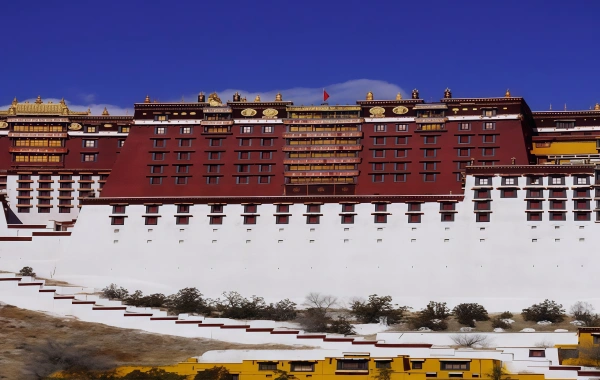
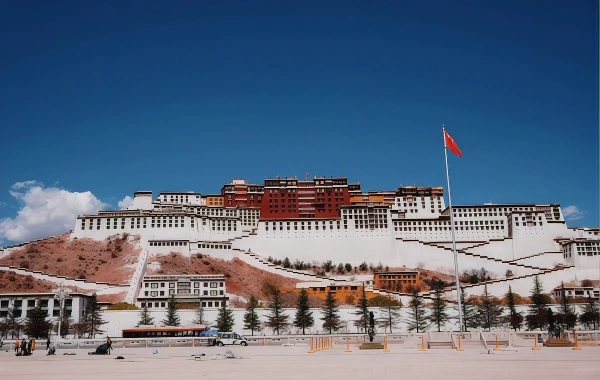
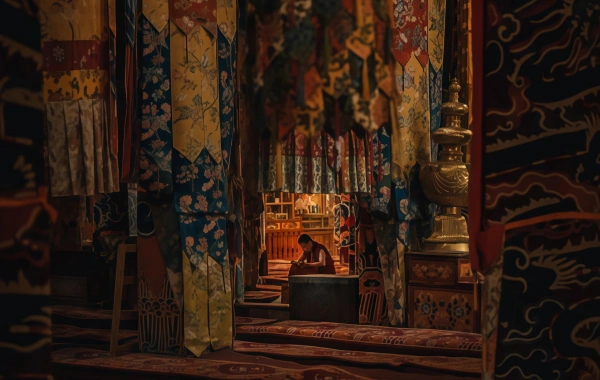
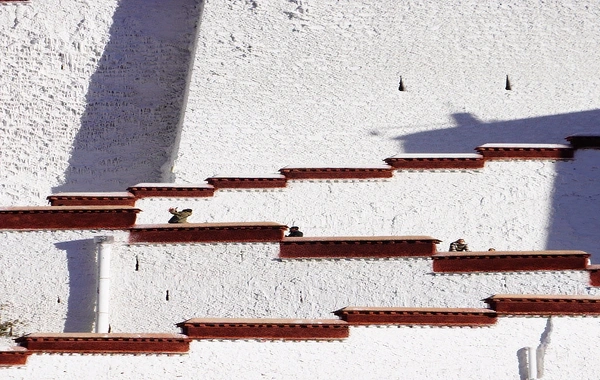
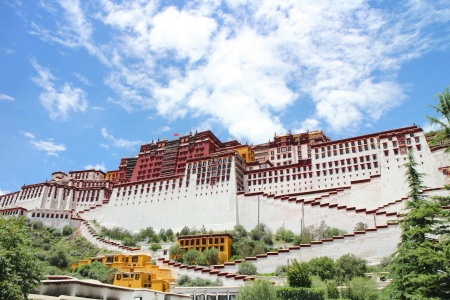
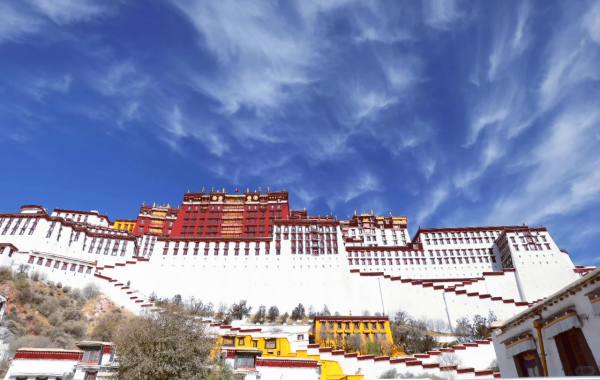
The grandeur of the Potala Palace is, first and foremost, embodied in the architectural wisdom demonstrated by its construction directly against the mountainside. The palace's exterior walls range in thickness from 2 to 5 meters; its foundations are embedded directly into the bedrock, and the walls themselves are constructed entirely from granite, resulting in a structure of astonishing solidity. The entire complex comprises the White Palace to the east, the Red Palace in the center, and various ancillary structures; it stands 13 stories high on the exterior (containing 9 internal levels) and reaches a total height of 115.7 meters. The White Palace served as the Dalai Lama's winter residence and also housed the administrative offices of the former local government of Tibet. Located on the top floor of the White Palace, the East and West Sun Palaces served as the Dalai Lama's living quarters, study, and scripture halls. The interiors are exquisitely furnished, and the walls are adorned with murals depicting significant events in Tibetan history. From the windows here, one can enjoy a panoramic view of the entire Lhasa River Valley.

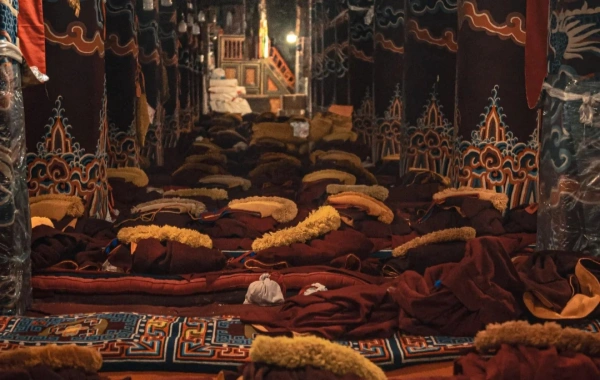
The Red Palace is considered the spiritual heart of the Potala Palace; it is primarily dedicated to housing Buddhist shrines and the stupas (reliquary tombs) of the successive Dalai Lamas. The most prominent structures within the Red Palace are the halls containing the stupas of the various Dalai Lamas, among which the stupa of the Fifth Dalai Lama is the most awe-inspiring. This particular stupa consumed 3,721 kilograms of gold and is inlaid with tens of thousands of gemstones; its exterior is sheathed in gold leaf and studded with countless jewels, standing as a pinnacle of traditional Tibetan gold and silver craftsmanship.

In front of the palace stands a towering white wall known as the "Buddha-Displaying Terrace," measuring approximately 30 meters in height and 20 meters in width. On major Buddhist festivals according to the Tibetan calendar, a colossal thangka (religious tapestry) depicting the Buddha is unfurled here, creating a truly spectacular scene.

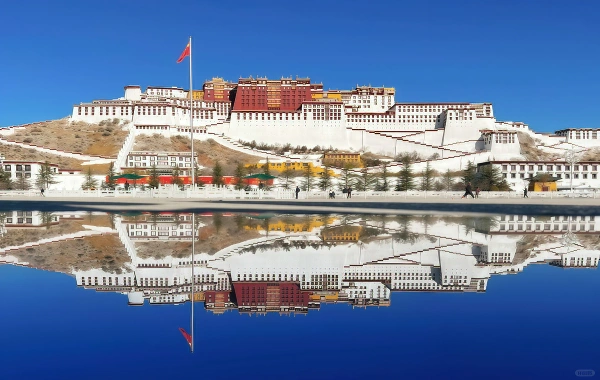
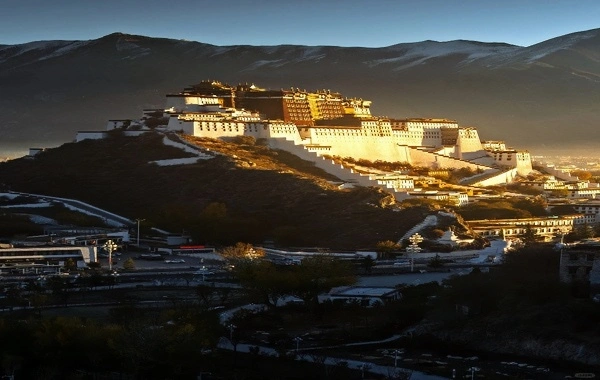
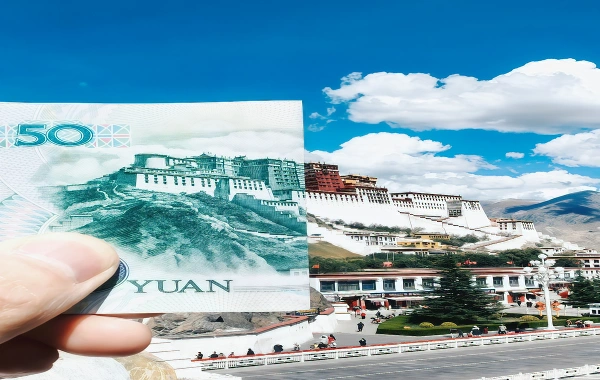
> Photography Tip: The best vantage point for capturing a panoramic view of the Potala Palace is the Yaowang Mountain (Chagpori) Viewing Platform—the very spot where the iconic image featured on the 50-RMB banknote was taken. The lighting is softest during the early morning and late evening hours; in winter, particularly just after a snowfall when the skies clear, the contrast between the palace's red walls, white roofs, and the azure sky creates a scene of extraordinary magnificence. Reflections of the palace can also be captured from the banks of the artificial lake located within the Potala Palace Square.

Murals and Cultural Artifacts—Tibetan History on the Walls

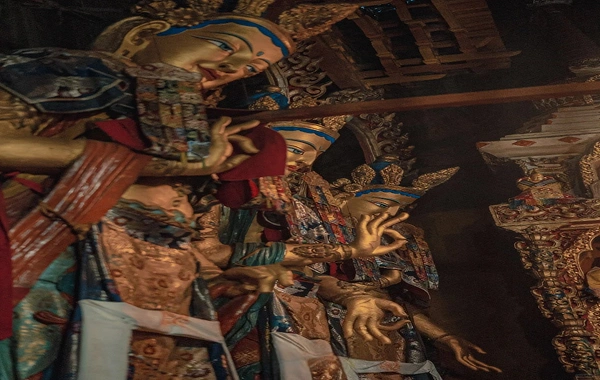
The Potala Palace is not merely an architectural marvel; it is also a vast repository of Tibetan culture. Housed within its walls are tens of thousands of precious items, including historical artifacts, religious ritual implements, thangkas, sculptures, stupas, and ancient scriptures.

Mural Art: The walls of the Potala Palace's halls, vestibules, and corridors are entirely covered with murals; the second floor of the Great West Hall alone features 698 individual murals. The subject matter of these murals is incredibly diverse, ranging from Buddhist parables and religious mythology to depictions of historical figures and local customs, as well as secular themes such as sports and architecture. Among these, the most renowned is undoubtedly the Painting of Princess Wencheng’s Entry into Tibet, which vividly recreates the historical scene of Princess Wencheng’s arrival in Lhasa from Chang'an in 641 AD.

Treasures of Scripture: The Potala Palace houses a vast collection of Buddhist scriptures, encompassing everything from the Kangyur and Tengyur canons to texts on medicine, astronomy, calendrical calculation, and the "Ten Sciences." Prominent among these are the "Golden Scriptures"—texts inscribed using precious materials such as gold, silver, coral, and pearls—which stand as true gems of Tibetan calligraphic art.

Imperial Gifts: The palace also preserves a wealth of precious artifacts bestowed upon successive Dalai Lamas by the central governments of the Ming and Qing dynasties, including golden decrees, imperial seals, and jade tablets. The longevity tablet of Emperor Kangxi and the painted scroll of Emperor Qianlong—inscribed in four languages: Tibetan, Chinese, Manchu, and Mongolian—bear witness to the enduring historical ties between Tibet and the central government.

Jokhang Temple: Situated in the heart of Lhasa’s historic district, the Jokhang Temple serves as the ultimate pilgrimage site for Tibetan Buddhism. Housed within its sanctuary is the life-sized statue of the 12-year-old Siddhartha Gautama (the historical Buddha), brought from Chang'an by Princess Wencheng; radiating an aura of solemnity and benevolence, this statue is revered by the Tibetan people as the most sacred Buddha image in the world. Standing before the temple is the Tang-Tibet Alliance Tablet (erected in 823 AD), which bears an inscription in both Chinese and Tibetan detailing the peace treaty established between the Tang Dynasty and the Tibetan Empire; it stands as a historical testament to the friendly exchanges between the Chinese and Tibetan peoples. The architecture of the Jokhang Temple represents a harmonious fusion of Chinese, Tibetan, Nepalese, and Indian styles—featuring golden roofs and dougong bracket systems typical of Chinese architecture, alongside fortress-like towers and intricately carved beams characteristic of the Tibetan style—making it a timeless exemplar of Tibetan religious architecture.

Norbulingka: Meaning "Treasure Garden" in Tibetan, this complex is situated approximately two kilometers west of the Potala Palace. Construction began in the 1740s (during the era of the 7th Dalai Lama), and it subsequently served as the summer palace where successive Dalai Lamas would retreat to escape the summer heat and conduct state affairs. The entire complex spans an area of ​​360,000 square meters, comprising 374 rooms and featuring gardens planted with over 100 varieties of rare and exotic flora, earning it the distinction of being a botanical garden of the high plateau. The architectural complex within the park—centered around the Ganden Phodrang, the Golden Phodrang, and the Daden Mingjur Phodrang—embodies the very essence of Tibetan garden art.

Core Experiences: A Pilgrim's Guide to the Sacred Land of the Snows

Furong Ancient Town Furong Ancient Town Furong Ancient Town Furong Ancient Town Furong Ancient Town

Five Must-Do Activities to Unlock Your Potala Palace Journey

1.  Ascend Red Mountain to Overlook the Panorama of Lhasa

Experience: Begin your ascent at the "Tablet Without Words" and climb upward along the zigzagging stone staircase. As you gain elevation, a panoramic view of the Lhasa River Valley gradually unfolds before your eyes—encompassing the Potala Palace Square, Chakpori Hill, Dzonggyal Lukhang Park, and the distant snow-capped mountains. Standing in Deyang Shar Square, look up at the golden roofs of the Red Palace and experience the awe-inspiring grandeur of the "Palace on the Roof of the World."

Timing: It is recommended to begin your climb between 9:00 and 10:00 AM, when the lighting is optimal and the air is at its freshest.

2.  Pay Homage to the Stupa of the 5th Dalai Lama

Experience: Upon entering the Red Palace, the first sight to greet you is the Hall of the 5th Dalai Lama's Stupa. This reliquary—crafted from 3,721 kilograms of gold and inlaid with tens of thousands of precious gems—stands as the pinnacle of Tibetan gold and silver craftsmanship. The pearls, coral, turquoise, agate, and other gemstones adorning the stupa's exterior are each priceless treasures in their own right. The 5th Dalai Lama was one of the most accomplished rulers in Tibetan history; he unified Tibet, rebuilt the Potala Palace, and established the Gelug school as the dominant religious authority in the region. Paying homage to this stupa is not merely a tribute to a great historical figure, but a deeply moving encounter with the artistry and faith of the Tibetan people.

Tip: Photography is prohibited inside the hall; please maintain silence and a respectful demeanor.

3.  Stroll Along Barkhor Street to Experience the Vibrant Pulse of Lhasa

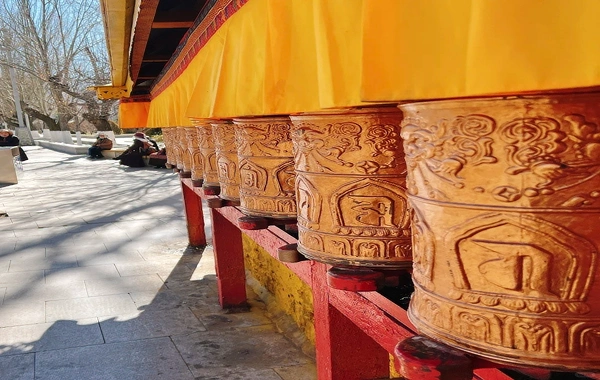
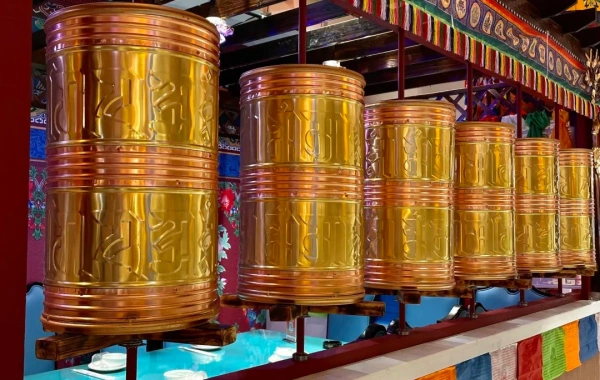
Experience: Stepping out from the Jokhang Temple, you find yourself on the renowned Barkhor Street. This circumambulation route encircling the Jokhang Temple is the oldest and most bustling thoroughfare in Lhasa. In the early morning and late evening, countless devotees—holding prayer wheels and chanting the Six-Syllable Mantra—walk clockwise along the path in their ritual circuit. Here, you will encounter pilgrims from all corners of the Tibetan region—some performing full-body prostrations, others spinning prayer wheels, and still others sitting leisurely in sweet tea houses, sipping on sweet tea. Barkhor Street is flanked by traditional Tibetan architecture, featuring a dazzling array of Tibetan ornaments, Thangka paintings, incense, and carpets.

Recommendation: Find a sweet tea house, sit down, order a pot of sweet tea and a bowl of Tibetan noodles, and immerse yourself in the slow-paced lifestyle of the people of Lhasa.

4.  Admire the Night View and Light Show at the Potala Palace

Experience: As night falls, the lights illuminating the exterior walls of the Potala Palace switch on, making the entire structure appear as if it were a celestial palace suspended in the night sky. The best vantage points for viewing are Potala Palace Square and the Chakpori (Yaowang Mountain) Viewing Platform. The musical fountains in the square operate on a schedule, creating mesmerizing reflections of the Potala Palace that shimmer gracefully in the water.

Timing: The lights typically turn on after dark (around 8:00 PM in summer and 7:00 PM in winter) and remain lit until approximately 11:00 PM.

5.  Savor Authentic Tibetan Cuisine

Must-Try Delicacies: Butter tea, sweet tea, Tibetan noodles, yak meat buns, tsampa, yogurt, and highland barley wine.

Recommended Spots: Tibetan-style restaurants located around Barkhor Street (such as Makye Ame and Guangming Gangqiong Sweet Tea House), as well as Tibetan eateries situated near Potala Palace Square. 3.2 Suggested Itineraries

Half-Day "Red Mountain Sanctuary" Highlights Tour (Ideal for those with limited time):

Arrive at the Potala Palace South Gate Security Checkpoint at 8:30 AM → Explore the Xuecheng (Snow City) area (Treasury Hall, Mint, etc.; 30 minutes) → Enter via the ticket office near the "Tablet Without Inscription," then ascend the zigzag stone staircase to Deyangshar Square (30 minutes) → Tour the White Palace (East Sunshine Hall, etc.; 30 minutes) → Tour the Red Palace (Stupa Halls, Buddha Halls, etc.; 45 minutes) → Descend via the rear mountain trail, passing by the cultural souvenir shop (15 minutes) → Tour concludes approximately between 11:30 AM and 12:00 PM.

IntoTravelChina Tip: Visits to the Potala Palace require a reservation made 7 days in advance via the official Mini Program; daily visitor capacity is capped at 2,300 people. We recommend visiting in the morning, when the lighting is optimal and your energy levels are highest. When climbing at high altitudes, please walk slowly and steadily, and take precautions against altitude sickness.

Full-Day "Holy City of the Snows" In-Depth Tour (Recommended combination: Jokhang Temple & Barkhor Street):

Morning: Potala Palace Tour (3 hours; follow the route described above) → Walk to the Yaowangshan (Medicine King Mountain) Viewpoint to capture the iconic photo featured on the 50 RMB banknote (15 minutes) → Walk to Potala Palace Square to photograph the panoramic view and its reflection (30 minutes).

Midday: Lunch at a Tibetan restaurant near Barkhor Street (1 hour; recommended dishes: Sweet Tea, Tibetan Noodles, Yak Meat Buns).

Afternoon: Jokhang Temple Tour (1.5 hours; pay homage to the life-sized statue of the 12-year-old Siddhartha Gautama) → Stroll through Barkhor Street and experience the Kora (pilgrim circumambulation) ritual (1 hour) → Visit the Ramoche Temple (45 minutes; optional) → Return to Potala Palace Square in the evening to admire the night scenery (30 minutes).

IntoTravelChina Advantage: We can book the most suitable accommodation for you, seamlessly coordinate the transitions between all your activities, and provide detailed guides on high-altitude acclimatization and safety protocols. Expert Guidance: IntoTravelChina offers fully customized itineraries—complete with a dedicated private guide, transportation, and activity arrangements—ensuring a deeply immersive and entirely worry-free travel experience. >> [Consult for Customization Now]

Comprehensive Travel Guide: Transport, Timing, and Seasons

Furong Ancient Town Furong Ancient Town Furong Ancient Town Furong Ancient Town Furong Ancient Town

How to Get There: Easily Accessible from Lhasa City Center

The Potala Palace is situated in the heart of Lhasa, offering extremely convenient access.

- By Air: Flights from across the country arrive at Lhasa Gonggar International Airport, located approximately 60 kilometers from the city center. You can take an airport shuttle bus (30 RMB per person; approx. 1 hour) to reach the city center, then take a taxi to the Potala Palace (approx. 10–15 minutes; 10–15 RMB).

- By Train: The Lhasa Railway Station (on the Qinghai-Tibet Railway) is located in the western suburbs of the city. You can take public buses (such as Routes 1, 13, or 14) or a taxi to reach the Potala Palace (approx. 20 minutes; 20–30 RMB).

- Local Transport: The Potala Palace is centrally located and accessible on foot. It is a walk of about 10–15 minutes from Barkhor Street or the Jokhang Temple. Taxi flag-down fares start at 10 RMB, and most destinations within the city center can be reached for under 20 RMB.

- Entrance Options:

- Individual Travelers / App Ticket Holders: South Gate (near the ground-level parking lot by the White Pagoda); security screening is required before entry.

- Group Tours: East Gate.

- Recommended Entrances: The security checkpoint next to the "Heavenly Tibet" Thematic Post Office; the East Gate of Potala Palace Square; and the West Gate of Potala Palace Square (near the Yaowang Mountain Viewing Platform).

Important Return Trip Tip: Taxis are readily available around the Potala Palace; however, during peak season afternoons, the volume of tourists is high, so it is advisable to book a ride-hailing service in advance. If you plan to visit Potala Palace Square at night, you can either walk back to your hotel or take a taxi.

Best Time to Visit

The Potala Palace offers beautiful scenery in every season, but spring (April–May) and autumn (September–October) feature the most pleasant weather, making them the ideal seasons for a visit.

- The Golden Seasons—Spring & Autumn (April–May; September–October): Temperatures are comfortable (7.5°C to 16°C), rainfall is minimal, and the skies are azure with abundant sunshine—making this the absolute best time for photographing the Potala Palace. In autumn, the Lhasa River Valley is ablaze with color as the foliage turns vibrant shades. - Summer Season (June–August): Temperatures are relatively high (17–18°C), though rainfall is more frequent (averaging 104.5 mm in July). Summer marks the peak tourist season in Tibet; due to the large crowds, reservations must be made well in advance. The advantage of visiting during this time is that oxygen levels are higher, making altitude sickness symptoms relatively milder.

- Winter Season (November–March): Temperatures are cold (averaging 1.8–2.5°C), yet the weather is sunny with exceptionally clear skies. Tourists are scarce in winter, allowing you to enjoy the tranquility of the Potala Palace in solitude. Special Note: From January to March each year—during the "Winter Tour in Tibet" promotional period—the Potala Palace offers free admission (specifically, free entry from January 1 to March 15, 2026; starting March 16, the off-season ticket price of 100 RMB per person applies). After a snowfall, the Potala Palace is draped in a mantle of white, appearing even more sacred and majestic.

Tickets and Opening Hours

- Ticket Prices:

- Peak Season (May–October): Route 1: 200 RMB/person; Route 2: 100 RMB/person (subject to official announcements).

- Off-Season (November–April): Route 1: 100 RMB/person; Route 2: 50 RMB/person.

- During "Winter Tour in Tibet" Promotion (January 1–March 15): Free admission.

- Booking Method: Reservations must be made 7 days in advance via the "Potala Palace Official Ticketing System" Mini Program or the "Potala Palace Official" WeChat Official Account.

- Opening Hours: Peak Season: approx. 07:30–16:00; Off-Season: approx. 09:00–15:00. Closed on Mondays (except during public holidays).

- Differences Between the Two Tour Routes:

- Route 1: The comprehensive tour route, covering the White Palace Portico, the East Sunshine Hall, the Jampa Buddha Hall, the Mandala Hall, the Hall of the Sacred Three Realms, the Guru Hall, the Hall of the 7th Dalai Lama's Stupa, the Hall of the Sacred Avalokiteśvara, the Hall of the 8th Dalai Lama's Stupa, the Kalachakra Mandala Hall, and others—including the central Stupa Halls within the Red Palace. The entire tour takes approximately 2.5 to 3 hours.

- Route 2: A shorter tour route, covering the White Palace Portico, the East Main Hall, the West Main Hall, the Hall of the Lamrim (Stages of the Path), the Hall of the Vidyadharas (Knowledge-Holders), the Hall of the 5th Dalai Lama's Stupa, the Hall of Avalokiteśvara's Incarnations, and other sites. The entire tour takes approximately 1.5 hours. We recommend prioritizing Route 1.

Accommodation Options

- Potala Palace / Barkhor Street Area (Recommended): Located in the heart of Lhasa, within walking distance of the Potala Palace, Jokhang Temple, and Barkhor Street. Accommodation options are abundant, ranging from budget-friendly guesthouses to high-end boutique hotels. Reference Prices: Budget-friendly: 200–400 RMB/night; Comfort-level: 400–800 RMB/night; High-end: 800 RMB and above.

- Norbulingka Area: Located to the west of the Potala Palace, offering a quiet environment ideal for travelers who appreciate garden landscapes. It is approximately 2 kilometers from the Potala Palace, a taxi ride of about 10 minutes.

- Xianzu Island / Sun Island Area: A hotel district situated along the banks of the Lhasa River, featuring beautiful surroundings; some hotels offer river views. It is approximately 3–5 kilometers from the Potala Palace, a taxi ride of about 15–20 minutes.

IntoTravelChina Accommodation Booking Tips:

We strongly recommend planning your itinerary and booking your accommodation 1–2 months in advance, especially during the peak season (June–October) when availability is tight. High-altitude boutique hotels located near the Potala Palace are often in high demand. By booking through us, you gain access to real-time room availability and can bundle your accommodation, entrance tickets, and transportation into a single plan. This often allows you to secure package discounts and ensures a seamless travel experience. Tell us your budget and requirements, and we will match you with the perfect "Sacred Abode of the Snowland."  >> [Consult for Customization Now]

Extended Journeys: A Loop Tour Connecting the Highlights of the Snowland Plateau

The Potala Palace is by no means the end of your journey, but rather the perfect starting point for exploring the magnificent landscapes of the Snowland Plateau. - Classic 4-Day Loop: Lhasa (Potala Palace + Jokhang Temple + Barkhor Street) → Yamdrok Lake (one of Tibet’s three sacred lakes) → Karola Glacier → Shigatse (Tashilhunpo Monastery). This classic route seamlessly blends sacred sites of Tibetan Buddhism with the stunning scenery of high-altitude lakes and glaciers.

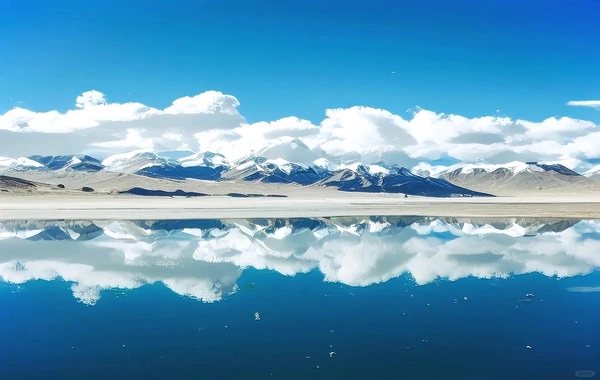
- Namtso Lake Day Trip / 2-Day Tour: Depart from Lhasa to visit Namtso Lake—the world's highest-altitude saltwater lake (elevation: 4,718 meters)—and experience the purity and grandeur of this "Heavenly Lake." The one-way journey takes approximately 4 hours; you may choose to return to Lhasa on the same day or stay overnight by the lakeside.

- Qinghai-Tibet Railway Extension: Board a train in Lhasa and travel along the Qinghai-Tibet Railway toward Xining. Traverse the uninhabited wilderness of Hoh Xil, spot wildlife such as Tibetan antelopes and wild yaks, and experience the awe-inspiring majesty of this "Sky Road."

Partner with IntoTravelChina to Embark on Your Exclusive Journey to the Sacred Snowland

The story of the Potala Palace is one of 1,300 years of unwavering faith, the harmonious coexistence of Han and Tibetan cultures, and the pinnacle of Tibetan architectural artistry. As you step into this "Pearl of the Roof of the World," you will not only witness firsthand the breathtaking opulence of the Fifth Dalai Lama’s stupa but also—through every brick, tile, brushstroke, and carving—feel the very pulse and heartbeat of the snowy plateau.

IntoTravelChina specializes in crafting in-depth, personalized, and hassle-free travel experiences across China. Our travel experts are here to provide you with:

- Tailor-Made Itineraries: We design the perfect route—featuring the Potala Palace and surrounding Tibetan attractions—customized to your specific interests and schedule.

- One-Stop Service: We handle all arrangements, including entrance tickets, unique accommodations, transportation transfers, local guides, and activity bookings.

- Exclusive Experiences: We arrange professional guides for in-depth interpretations of the palace murals and stupas, immersive Tibetan intangible cultural heritage experiences, high-altitude acclimatization guidance, and more.

Let your journey to the Potala Palace be more than just sightseeing—let it be an immersive pilgrimage into the heart of Snowland culture.

> Start Planning Your Journey Today

> We invite you to contact our professional travel consultants; we will provide you with a personalized itinerary proposal and price quote within 24 hours.  >> [Consult for Customization Now]
What Our Clients Say?

Based on 10,000+ traveler reviews

...
Daniel Dorothea
Canada
Reviewed on April 29,2025
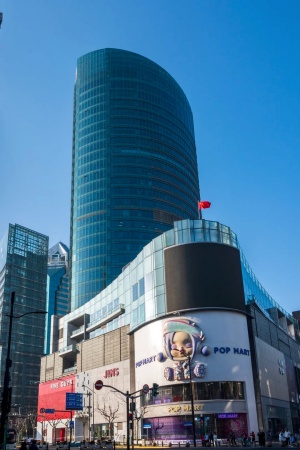
Shopping on Nanjing Road in Shanghai was just amazing! It's truly the "First Commercial Street of China", where tradition and modernity blend perfectly. You can find awesome souvenirs and experience the trendy vibes in cool stores. The neon lights at night are just spectacular, shining bright like Times Square in New York. The food here is incredible too. I had a feast for my taste buds. Shanghai, I'll definitely be back!
Destination(s): Shanghai
Date of Experience: May 08,2024
...
...
Elvis Eva
Canada
Reviewed on June 20,2025
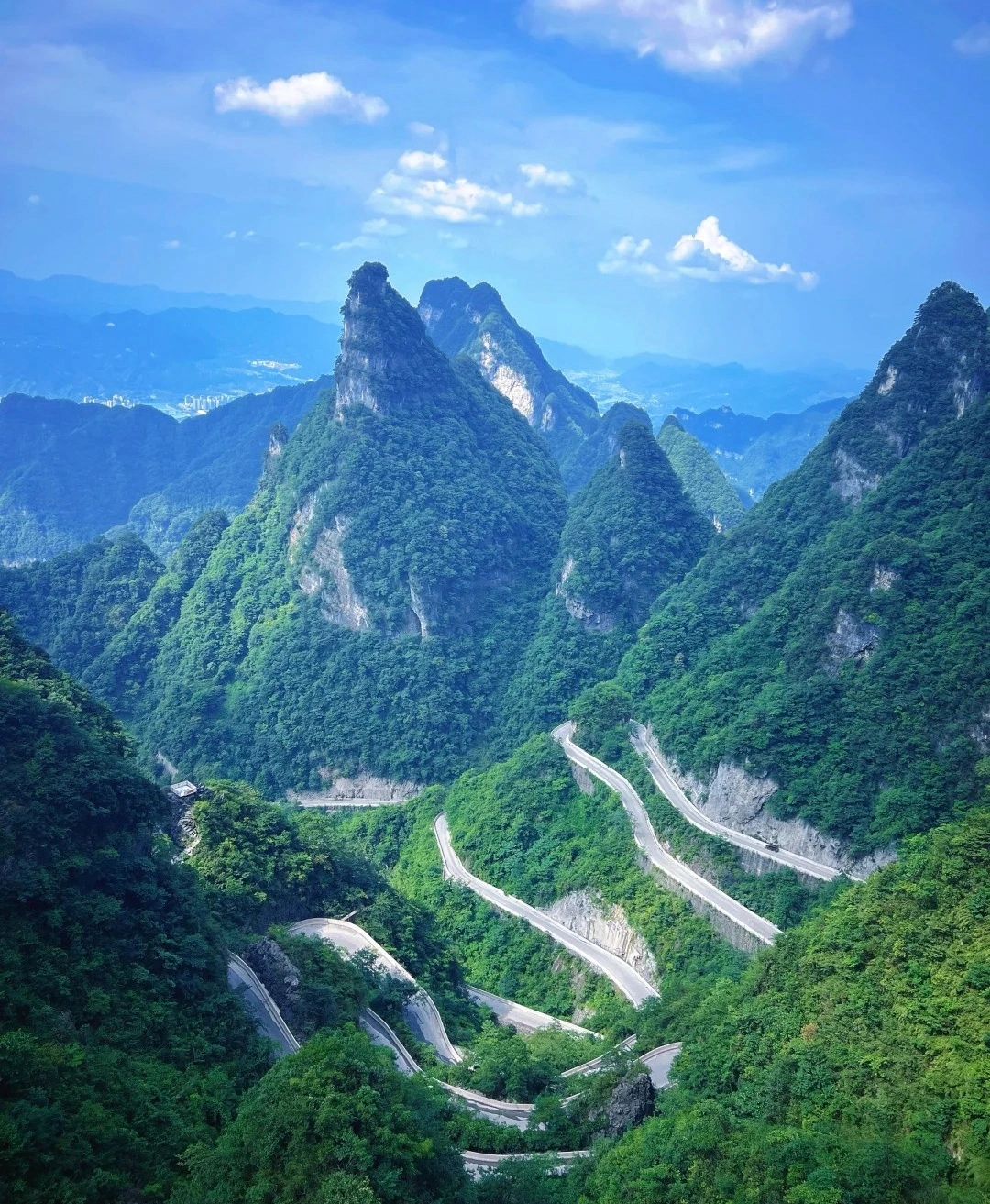
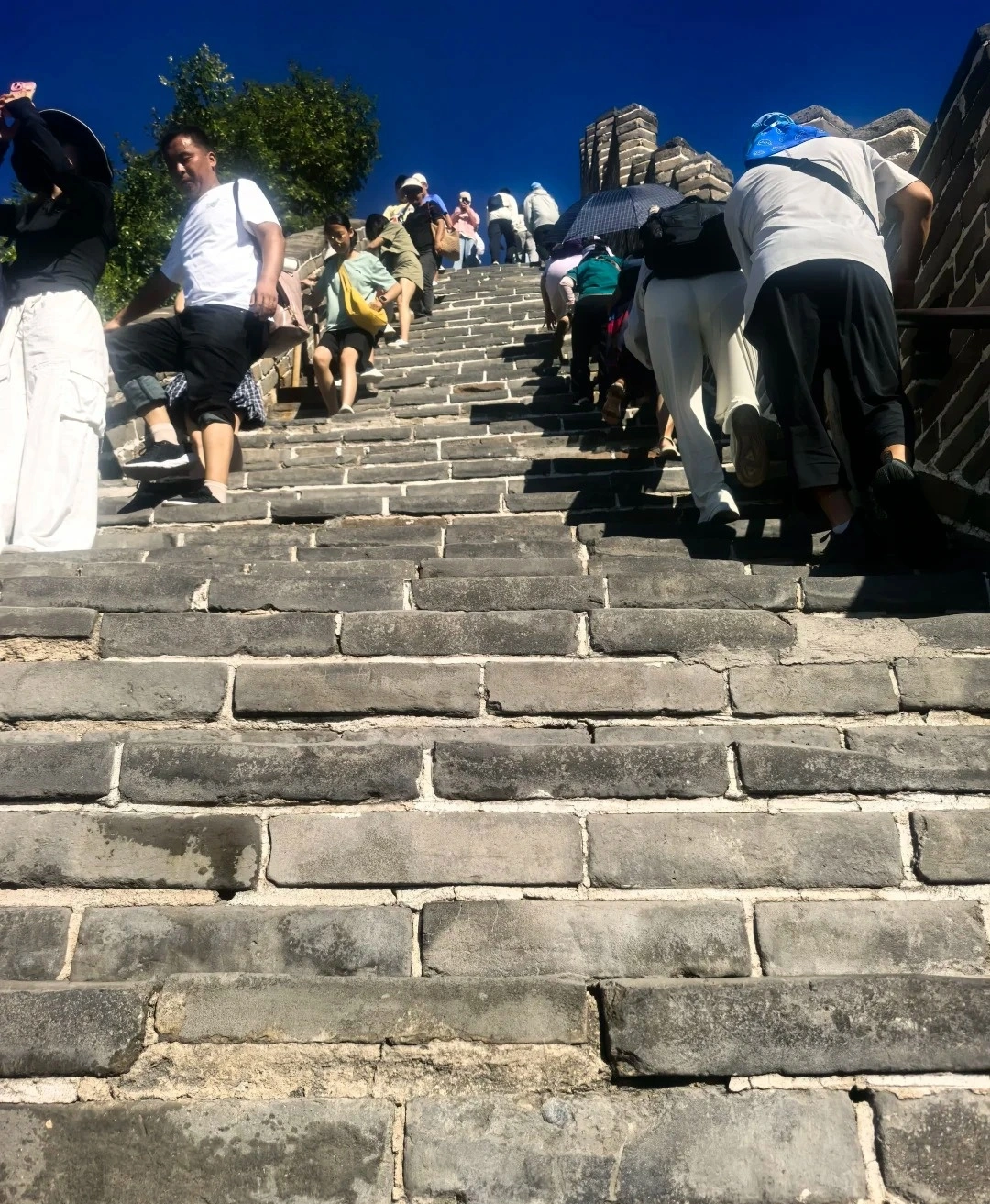
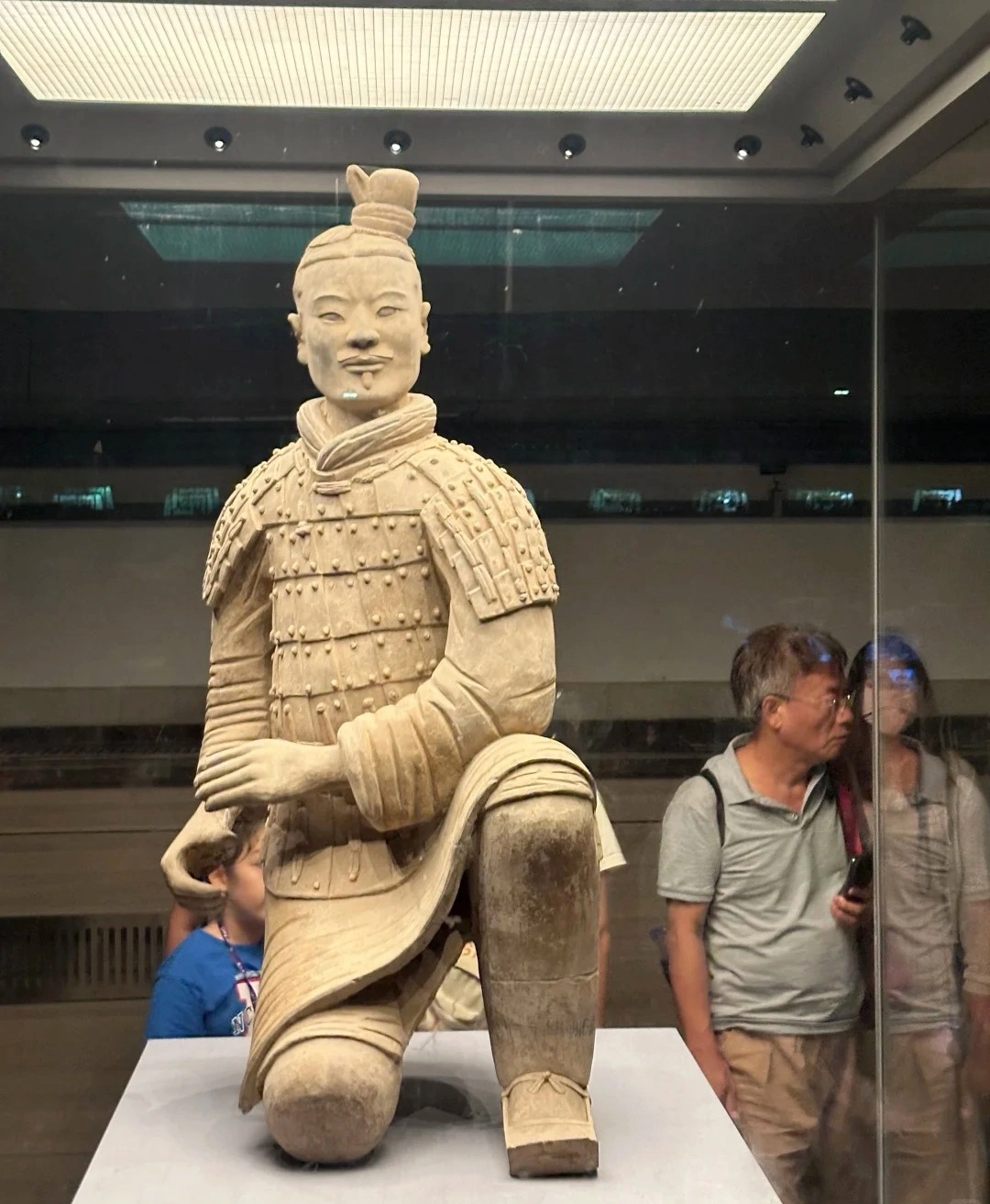
As a solo traveler from Canada, I was nervous about navigating China alone—but this 11-day tour was PERFECT! From hiking the Great Wall at sunrise (Day 3) to gasping at the Terracotta Army (Day 5), every day delivered ‘pinch-me’ moments. The real showstopper? Zhangjiajie’s Avatar Mountains (Day 7)! Our guide made the stone pillars come alive with stories. Massive thanks for handling all logistics—bullet train tickets, entry passes, car! And the 4-star hotels surprised me.
Destination(s): Beijing Xian Zhangjiajie Shanghai
Date of Experience: June 02,2025
... ... ...
...
Simon
America
Reviewed on May 29,2025
Our 2-day Zhangjiajie tour was beyond spectacular! As someone who’s visited Beijing and Shanghai for work, this trip revealed China’s wild, magical heart. Day 1 in Zhangjiajie National Forest Park felt like stepping onto Pandora—I’m a huge Avatar fan, and Yuanjiajie’s floating peaks left me breathless. The misty pillars and lush valleys like pure movie magic! Then came Fenghuang Ancient Town, we eat dinner beside the thundering waterfall. It seems Unreal! The night views of stilt houses glowing over the river were straight from a fairy tale. For fellow Avatar lovers and adventure seekers: Don’t miss this bucket-list experience! 10/10 would return. A Well-Traveled Film Buff, May 2025
Destination(s): Zhangjiajie
Date of Experience: May 08,2025
... ...

FAQ

Which iconic places in Lhasa can be overlooked from the Potala Palace?

You can see the Jokhang Temple, Barkhor Street and some other important urban areas.

What are the daily opening hours of the Potala Palace?

It usually opens from around 9:00 in the morning to 4:00 in the afternoon, but it may change according to different seasons and arrangements.

What important religious ceremony activities have been held in the Potala Palace?

There were many grand Buddhist chanting ceremonies, religious festivals and the enthronement ceremonies of Living Buddhas in the past.

How long does it usually take to take a taxi from Lhasa Railway Station to the Potala Palace?

It usually takes about 30 minutes to 40 minutes depending on the traffic conditions.

Are there any requirements for clothing when visiting the Potala Palace?

It is recommended to dress neatly and conservatively. Avoid wearing overly revealing or inappropriate clothes out of respect for the religious and cultural atmosphere.

Ask a Question

Question Summary (100 characters)
Details (optional) (2,000 characters)
Name
Country
Email