Du Fu Thatched Cottage: A Spiritual Home from the Poetry Saint's Thatched Cottage to the Millennium Literary Holy Land

Du Fu Thatched Cottage: A Spiritual Home from the Poetry Saint's Thatched Cottage to the Millennium Literary Holy Land

Overview: A literati courtyard that awakens the memory of Tang poetry
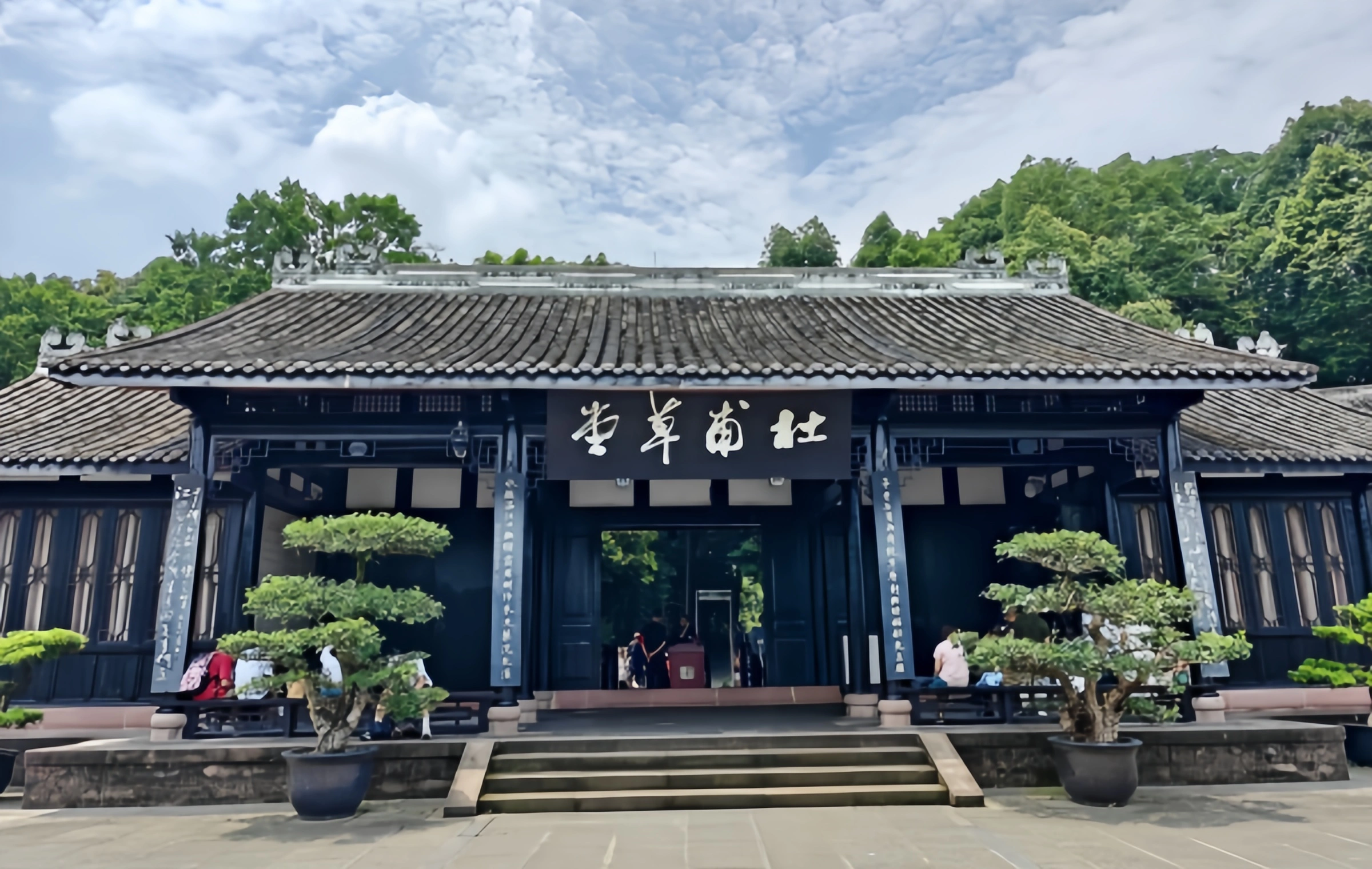
The Chengdu Du Fu Thatched Cottage is located by the Huanhua River in Qingyang District, Chengdu City, Sichuan Province, covering an area of nearly 300 acres. It is the former residence of the great Tang Dynasty poet Du Fu when he lived in Chengdu.

Quick overview of core highlights
Identity tags: Chengdu Former Residence of Poet Saint Du Fu/Holy Land in Chinese Literary History/Model of Classical Gardens in Western Sichuan
Core Experience: Exploring the Former Site of a Thatched Cottage, Strolling through Poetic Gardens, Appreciating Historical Inscriptions, Immersing in Tang Dynasty Elegance Collection
Suggested tour: Half day to one day, it is recommended to combine explanations or read relevant poems in advance to gain a deeper experience.
Address: No. 37 Qinghua Road, Qingyang District, Chengdu City, Sichuan Province

  • Du Fu Thatched Cottage: A Spiritual Home from the Poetry Saint's Thatched Cottage to the Millennium Literary Holy Land-1
  • Du Fu Thatched Cottage: A Spiritual Home from the Poetry Saint's Thatched Cottage to the Millennium Literary Holy Land-2
  • Du Fu Thatched Cottage: A Spiritual Home from the Poetry Saint's Thatched Cottage to the Millennium Literary Holy Land-3
  • Du Fu Thatched Cottage: A Spiritual Home from the Poetry Saint's Thatched Cottage to the Millennium Literary Holy Land-4

Origin: Living in troubled times and eternal poetic soul

Furong Ancient Town Furong Ancient Town

The Beginning of the Thatched Cottage - A Dream of Living in the Turbulent and Wandering World
In 759 AD, the Tang Dynasty went from prosperity to decline, and the war of the "An Lushan Rebellion" swept across the Central Plains. Poet Du Fu arrived in Chengdu with his family after going through ups and downs to avoid the war. With the help of friends, he found a piece of wasteland by the picturesque Huanhua River and carefully built a thatched cottage. The following spring, the thatched cottage was completed. Although there were no leaks in the beds or houses, this simple dwelling became a rare peaceful harbor for poets in turbulent times. The three years and nine months of settling down here were a relatively stable and prosperous period in Du Fu's creative career. Every blade of grass and every tree in the thatched cottage, as well as every storm and wind, turned into immortal poems in his writings.

Millennium Protection - Sublimation from Former Residence to Temple Buildings
After Du Fu left Shu, the thatched cottage gradually declined. But later generations are grateful for his poetry and have repeatedly rebuilt and repaired it, making his spirit immortal.
The Five Dynasties Address: Former Shu poet Wei Zhuang restored the thatched cottage for the first time at the old site, establishing its commemorative status.
Established during the Two Song Dynasties: During the Yuanfeng period of the Northern Song Dynasty, the official built a temple here to worship Du Fu, and the thatched cottage completed its transformation from a residential building to a cultural memorial site.
Ming Qing Pattern: The large-scale reconstruction during the Kangxi and Jiaqing periods of the Ming and Qing dynasties basically formed the architectural scale and garden pattern seen today, laying the foundation for the "mixed style" Chinese classical temple gardens.
Contemporary freshmen: The Du Fu Memorial Hall was established in 1955 and renamed the Du Fu Thatched Cottage Museum in 1985. While protecting the core cultural relics and buildings, we aim to make this place a living museum of poetry and culture through academic research, cultural relic collection, and garden maintenance.

In depth understanding: Explore more Chinese historical holy sites>>Wuhou Temple

Must See Wonders: Symphony of Poetry and Painting

Furong Ancient Town Furong Ancient Town

Humanistic Craftsmanship - Echoes of Poetry and History in Architectural Sequence
The architecture of the thatched cottage is not arranged randomly, but rather a meaningful narrative axis of "poetry and history".
The former residence of the thatched cottage - the origin of poetry
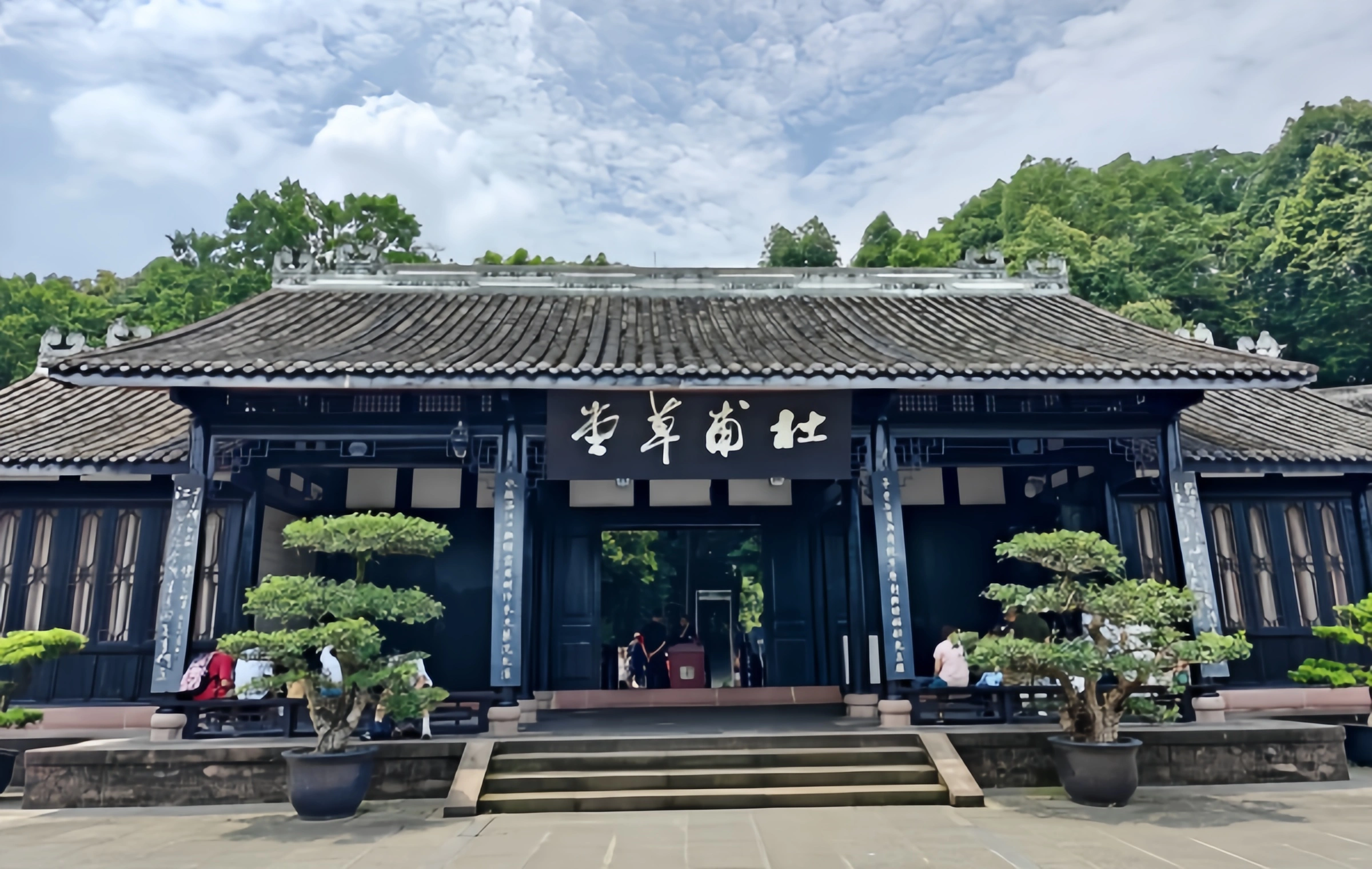
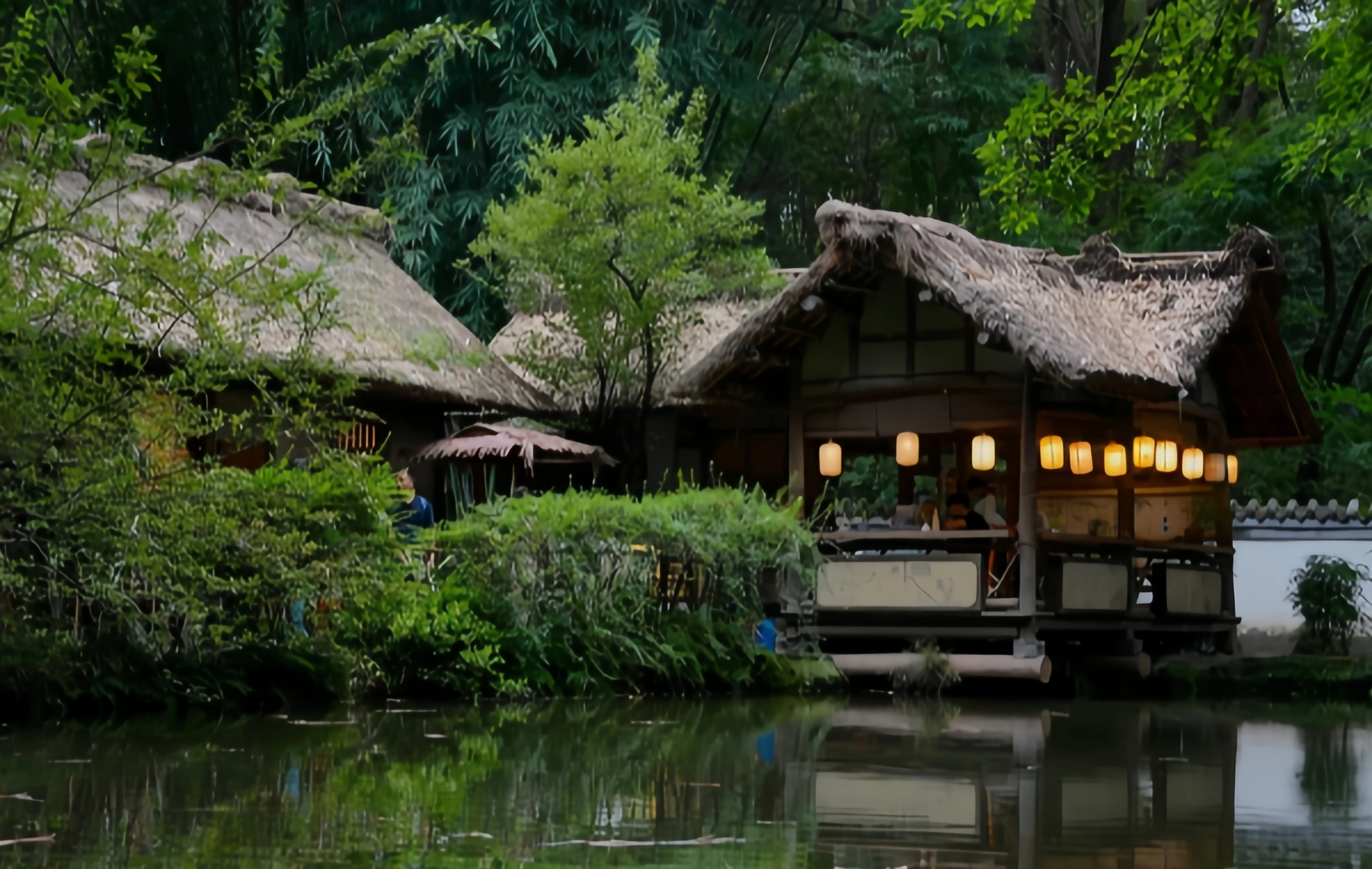
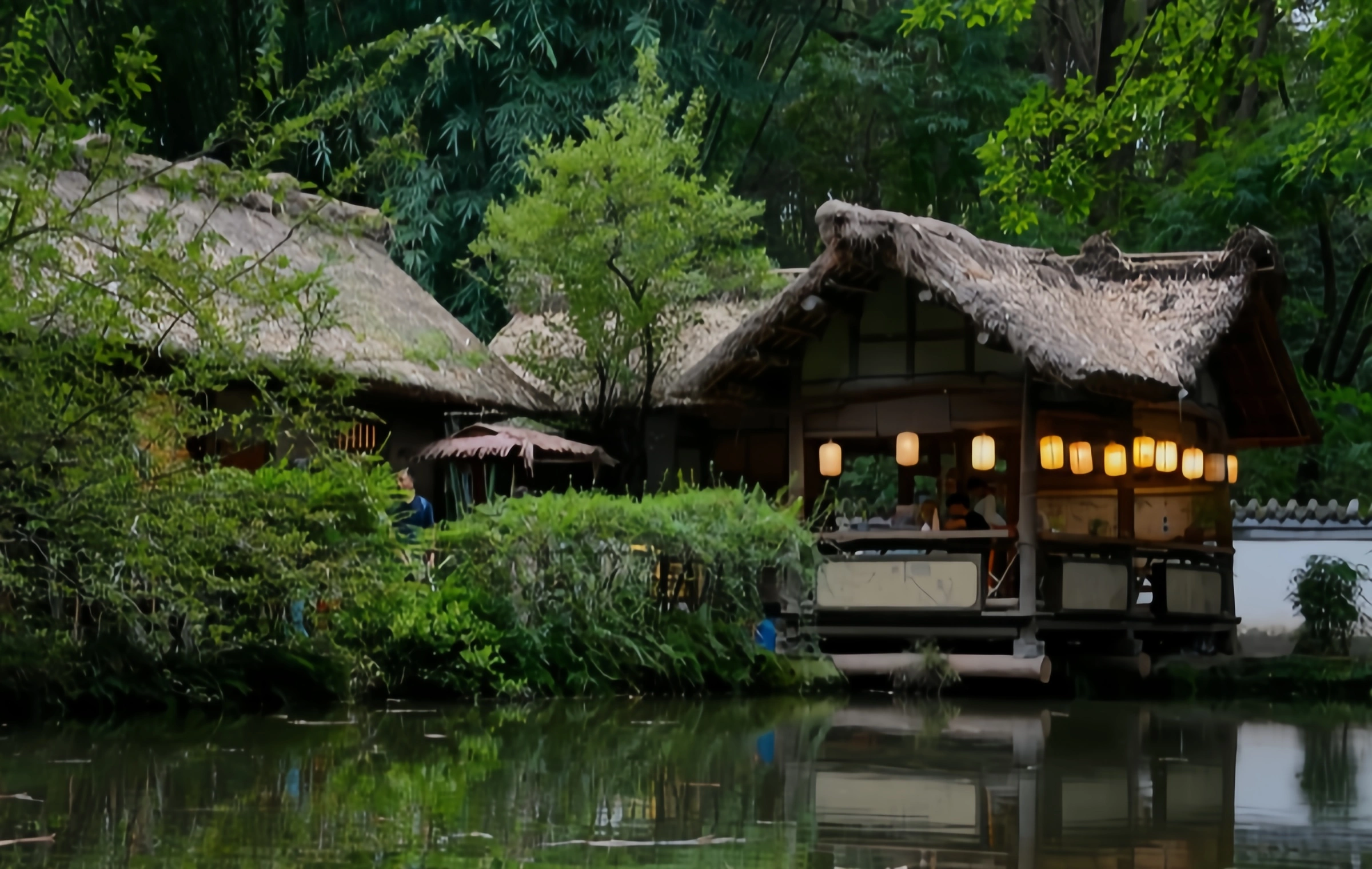
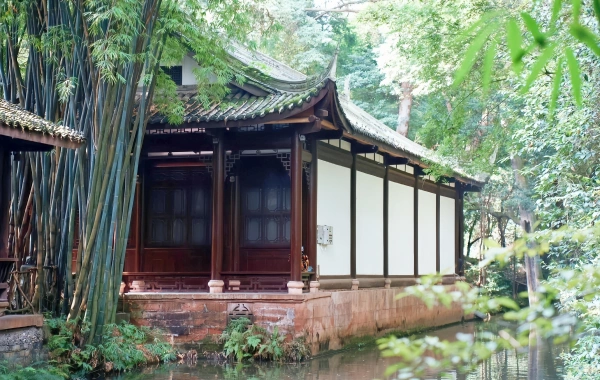
The thatched cottage scenic area located deep in the garden is a symbolic building restored based on the description of Du Shi and the characteristics of Western Sichuan dwellings. Bamboo fences, firewood doors, thatched roofs of living rooms, vegetable gardens, and medicinal fields together outline the pastoral life scene of "spring water in the south and north of the house" and "returning to the riverbank by the old fence". This is the soul of the entire thatched cottage, allowing visitors to intuitively touch the poet's life scenes and emotions back then.
Poetry and History Hall - The Core Hall
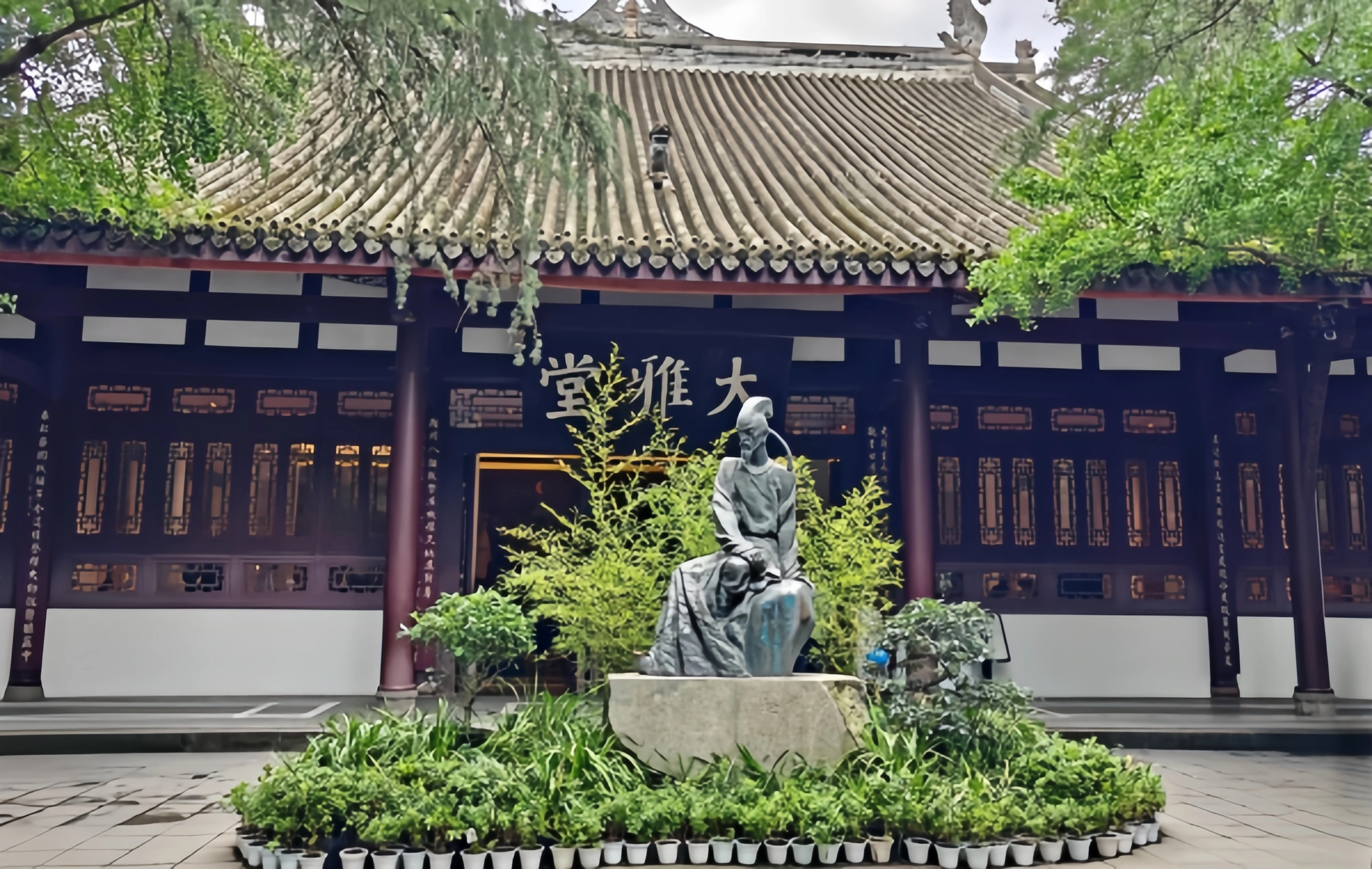
The Poetry and History Hall, located on the central axis, has a grand and majestic architecture. The name implies that Du Fu's poetry is like a "history of poetry", and history is also like poetry, singing and moving. The hall is adorned with couplets and plaques inscribed by famous poets from various dynasties, with a statue of Du Fu placed in the center. The solemn atmosphere evokes respect and serves as the core space for commemorating the poet and reflecting on his patriotism.
Gongbu Temple and "Shaoling Thatched Cottage" Stele Pavilion
The Gongbu Temple is a specialized temple dedicated to the worship of Du Fu, named after his former position as an "inspector of the Gongbu Department". The temple houses a statue of Du Fu and is flanked by Song Dynasty poets Huang Tingjian and Lu You, symbolizing the inheritance of the cultural heritage of the thatched cottage. The "Shaoling Thatched Cottage" Stele Pavilion is a highly iconic thatched roof stele pavilion, with four characters inscribed on the stone tablet by Prince Guo of the Qing Dynasty. It has become a cultural symbol of the Thatched Cottage and even Chengdu.
Thatched Cottage for Future Generations, Poet Saints for Thousands of Years - Inscriptions and Poetic Gardens of Various Dynasties
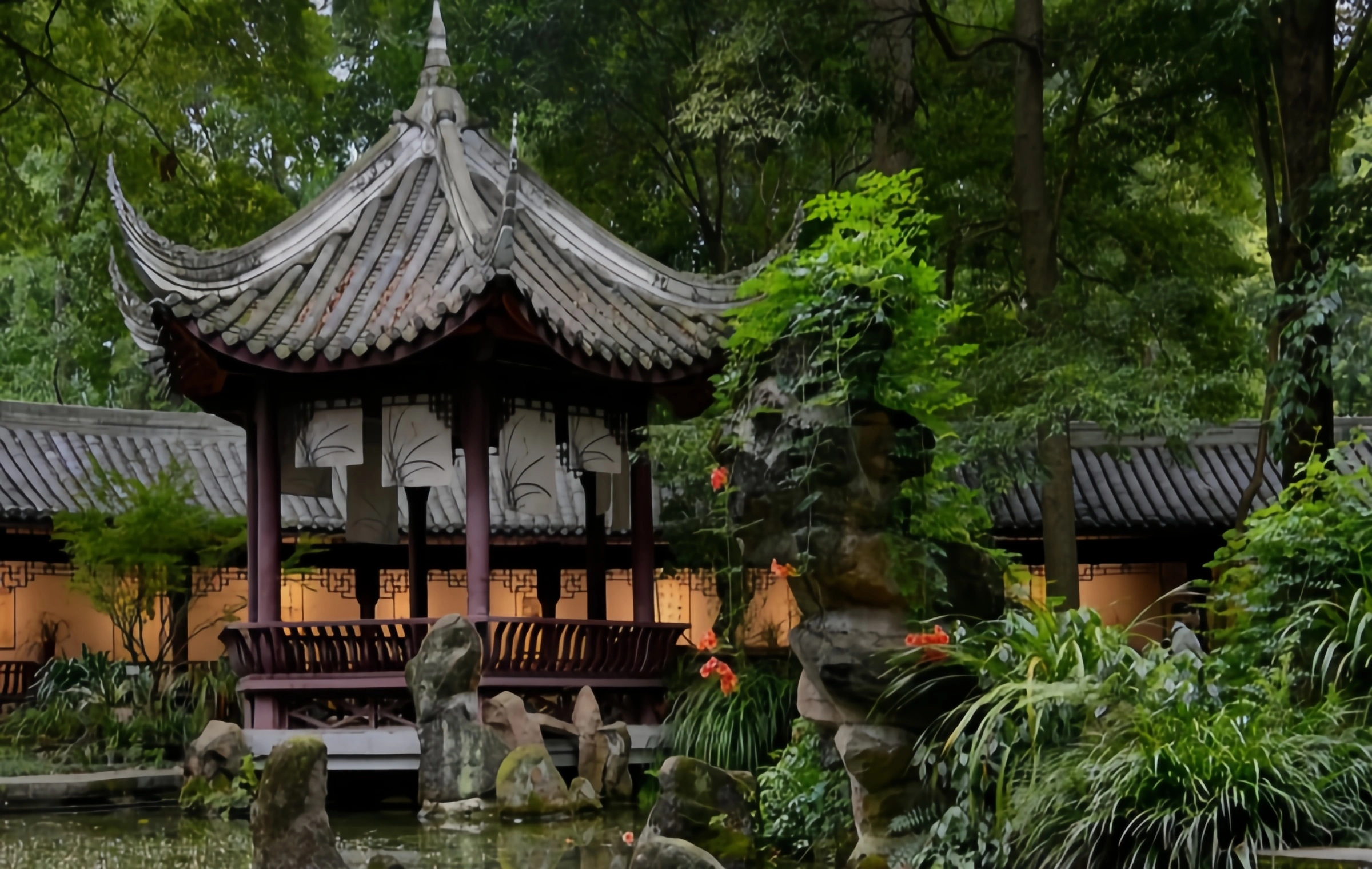
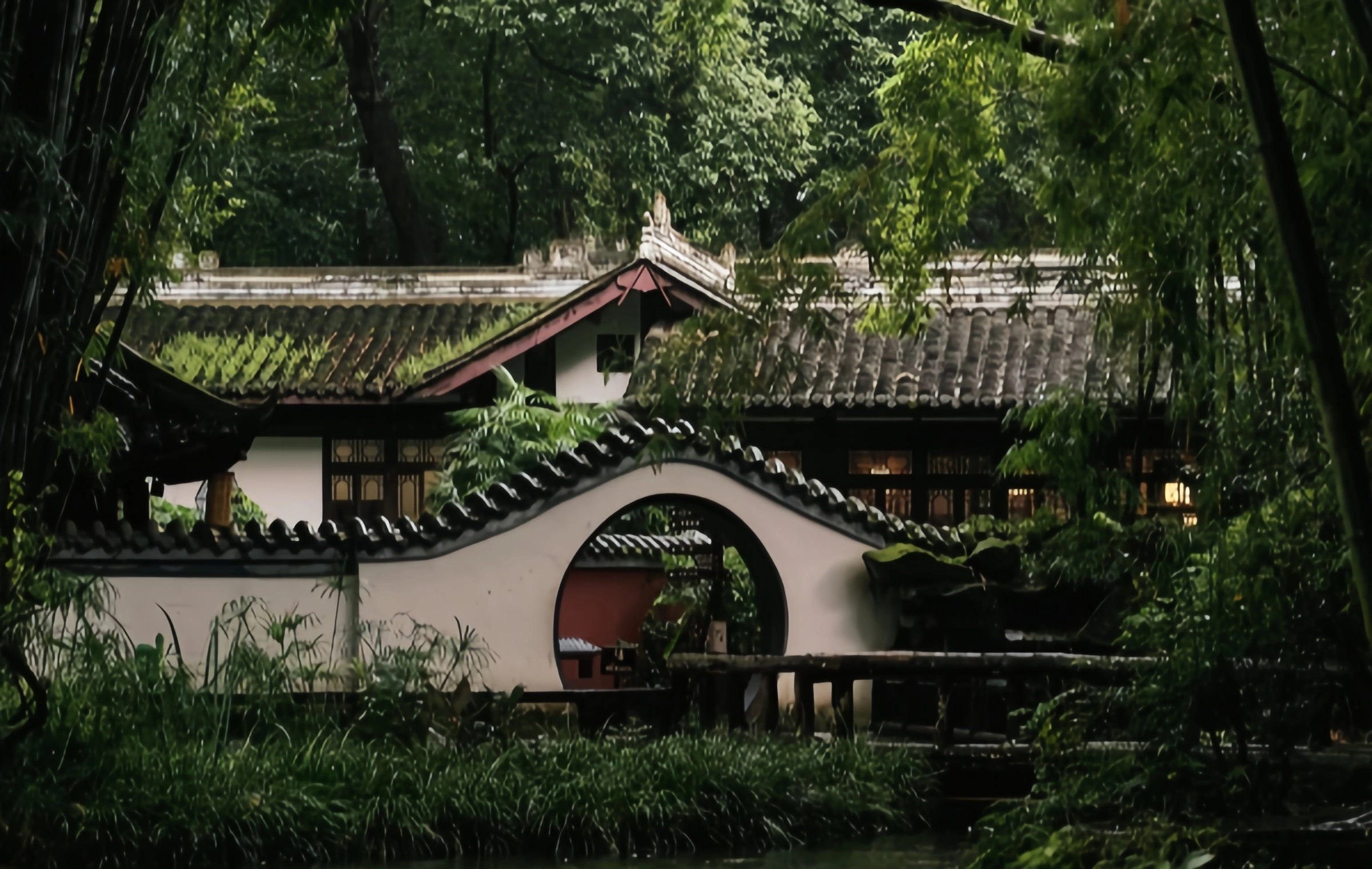
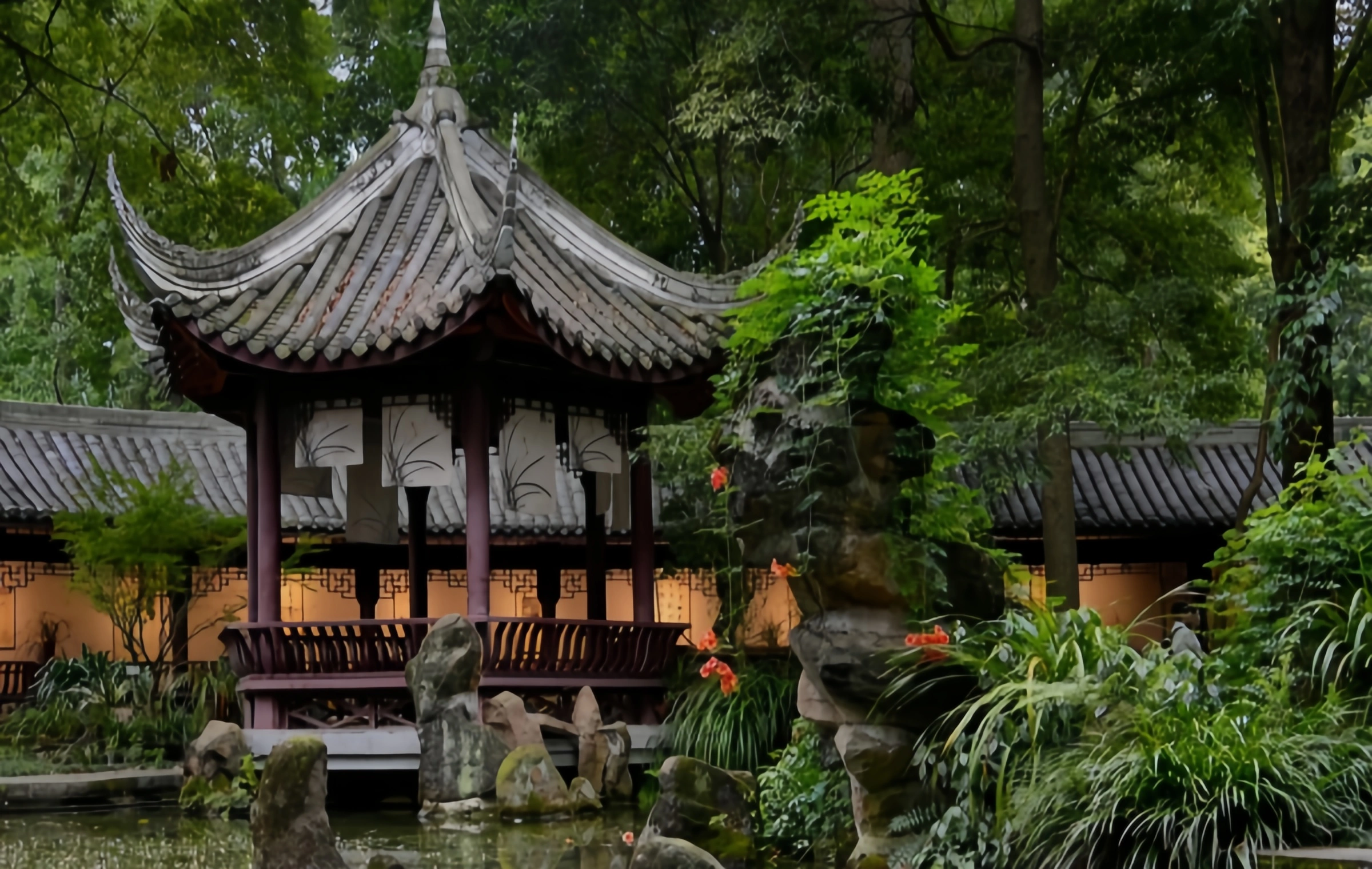
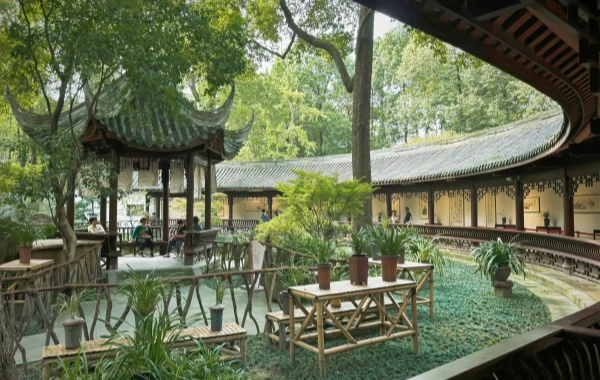
The scattered inscriptions, couplets, and poems from various dynasties constitute another history of "Du Shi Xue" in stone carving. From the Song Dynasty to modern times, the collection of famous calligraphy treasures greatly enhanced the cultural connotation of the thatched cottage. The garden design cleverly borrows the flowing water of the Huanhua River, forming a scenery of water pavilions, ponds, and streams lingering around. The path is winding, and ancient trees are towering (especially nanmu and ginkgo). The architecture is hidden in lush greenery, perfectly reflecting the artistic conception of "tranquility". As one moves around the scenery, there is a poetic and picturesque atmosphere.

Natural Charm - Garden Poetry and Painting in Four Seasons Circulation
The beauty of a thatched cottage lies half in its architecture and half in its gardens. This classical garden in western Sichuan is itself a three-dimensional natural poem.
Huanhua Creek Water and Wangan Bamboo Shadow
The Huanhua River is the lifeline of the thatched cottage, which is repeatedly mentioned in Du Fu's poetry. The meandering stream flows through the garden, giving the entire space a lively and dynamic atmosphere. Bamboo and wood are widely planted along the coast and in the courtyard, especially in large bamboo forests, creating a deep atmosphere of "alder forests blocking the sun and rustling leaves, bamboo cages and smoke dripping from the shoots". In summer, the green shade covers the sun, making it extremely cool.
Famous ancient wood flowers and seasonal scenery
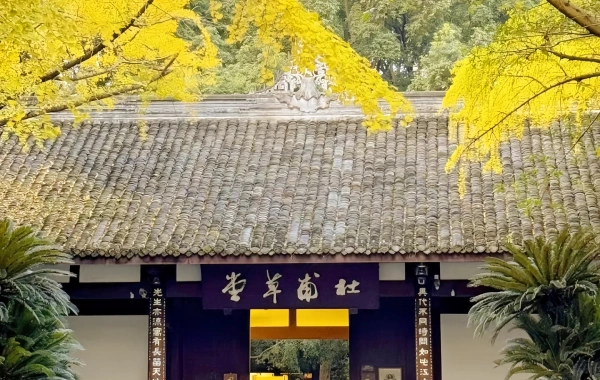
The ancient trees in the park are towering, the vegetation is lush, and the scenery is distinct throughout the four seasons. In spring, red plum blossoms, crabapples, and magnolias compete for beauty; In summer, there are lotus pavilions and lush greenery; In autumn, ginkgo trees are golden and osmanthus flowers are fragrant; Winter wintersweet is cold and has a lingering fragrance. The transformation of flowers during the four seasons is just like Du Fu's keen perception and description of nature in his poetry, allowing tourists to appreciate different poetic and artistic conception in different seasons.
Flower Path and Water Barrier - Scenery in Poetry, Poetry in Scenery
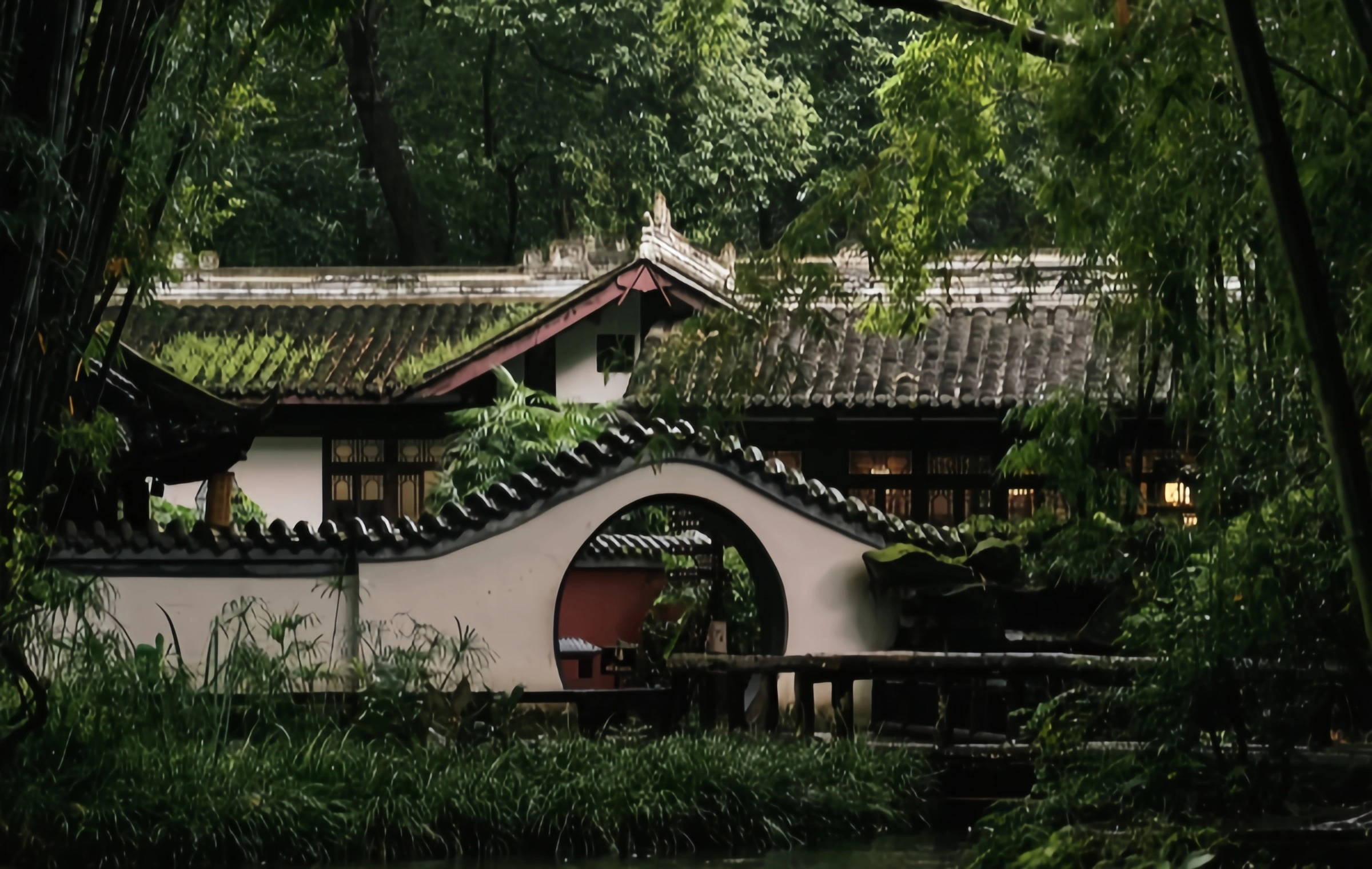
The "Flower Path" in the poem "Flower Path Never Passed by Guests, Pengmen is Now Opened for You" is a small path lined with red walls and swaying bamboo shadows, quiet and deep, making it an excellent location for photography. The "Shuijian" is a water platform reconstructed based on Du Shi's poem, where you can overlook the Jinjiang River (Huanhua Creek) and feel the leisurely wild scenery of "fish emerging in the drizzle, swallows slanting in the breeze".

Photography and Travel Tips:
Iconic check-in: The firewood gate in front of the thatched cottage, the red wall bamboo shadows on the flower path, and the "Shaoling Thatched Cottage" pavilion are the three must see scenes for photography.
Light and Shadow Moment: The dusk before the opening or closing of the garden in the early morning, with fewer tourists and soft lighting, can capture the most peaceful moment of the garden.
Seasonal limitation: The golden ginkgo leaves in late autumn complement the quaint architecture, making it the golden season for photography; When plum blossoms bloom in early spring, they also have a unique charm.
Humanistic perspective: Pay more attention to architectural details, couplets, and inscriptions, as they themselves are highly narrative images.

Core Experience: Immersive Poetic Life Guide

Furong Ancient Town

Five Must Do Things to Unlock a Complete Thatched Cottage Journey
Visiting the Poetry Saint's Thatched Cottage, Reading the Breaking Song of Autumn Wind
Entering the restored thatched cottage scenic area, touching the bamboo fence and wooden door with one's own hands, reciting the song "The thatched cottage was broken by the autumn wind" in the scene where the poet once lived and created, feeling his broad mindedness of "finding peace in thousands of buildings", and completing a spiritual dialogue spanning thousands of years.
Searching for flower paths and red walls, seeking quiet poetry shadows
Strolling along the famous "Flower Path", feeling the classical garden aesthetics of "winding paths leading to secluded places" in the winding passage formed by red walls and green bamboo on both sides. This is a classic background for taking poetic portraits, dressed in elegant clothing, making it easy to capture photos with literary imagery.
Appreciating millennium inscriptions and appreciating the elegance of calligraphy and ink
Carefully observe the precious stone inscriptions and famous couplets left behind since the Song Dynasty in places such as the "Daya Hall" and the "Poetry and History Hall". Behind every stone tablet and couplet, there is the admiration and interpretation of Du Fu by later generations, which is a condensed history of calligraphy art and literary criticism.
Sitting at the Shuijian Tea House, drinking a leisurely cup of tea
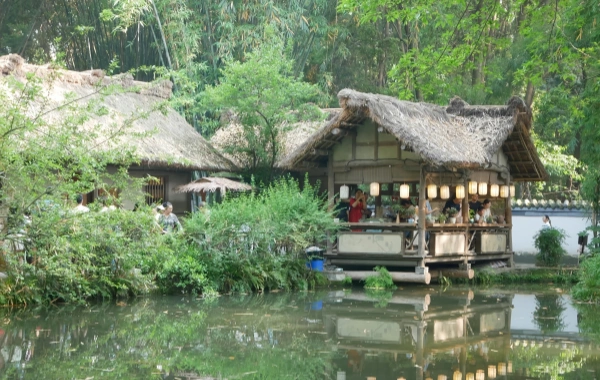
In a tea house or pavilion near the water, brew a cup of covered tea. Watch koi playing, listen to the wind blowing bamboo leaves, and experience the true meaning of Chengdu's "slow life". This situation and scene best reflect the indifferent state of mind in Du Fu's works, where "the flow of water is not competitive, and the clouds care too late".
Visiting Caotang Cultural and Creative, Returning with Poetry
In the cultural and creative store of Caotang, choose a unique souvenir. Whether it's notebooks, bookmarks, or exquisite cultural and creative stationery with the theme of Du Shi, they are all beautiful ways to bring home the poetry of Caotang and continue cultural memories.

Suggested tour routes
The Du Fu Thatched Cottage has a moderate area and rich connotations, suitable for arranging half day to one-day in-depth cultural tours.
Half day "Poetry History Axis" essence Tour (suitable for tourists with tight time):
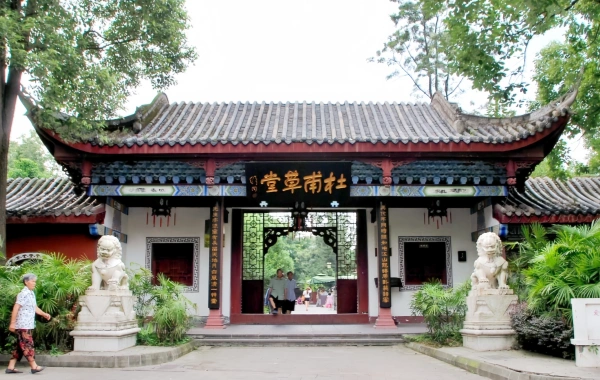
Enter from the main entrance (south gate) → visit the main hall, the Poetry and History Hall, and the Chai Gate in sequence → arrive at the core scenic area of Gongbu Temple and the "Shaoling Grass Hall" Stele Pavilion for check-in → head east to the Maowu Former Residence scenic area to deeply experience the poet's life scene → finally take a stroll along the Huanhua River, passing through the water barrier and flower path, and exit the garden from the south or west gate. The whole process takes about 2.5-3 hours.
IntoTravelChina tip: This route runs along the central axis, closely following the core historical relics, and has the highest efficiency. It is recommended to rent a voice guide or follow the scenic area for free scheduled explanations to gain a deeper understanding.
One day "Poetry and Painting Garden" in-depth tour (highly recommended for literature and garden enthusiasts):
In the morning, enter the park from the north gate or main gate, first visit the Tang Dynasty Site Exhibition Hall to learn about the archaeological discoveries of the Thatched Cottage → systematically tour the central axis building complex (such as the Grand Hall, Poetry and History Hall, Ministry of Works Temple, etc.), carefully read the inscriptions and couplets → have lunch at the tea house or nearby in the park. In the afternoon, immerse yourself in the former residence area of the thatched cottage and the garden area of the Huanhua River, slow down your pace, stop at various places such as the flower path, water threshold, and bonsai garden, and experience the scenery and garden details of the four seasons → visit special exhibitions such as the Du Shi calligraphy and woodcut gallery → finally take a stroll through cultural and creative shops, ending a fulfilling cultural journey.
Advantages of IntoTravelChina: We can book a senior cultural guide for you (especially skilled in interpreting Du Fu poetry and classical gardens), arrange linked tours with nearby Sichuan Provincial Museum or Huanhuaxi Park, and provide the best rest areas and dining advice, allowing your cultural journey to be calm and in-depth.

Professional guide: IntoTravelChina can provide you with a personalized itinerary, including exclusive tour guides, transportation, and activity arrangements, allowing you to have a worry free and in-depth experience. >>Consult now for customization

Travel Guide: Transportation, Accommodation, and Seasons

Furong Ancient Town

How to reach: Seamless Connection Guide
Du Fu Thatched Cottage is located in the southwest of the central urban area of Chengdu, with extremely convenient transportation.
Subway (recommended): Take Chengdu Metro Line 4 to Caotang North Road Station, exit from Exit B, and walk for about 10 minutes to reach Caotang North Gate. Alternatively, take Line 5 to Qingyanggong Station and walk for about 15 minutes.
Bus: Multiple bus routes can reach the "Du Fu Cao Tang" station, such as routes 19, 35, 58, 82, 151, 165, 170, 1024, 1031, etc.
Self driving/taxi: simply navigate to "Du Fu Thatched Cottage Museum". There are parking lots around the scenic area, but parking spaces are scarce during holidays. It is recommended to prioritize public transportation.

Best travel time
The scenery of Du Fu Thatched Cottage varies throughout the four seasons, and the garden is rich in plants. The climate is most pleasant in spring and autumn (March May, September November), which is the golden season for tourism.
Spring and Autumn Golden Season: In spring, various flowers bloom, and the garden's crabapples, magnolias, azaleas, and other plants bloom repeatedly, full of vitality; In autumn, the sky is high and the air is refreshing, with golden ginkgo trees and fragrant osmanthus flowers. The colors are colorful and the photography effect is excellent.
Summer Cooling Season: Chengdu's summer is relatively hot and humid, but the ancient trees in the thatched cottage are towering, and the bamboo shade is cool, making it a good place to escape the heat and relax. Attention should be paid to mosquito prevention.
Winter quiet season: There are relatively few tourists, but you can enjoy the plum blossom, which has a unique and quaint charm. The indoor exhibition hall is warm and comfortable, suitable for peaceful viewing.

Accommodation options
Caotang and Huanhua Creek surroundings (preferred for experiencing poetic tranquility):
This area has a peaceful environment and a strong cultural atmosphere. There are numerous high-quality hotels and characteristic homestays, some of which offer garden views by sliding their windows and walking to the grass hut, making them very suitable for tourists who want to immerse themselves in the cultural atmosphere.
Tianfu Square/Chunxi Road area in the city center (most convenient for shopping and dining):
Located in the absolute core business district of Chengdu, there is a wide selection of hotels, ranging from luxurious five-star to economical, with extremely convenient dining, shopping, and entertainment options. It takes about 20-30 minutes to take the subway to Caotang.
Kuanzhai Alley/Kuixinglou Street area (balancing culture and cuisine):
This area itself is a famous historical and cultural district, full of Chengdu characteristics, with numerous internet famous restaurants. The accommodation mainly consists of boutique hotels and cultural homestays, which are lively and have a local lifestyle atmosphere. The transportation to Caotang is convenient.

IntoTravelChina accommodation booking recommendations:
We strongly recommend that if you wish to embark on a deep cultural and leisure journey, prioritize accommodation around Caotang/Huanhua Creek. By booking with us, we can not only select the most distinctive cultural themed accommodations for you, but also seamlessly connect your itinerary with Caotang tickets, professional explanations, and other cultural attractions in Chengdu (such as Wuhou Temple and Jinsha Site), saving you a lot of planning time. Tell us your preferences, and we will create the most authentic "Poetic Chengdu" journey for you. >>Click to contact IntoTravelChina travel consultant

Extended Journey: Connecting the Cultural Essence of the Land of Abundance

Furong Ancient Town Furong Ancient Town

One day essence tour of Chengdu urban culture: Chengdu Museum (history) → Taikoo Li (modern fashion) → Kuanzhai Alley (traditional street) → Sichuan Opera Performance (night). This route crosses the past and present of Chengdu within a day.
Sichuan Sichuan Classic 6-day Ring Road: Chengdu → Leshan (Leshan Giant Buddha Scenic Area, Mount Emei) → Sanxingdui → People's Park, Jinli Old Street → Giant Panda Base, Chunxi Road. This is a classic Sichuan journey from modern cities to natural wonders and cultural heritage.>>Explore the 6-day essence of Sichuan


Join hands with IntoTravelChina and embark on your exclusive poetic journey

Furong Ancient Town Furong Ancient Town

 Our travel experts can assist you with:
Tailored itinerary: Based on your interests, cleverly integrate the natural, historical, and culinary journeys of Taikoo Li and Sichuan, and design a unique route.
One stop service: handle all transportation, accommodation, tour guide, and special activity reservations during the itinerary, making you worry free and effortless.
Exclusive perspective and arrangement: providing in-depth interpretation of urban culture, recommending hidden treasure shops and exhibition information, making your trip not just sightseeing, but also a deep experience of urban aesthetics and lifestyle.
Make your trip to Taikoo Li not just about shopping, but also a deep conversation about understanding Chengdu, a city where you don't want to leave once you come.  

Start planning your journey now:Feel free to contact our professional travel consultants, and we will provide you with exclusive itinerary plans and quotes within 24 hours. >>Click to contact IntoTravelChina travel consultant

What Our Clients Say?

Based on 10,000+ traveler reviews

...
Daniel Dorothea
Canada
Reviewed on April 29,2025
Shopping on Nanjing Road in Shanghai was just amazing! It's truly the "First Commercial Street of China", where tradition and modernity blend perfectly. You can find awesome souvenirs and experience the trendy vibes in cool stores. The neon lights at night are just spectacular, shining bright like Times Square in New York. The food here is incredible too. I had a feast for my taste buds. Shanghai, I'll definitely be back!
Destination(s): Shanghai
Date of Experience: May 08,2024
...
...
Elvis Eva
Canada
Reviewed on June 20,2025
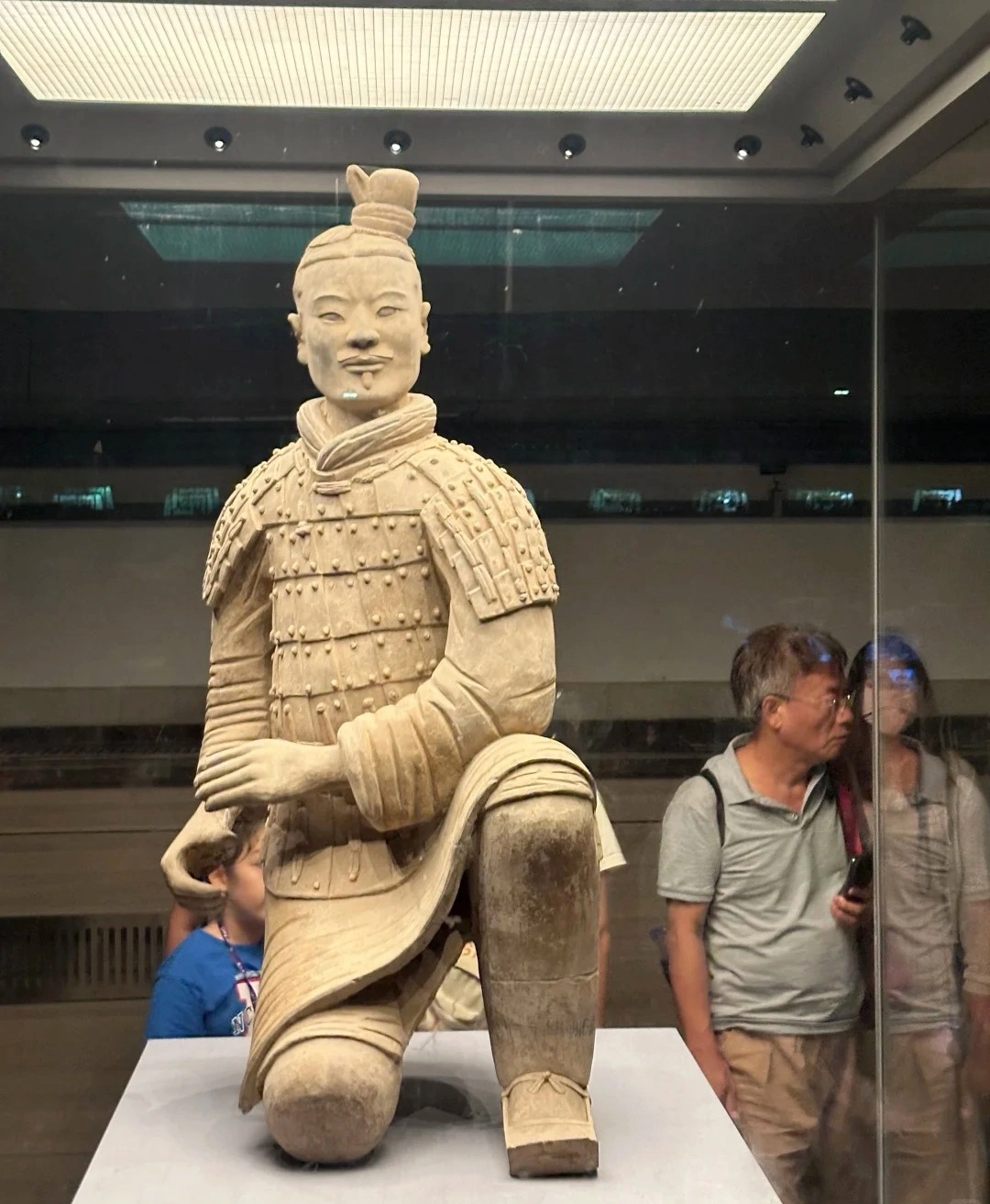
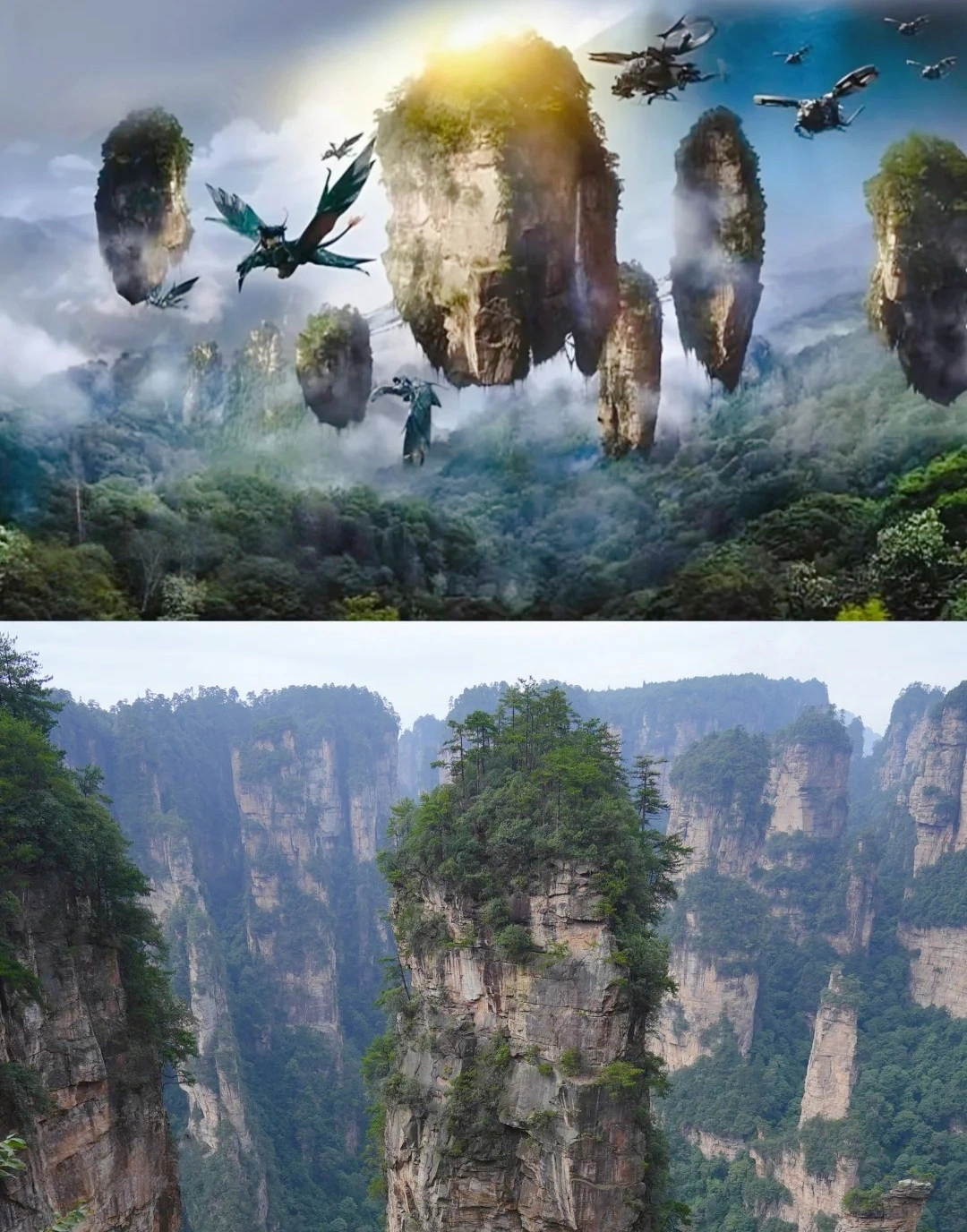
As a solo traveler from Canada, I was nervous about navigating China alone—but this 11-day tour was PERFECT! From hiking the Great Wall at sunrise (Day 3) to gasping at the Terracotta Army (Day 5), every day delivered ‘pinch-me’ moments. The real showstopper? Zhangjiajie’s Avatar Mountains (Day 7)! Our guide made the stone pillars come alive with stories. Massive thanks for handling all logistics—bullet train tickets, entry passes, car! And the 4-star hotels surprised me.
Destination(s): Beijing Xian Zhangjiajie Shanghai
Date of Experience: June 02,2025
... ... ...
...
Simon
America
Reviewed on May 29,2025
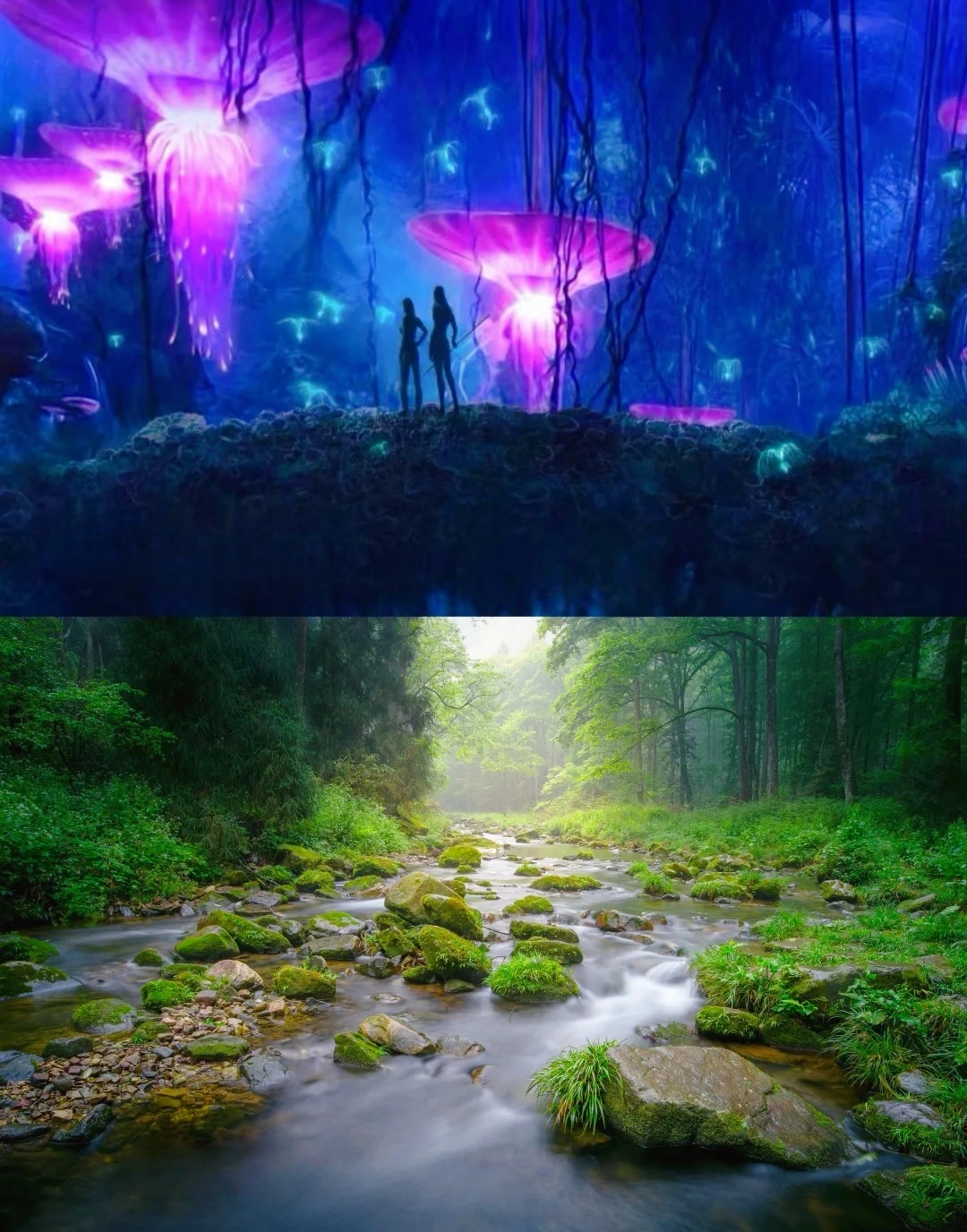
Our 2-day Zhangjiajie tour was beyond spectacular! As someone who’s visited Beijing and Shanghai for work, this trip revealed China’s wild, magical heart. Day 1 in Zhangjiajie National Forest Park felt like stepping onto Pandora—I’m a huge Avatar fan, and Yuanjiajie’s floating peaks left me breathless. The misty pillars and lush valleys like pure movie magic! Then came Fenghuang Ancient Town, we eat dinner beside the thundering waterfall. It seems Unreal! The night views of stilt houses glowing over the river were straight from a fairy tale. For fellow Avatar lovers and adventure seekers: Don’t miss this bucket-list experience! 10/10 would return. A Well-Traveled Film Buff, May 2025
Destination(s): Zhangjiajie
Date of Experience: May 08,2025
... ...

FAQ

What rare Du Fu-related artifacts can be found in the exhibition hall?

The hall displays Tang Dynasty pottery (similar to items he described), ancient scrolls of his poems copied by Song Dynasty scholars, and a replica of his writing brush. A highlight is a 17th-century map showing the locations where he wrote his most famous works during his 11-year exile.

What unique perspectives does the English audio guide offer?

The audio guide (available for rent at the entrance) connects Du Fu’s poems to global literary traditions—comparing his social critique to Shakespeare’s, or his nature imagery to Wordsworth’s. It also shares little-known stories, like how his works survived centuries of war.

What events at the annual "Du Fu Poetry Festival" appeal to foreign visitors?

Bilingual poetry readings (Chinese-English/French/Japanese). Workshops: Writing poems in the style of Du Fu, guided by local poets. Traditional music performances: Tang Dynasty-style zither music accompanying recitals.

What’s the most convenient way from Chengdu Shuangliu Airport to Du Fu Thatched Cottage?

Take Metro Line 10 to Taipingyuan Station, transfer to Line 4 to Shahepu Station, then take bus 19 or 35 to "Du Fu Thatched Cottage" stop (total ~1 hour, ¥10–15). Taxis/Ubers take ~40 minutes (¥80–100) and are easier with luggage.

Are there interactive activities to experience Chinese traditional culture?

Calligraphy workshops: Learn to write Du Fu’s poems with a brush (weekends, ¥50/person). Tea ceremonies: Try Sichuan tea in a traditional pavilion, with stories about how Du Fu drank tea while writing. Poetry writing contests: Join monthly events (in English/Chinese) to win a certificate.

Ask a Question

Question Summary (100 characters)
Details (optional) (2,000 characters)
Name
Country
Email